

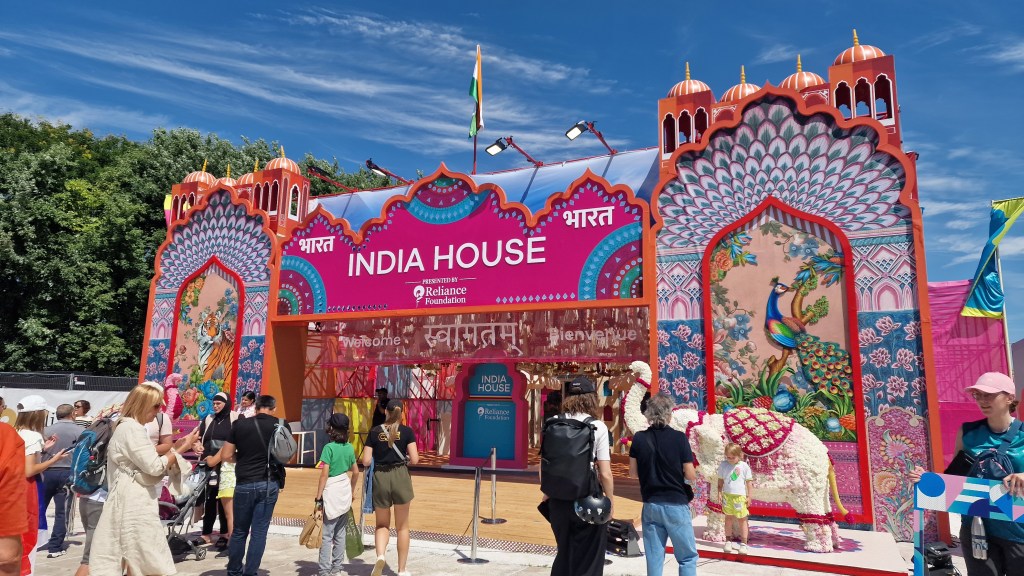
As a non-sporty Indian, hailing from a cricket-crazy nation, sports never really caught my fancy until I turned thirty in Paris, surrounded by fashion-obsessed friends from the Left Bank. After a series of personal setbacks, I decided to channel my energy into getting fit, and the announcement that Paris would host the 2024 Olympics became a personal deadline. Seven years later, I find myself at the Prairie du Cercle Nord in La Villette, savouring the delights of the Indian Pavilion’s food court. Yes, the food court—where the tantalizing thalis, vada pav, chaats, and kulfis have drawn me into a delicious affair that has been hard to resist.
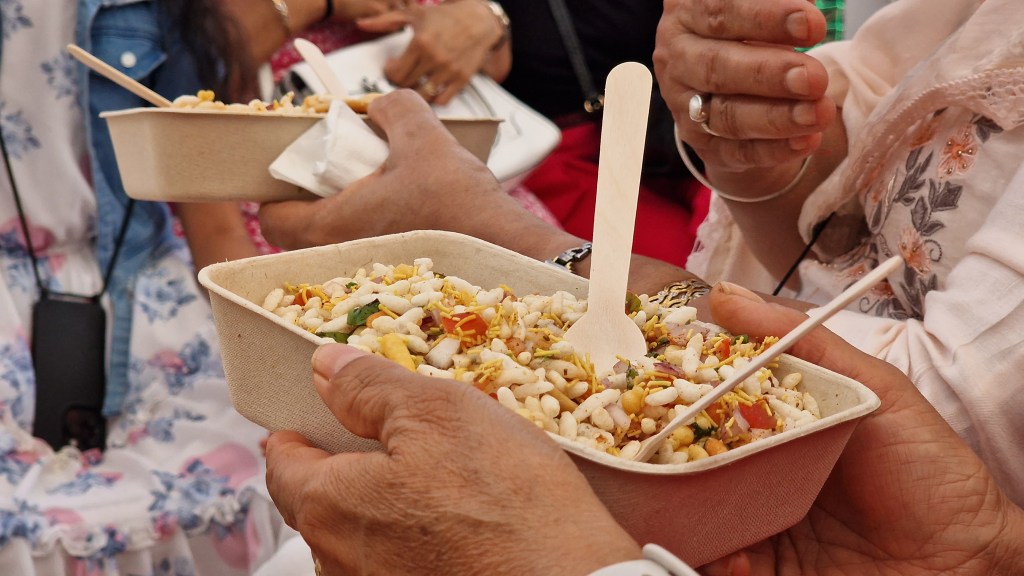
I owe a hearty thanks to the Ambanis, not only for being the talk of the town but for offering us the NRIs a taste of India that feels like home. Our nation might be synonymous with cricket, but we’re also a land where food reigns supreme. Who needs a bat when you have a bowl of dal bati? Jokes apart.
The India Pavilion, unique in the history of the games, is a vibrant showcase of India’s cultural heritage, visible from across the park. My entry was seamless, thanks to pre-booked tickets, and I was immediately struck by the volunteers in their beautifully designed kurtas, reflecting centuries-old Indian motifs once admired by the Royals of Versailles. These volunteers, exuding grace and style, set the tone for what was to come.
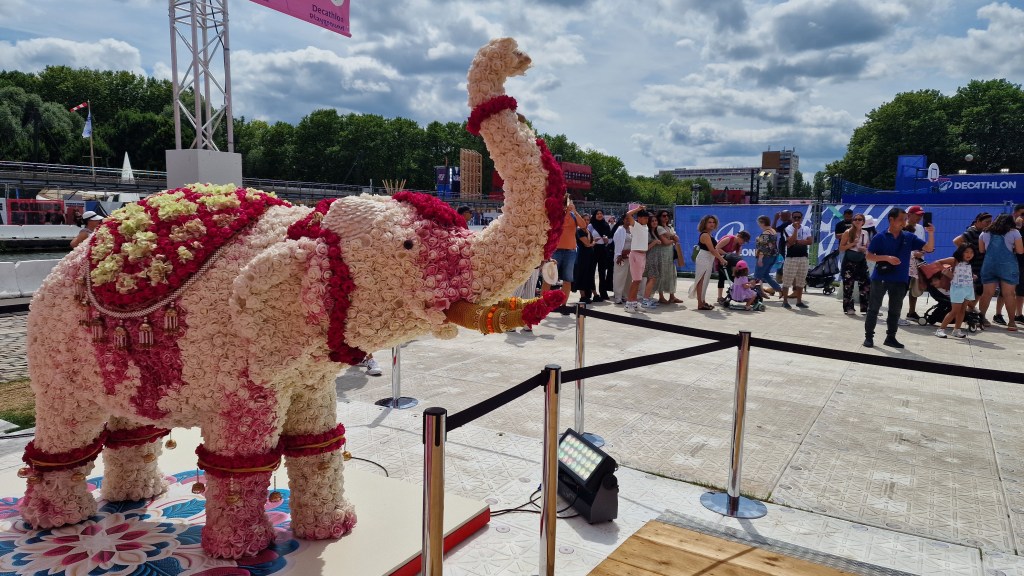
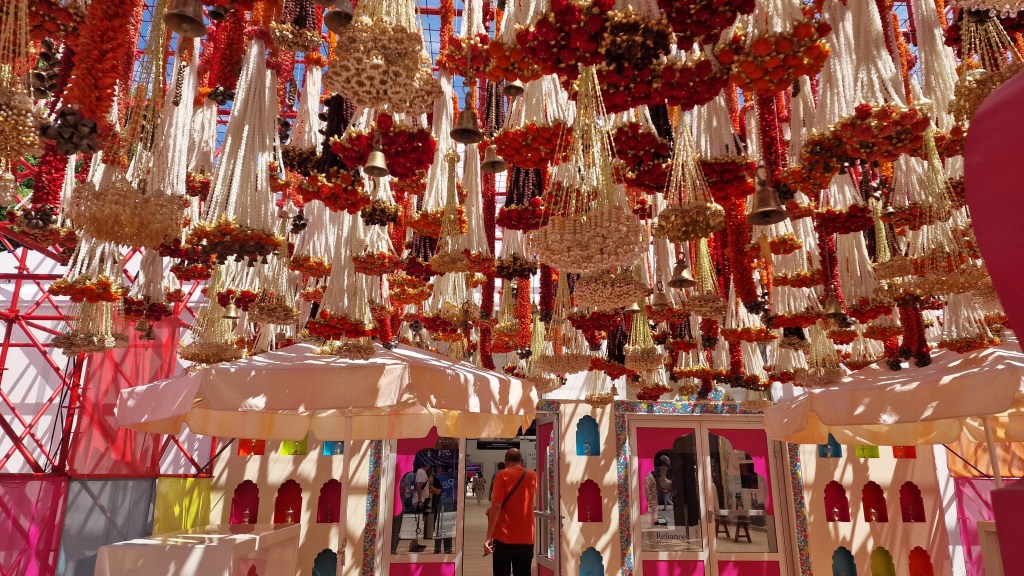
The pavilion’s entrance is nothing short of royal, with elephants on either side and flower hangings (jhalars) creating a canopy that evokes a traditional mandap. Inside, I was greeted by a dapper volunteer whose style could rival any Bollywood star—a reminder that the essence of India lies in its people.

The recent snap election in France resulted in significant political shifts: President Macron’s Renaissance party came second, the National Rally led by Marine Le Pen came third, and the Left coalition emerged victorious. Today, as the city gears up for its first Olympic games in a hundred years, we find ourselves with a presidency sans executive. This political landscape adds a layer of complexity to the Olympic preparations, as it reflects a nation in flux. The ongoing Olympic Games in Paris have sparked numerous controversies as well, highlighting the inextricable link between politics and global events. France’s journey as the 2024 host has been marked by both pride and polémique.
Living in France for over eighteen years, I’ve grown accustomed to the French penchant for critical introspection. The opening ceremony aimed to restore France’s reputation as a soft power champion, but it also stirred debates, especially with the provocative portrayal of the Last Supper that upset many Christian groups.
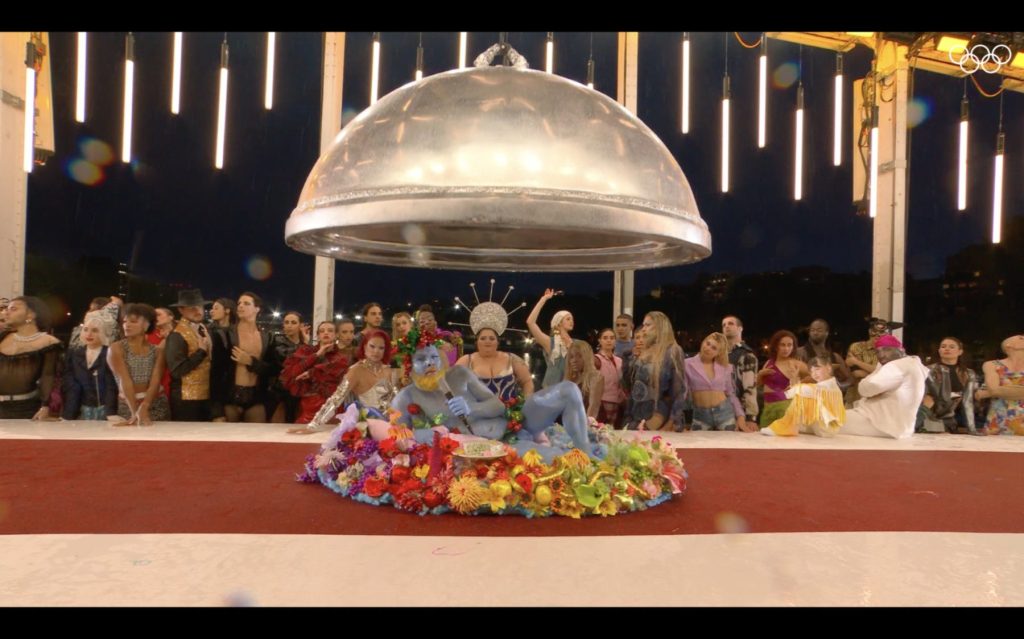
In the midst of these controversies, we witnessed a wide range of reactions. Aya Nakamura faced racist slurs, highlighting the persistent issues of race and identity in France. On the other hand, Céline Dion’s comeback performance struck an emotional chord with many, showcasing the unifying power of music. These events underscore that soft power is far from gentle; it is a potent force of influence and expression.
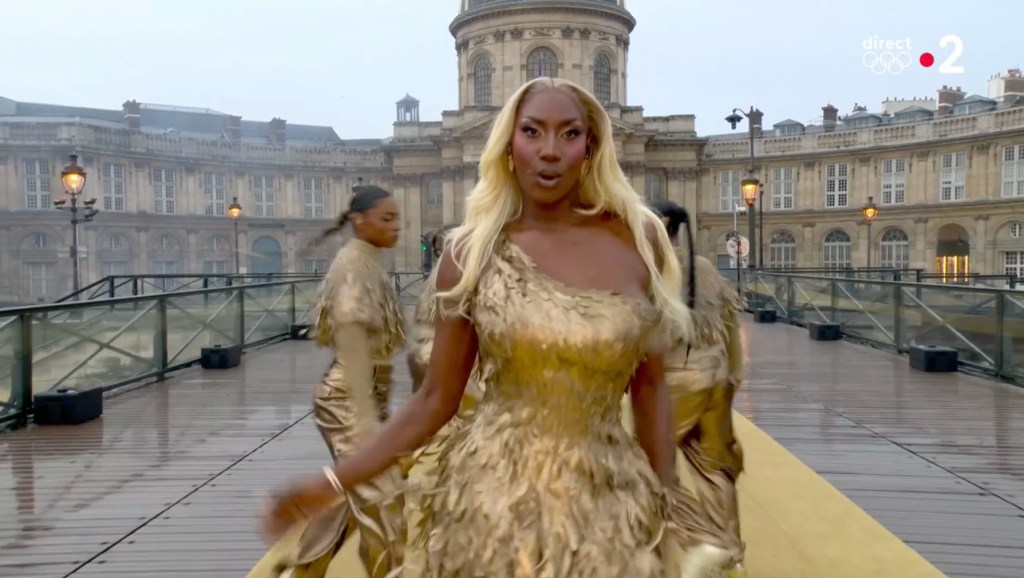
As André Malraux suggested, « Our art culture makes no attempt to search the past for precedents, but transforms the entire past into a sequence of provisional responses to a problem that remains intact. » This notion of transformation and response is central to the cultural displays at the Olympics.

Initially, I contemplated leaving the city like many Parisians, but the allure of experiencing the Olympics firsthand was too strong. This year, India is represented by 117 athletes across 16 sports disciplines, competing in 69 events for 95 medals. The significant presence of Indian athletes and dignitaries underscores India’s growing global footprint.
The India Pavilion, curated by the Reliance Foundation, is not just a cultural showcase but a statement of India’s soft power. It offers a visual and experiential delight, reflecting India’s rich traditions and contemporary innovations. As I explored further, I was drawn to Swadesh, the luxury boutique created by Neeta Ambani, which highlights India’s exquisite craftsmanship.
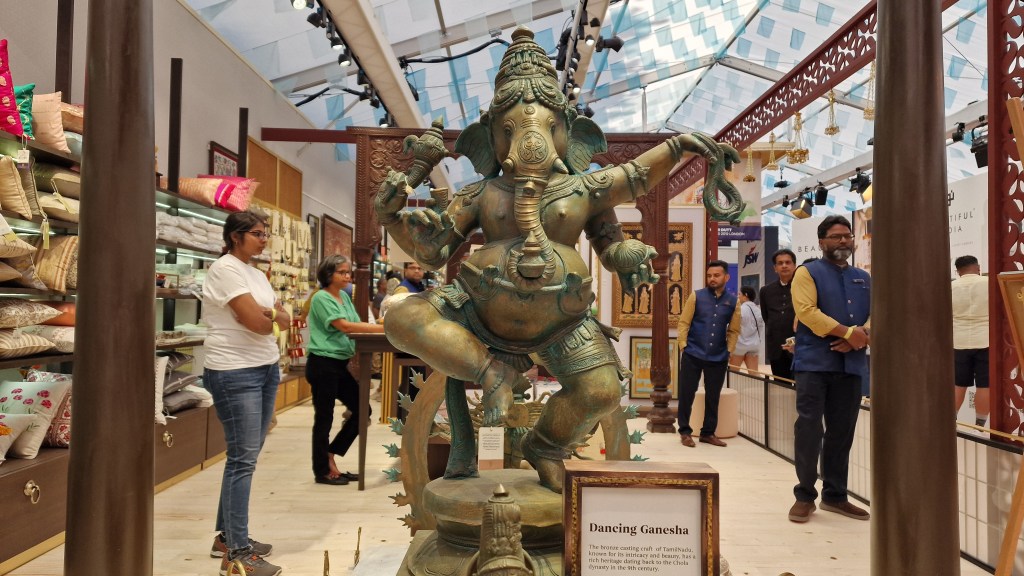
Coming from a family where I was literally spoon-fed with the intangible cultural heritage of Bengal by my parents, the core idea of Swadesh is perfectly relatable. Preserve, protect, and promote the artisans and their crafts while making them visible globally.
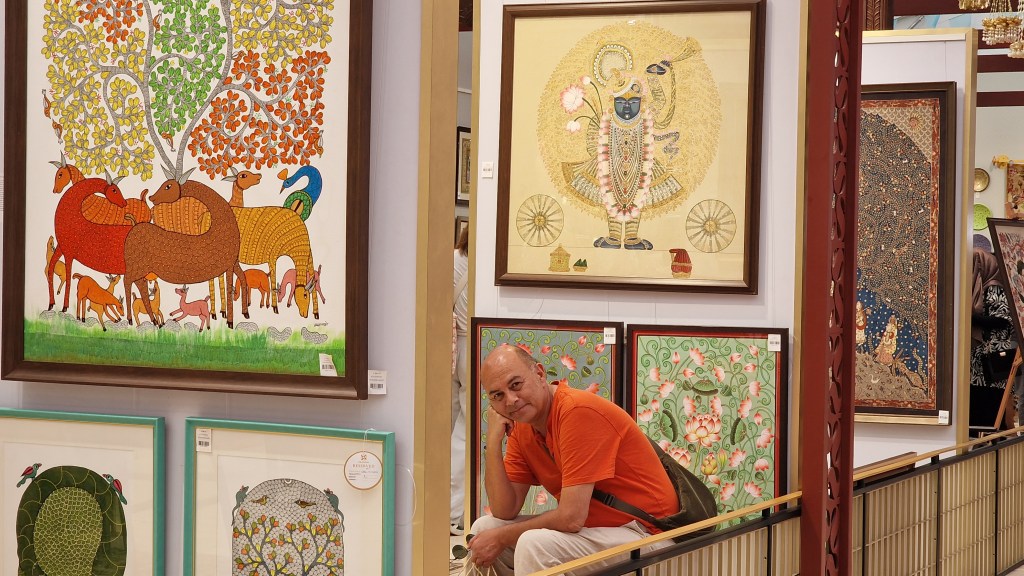
From patachitra to brass objects, passing by luxurious percale, upholstery, sarees, and carpets, the standalone boutique has brought every single treasure of India under one roof. Now, whether the pavilion itself, where people are mostly drawn to food and Hormudz Khambata’s Bollywood Troupe’s magnificent performance, is the right place to showcase exquisite artefacts of India is a question that lingers in my mind.
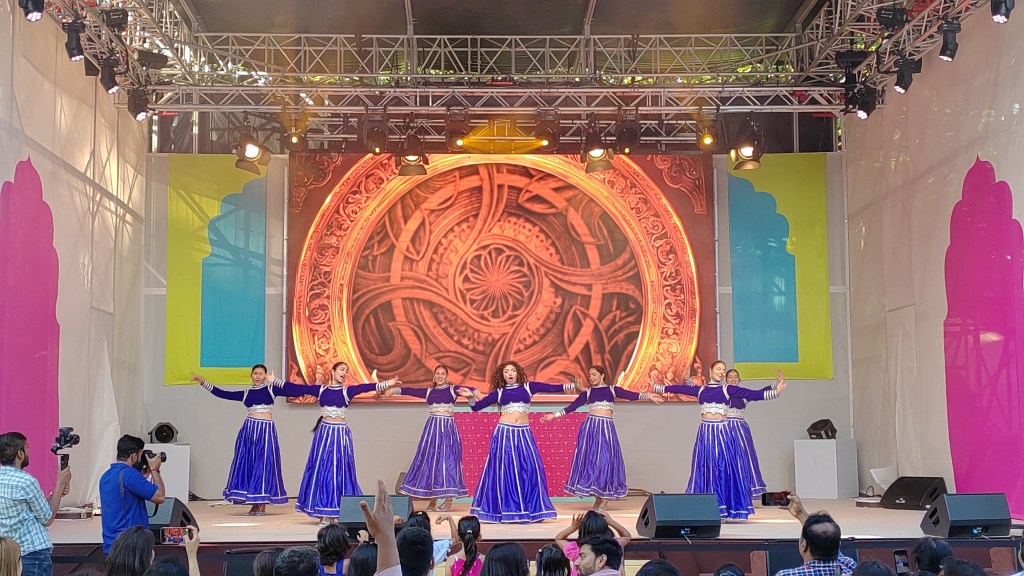
However, if viewed from a different angle, the boutique has triggered the dormant shopaholic in me. Despite my annual holidays being just days away and my desire to save money, I succumbed to my instincts. I bought baskets of crafts to feel closer to the home I left eons ago.
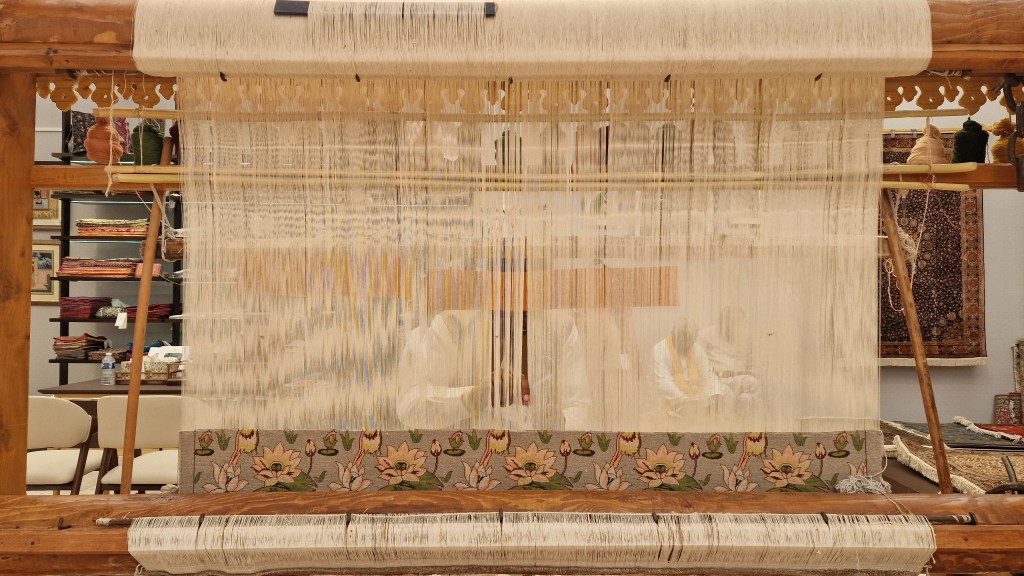
What stands out is the handloom experience brought from India. In one section, I can see weavers weaving sarees, and in another, karigars knotting carpets. The technical aspect of carpet weaving is fascinating: threads hang from a lateral bar and are connected one by one towards the lower slide.
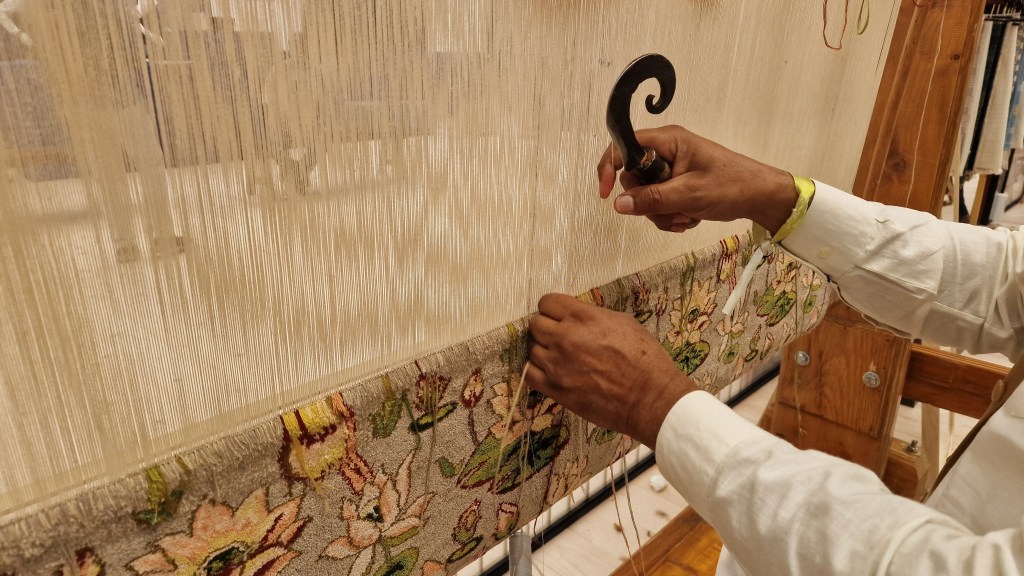
The weaver works without looking at the colors, guided by coded numbers placed gracefully inside the loom. His mind detects the codes, his brain interprets the colors, and his fingers move faster than light, creating wonders with a special needle. This intricate process can take months. This craftsmanship reminds me of the Canuts of Lyon, the erstwhile silk capital of France, now extinct due to lack of governmental support.
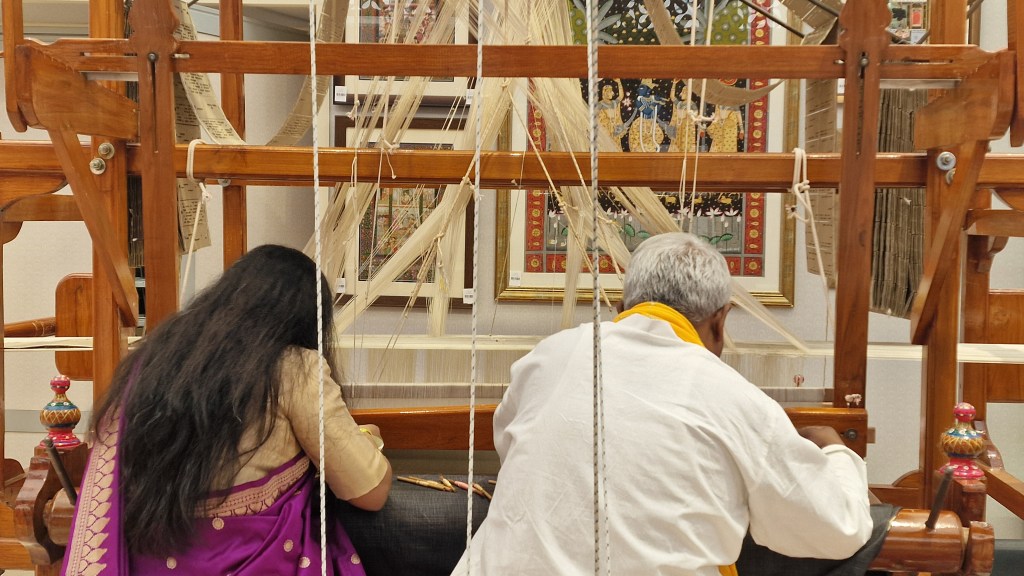
As I wandered through the pavilion, I became more drawn to its philosophy. Priya, the AVP and project manager of Swadesh who has been producing wonders for more than twelve years with the Reliance, helped quench my thirst for knowledge. A passionate singer herself and elegantly draped in a magnificent saree, Priya, through her unmatched skills, explained the process and objectives of Swadesh.

Her narratives drew me to the recently organized Dior Défilé in Mumbai, where it was finally acknowledged that Dior has been sourcing highly skilled crafts from India for more than thirty years.
Now, what is my takeaway at the end of the day as I head home after spending more than six hours inside the Indian Pavilion? More awareness and a resolve to make almost all the ten thousand Indian students currently pursuing their studies in France unique ambassadors of India’s time-tested heritage, which has stood strong against all attempts of disintegration. The initiatives from the Ambanis are commendable, but it is equally expected that those poised to run the country must have a solid volonté to document our rich tradition.
I believe that the State has a role in preserving both tangible and intangible cultural heritage, but these private initiatives are equally praiseworthy. Without solely focusing on for-profit ideals, they foster visibility on a grand scale.
My overall experience of the India Pavilion has been exceptional, leaving me with a deeper appreciation for India’s cultural heritage and the efforts to preserve it. But, I stay tuned for more insights and experiences as I continue to uncover the rich tapestry of India’s heritage without going to watch a single sporty event! That’s purely me.
Acknowledgement: The epmployees of Swadesh, a Reliance Foundation Initiative, the volunteers, Ms.Priya Dhananjay, Head of Interior Design Services, unknown officers and diplomats from the Ministry of External Affairs, Government of India and friends and well wishers from the Paris Olympics Committee. Views are personal.
En savoir plus sur Serendipity
Abonnez-vous pour recevoir les derniers articles par e-mail.


https://bdsnews.fr/film/
J’aimeJ’aime