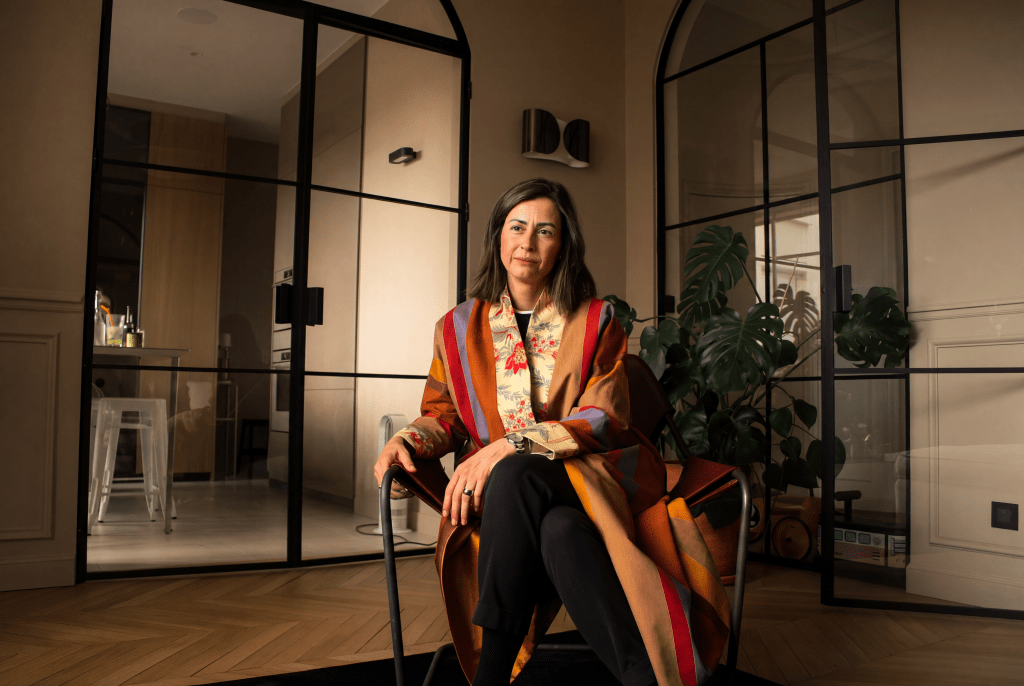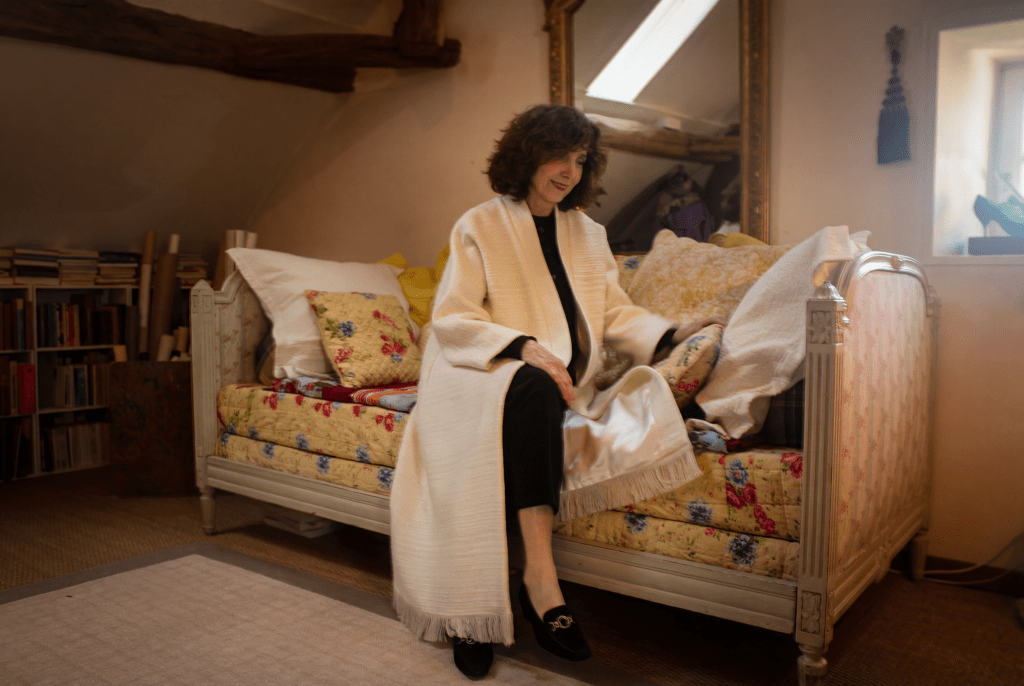
The Games Behind the Games

« An empowered citizen today helps create a more resilient society tomorrow. And resilience begins when complex subjects are made understandable without being reduced to slogans. »

Cybersecurity, Trust and the Hidden Architecture of Sport

BrandIndia Exclusive — From VivaTech 2026 to a conversation with Clément Migeon, Director of the Cybersecurity Division of the CNOSF, France’s National Olympic and Sports Committee
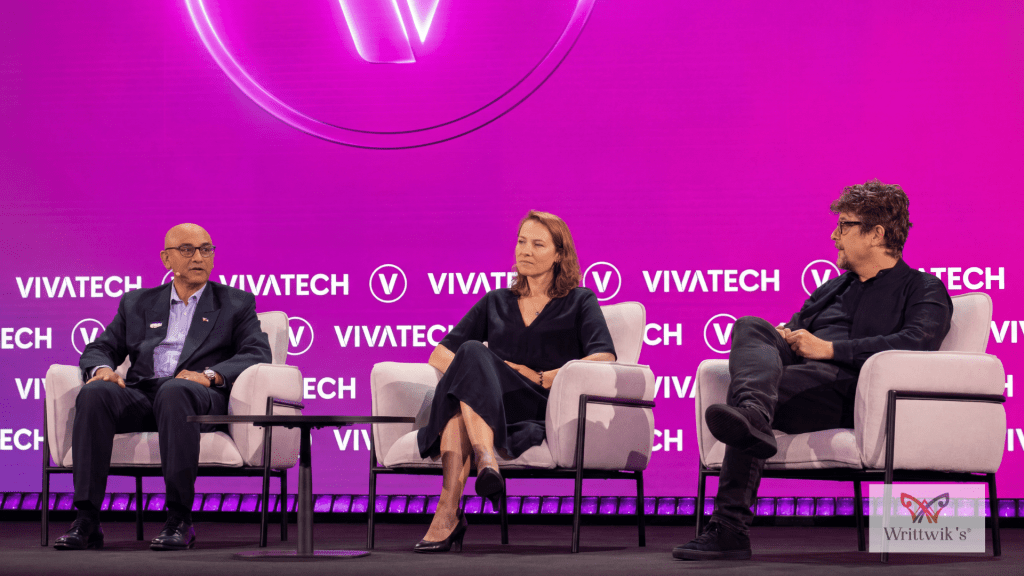
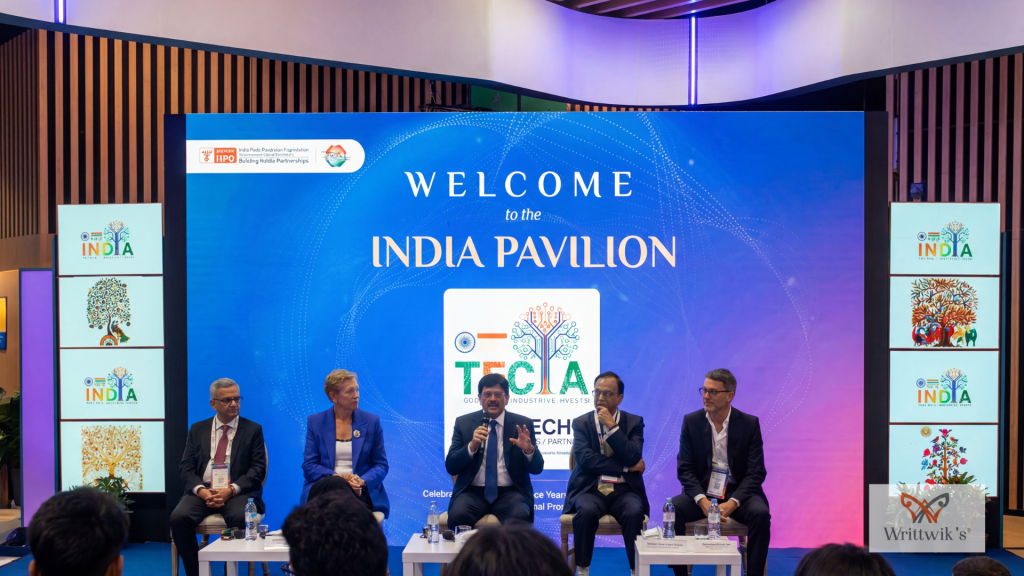
EU-India Digital Sovereignty Conference

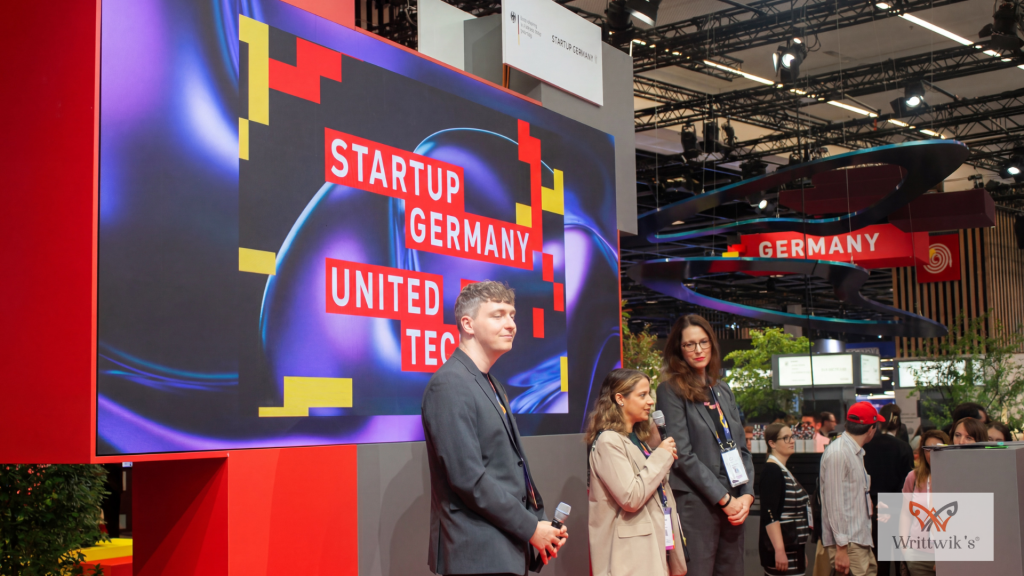
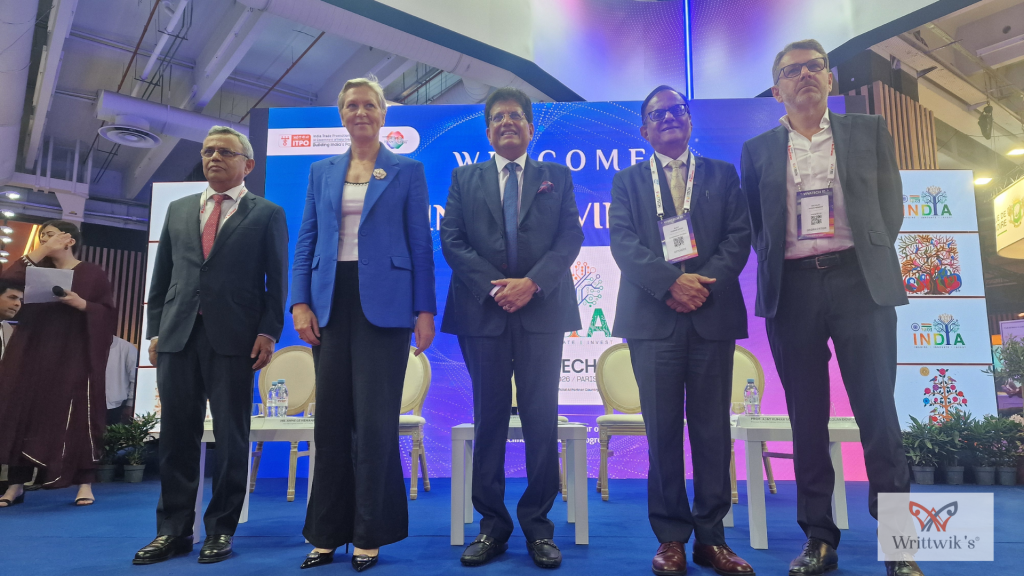
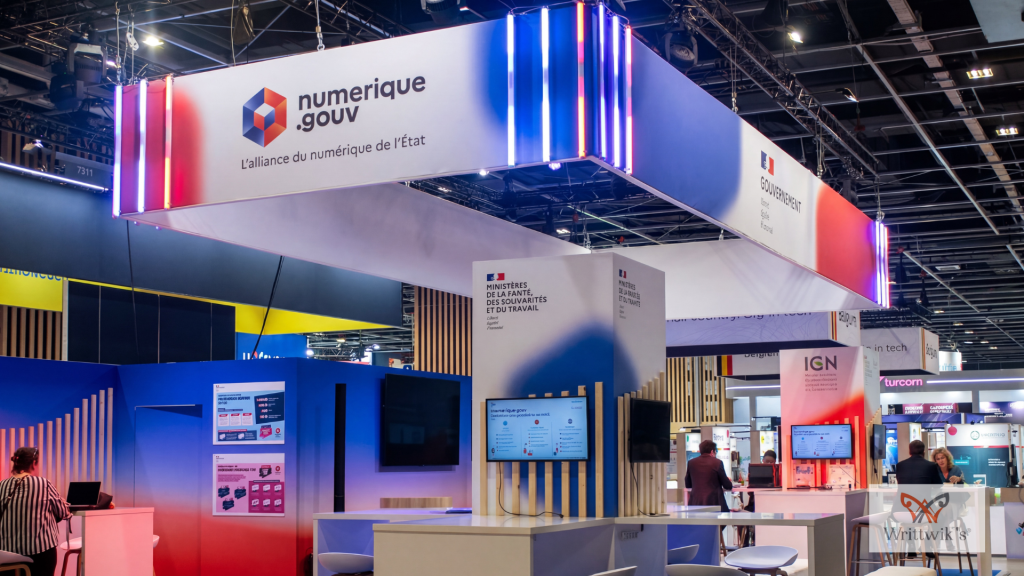
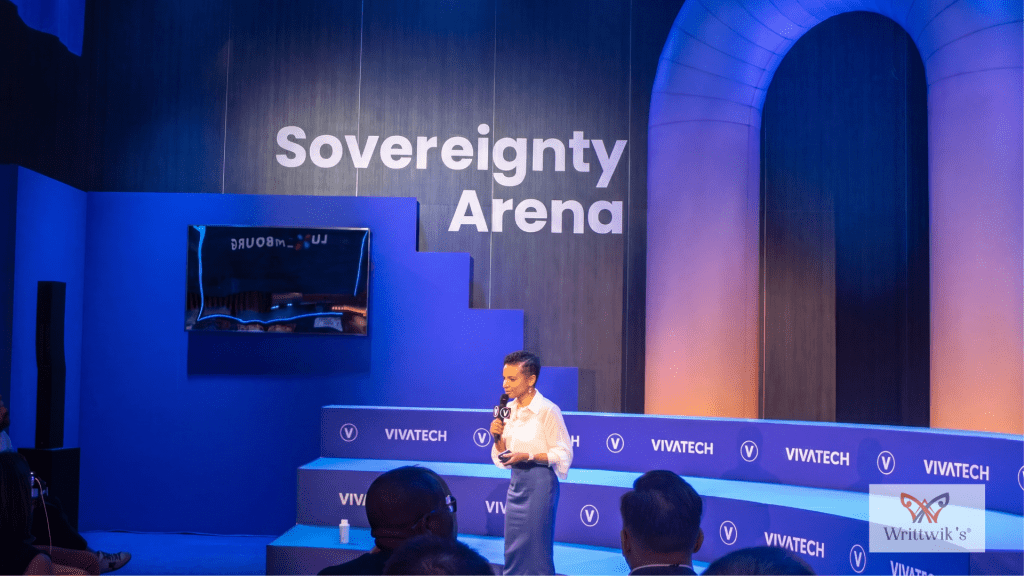
On Day 2 of VivaTech 2026, our focus was cybersecurity and digital sovereignty. Through Kaushik’s movement across the floor, BrandIndia.fr followed the subject from several angles: GovTech and the democratic organisation of public-sector meetings; Aikido Security and the prevention of software vulnerabilities; the EU–India discussion on sovereign digital infrastructure; Publicis/Razorfish’s warning that AI-generated content may weaken trust even as it accelerates production; and Bpifrance’s reminder that cybersecurity must now be built from the first line of code.

The day left us with one clear impression: technology is opening new possibilities, but it is also creating the very complications that institutions must now learn to govern.

This is where cybersecurity becomes more than a technical issue. It becomes a question of public trust, democratic resilience and human responsibility. If digital sovereignty is discussed on stage, it is tested inside real institutions especially in sport, where millions of people gather, watch, travel, pay, connect and believe in the same shared moment.

To understand what this means beyond rhetoric, I turned to Clément Migeon, Director of the Cybersecurity Division of the CNOSF, France’s National Olympic and Sports Committee, for a candid conversation on Paris 2024, ransomware, supply chains, AI-enabled threats, crisis management and the human factor.
I was not sure the interview would be possible. His schedule was tight, the subject is sensitive, and we are living through a period where cybersecurity, institutional reputation and information warfare constantly overlap. There are also limits to what can be said publicly, and rightly so. But precisely because of those limits, it felt necessary to ask direct questions and receive answers from someone who had lived the Olympic cycle from inside a sporting institution.
I did not want to approach cybersecurity only through the usual heavy strategic vocabulary, the kind often associated with national agencies, defence structures or high-level cyber doctrine. Those dimensions matter deeply. But sport offers another entry point. It speaks to everyone. It is public, emotional, democratic and massively followed. It allows us to understand cybersecurity not only as a matter of State protection, but as a matter of everyday trust.

An empowered citizen today helps create a more resilient society tomorrow. And resilience begins when complex subjects are made understandable without being reduced to slogans.
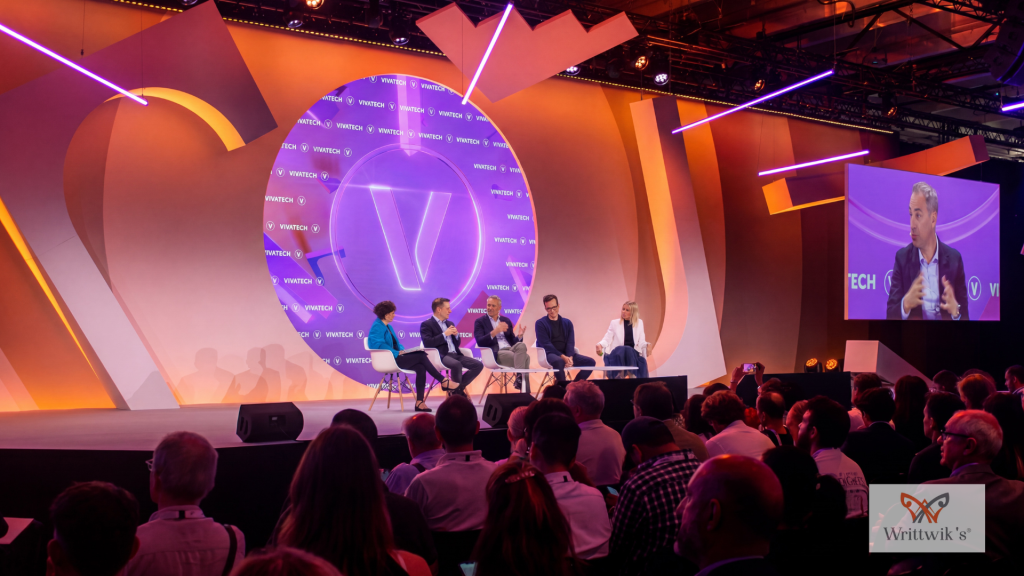
Adobe Theatre

This interview is therefore not only a technical exchange. It is part of a legacy design: to understand what Paris 2024 transmitted, what remains fragile, and how major public events can continue to stay open in a world where openness itself has become a security challenge.

Interview with Clément Migeon

Director of the Cybersecurity Division of the CNOSF, France’s National Olympic and Sports Committee

Writtwik: Thanks a lot Clément for agreeing to do this interview with me today. In your view, what was the main cybersecurity challenge during the Olympic cycle: protecting infrastructure, coordinating between stakeholders, or human vulnerability?
Selon vous, quel a été le principal défi cybersécuritaire durant le cycle olympique : la protection des infrastructures, la coordination entre acteurs ou la vulnérabilité humaine ?

Clément: For the National Olympic Committee of a country hosting the Games, the first challenge is certainly dealing with a cyber threat that can be disproportionate. For many external actors, we are often associated with the organising committee, whereas our actions are completely different, as are our resources.

Writtwik: Ransomware attacks now affect entire ecosystems. How does an institution such as the CNOSF prepare for a scenario in which sporting operations themselves could be disrupted?
Les attaques par ransomware touchent désormais des écosystèmes entiers. Comment une institution comme le CNOSF se prépare-t-elle à un scénario où les opérations sportives elles-mêmes pourraient être perturbées ?

Clément: Ransomware attacks are indeed very present. With the help of ANSSI and private partners, we managed to move into a resilience-oriented approach ahead of the Paris 2024 Games. We segmented our information systems and strengthened our backup policy so that we would be able to resume activity, even in degraded mode. Cyber crisis exercises were also organised to prepare all CNOSF business teams as effectively as possible.
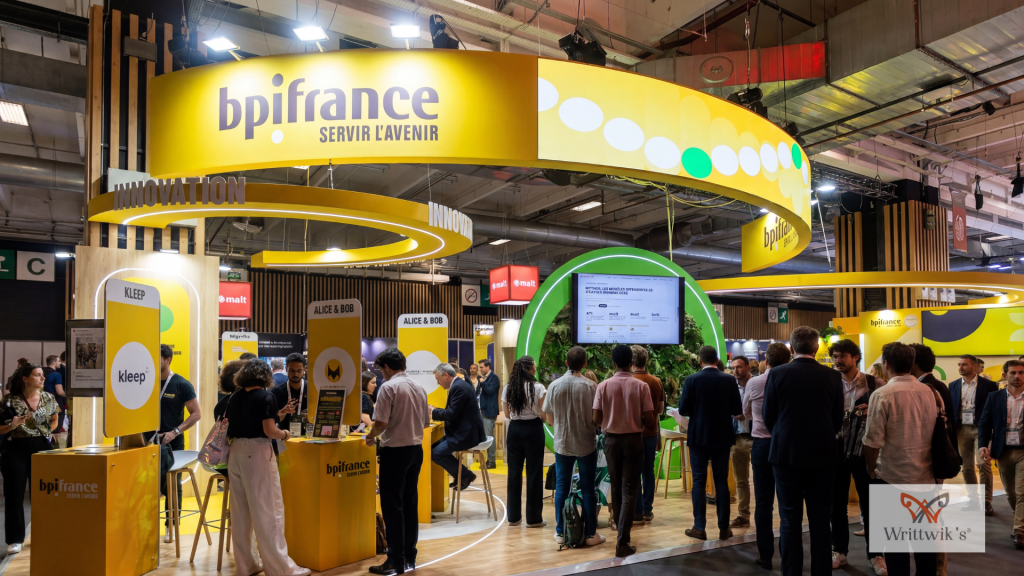
BPI France, AI and Cybersecurity

Writtwik: Major sporting events depend on a considerable number of subcontractors and digital service providers. Is the supply chain now the main point of cyber fragility?
Les grands événements sportifs reposent sur un nombre considérable de sous-traitants et de prestataires numériques. La chaîne d’approvisionnement constitue-t-elle aujourd’hui le principal point de fragilité cyber ?

Clément: Yes, clearly. Supply-chain attacks are now one of the main attack vectors. Within this chain, the CNOSF itself acted as a partner of the Paris 2024 Organising Committee, and in that capacity we remained vigilant and worked in collaboration with them.

Writtwik: Are generative artificial intelligence tools for instance deepfakes, automated phishing, synthetic identities already changing your perception of the cyber threat?
Les outils d’intelligence artificielle générative — deepfakes, phishing automatisé, identités synthétiques — modifient-ils déjà votre perception de la menace cyber ?

Clément: It is obvious that AI tools play a major role in current cyber threats. Increased awareness among our staff regarding the detection of phishing, or any other attack of this type, plays a predominant role in this area. Other cybersecurity tools integrating AI are beginning to emerge and are very promising.
Writtwik: What did cooperation with French cybersecurity institutions teach you about crisis management during a highly visible international event?
Que vous a appris la coopération avec les institutions françaises de cybersécurité sur la gestion de crise lors d’un événement international à très forte visibilité ?

Clément: The support provided by French State services in the field of cybersecurity was extremely valuable to us. Thanks to them, we were able to carry out a half-day cyber crisis exercise that brought together all CNOSF functions likely to be affected by an incident.

Writtwik: In your experience, what remains the most complex challenge today: technology, governance or the human factor?
Dans votre expérience, quel reste aujourd’hui le défi le plus complexe : la technologie, la gouvernance ou le facteur humain ?

Clément: Technology is, paradoxically, the most manageable part: it has a budget, a roadmap and solutions. The real knot lies between governance and the human factor, and the two are linked. Governance, because a common requirement has to be kept alive across different business departments, without direct hierarchical authority over most of them. The human factor, because no technical system can sustainably compensate for a click, a shared password, or vigilance that fades once the event is over. If I had to choose, I would say that the human factor is the most difficult risk to reduce over time, because it has to be constantly maintained. It requires a great deal of pedagogy and support.

Writtwik: Has Paris 2024 permanently transformed the cybersecurity approach of French sporting institutions, or is there a risk of loss of momentum after the event?
Paris 2024 a-t-il durablement transformé l’approche cybersécuritaire des institutions sportives françaises ou existe-t-il un risque d’essoufflement après l’événement ?

Clément: Paris 2024 primarily made it possible to pass on a cyber approach to a number of institutions and to spread good practices. Now, the results sometimes take time to become visible, as some systems carry significant technological debt, and sport remains mainly focused on the human dimension.

Writtwik: Thank you Clément.

Clément: Merci beaucoup Ritt!

Editorial Note

Clément Migeon’s answers are presented here within the limits of what can reasonably be discussed in a public forum on cybersecurity. The objective is not to disclose operational details, but to understand the broader lessons of Paris 2024 for public trust, institutional resilience and the future of major sporting events.

His responses underline one essential point: cybersecurity is not only a matter of technology. It is also a question of proportion, governance and human behaviour. An institution may not be the main organiser of an event, yet it can still be perceived as part of the target. It may not operate like a defence agency, yet it must increasingly adopt reflexes of strategic resilience: anticipation, segmentation, backup, crisis exercises, coordination with State actors and continuous awareness. In my opinion, this is where VivaTech 2026 and the CNOSF interview converge.

On the exhibition floor, the language was innovation: AI, digital sovereignty, cybersecurity by design and trusted infrastructure. In the CNOSF interview, I wanted in a way that the language becomes operational: ransomware, supply-chain exposure, technological debt and the human factor.

The challenge is not to turn sport into a fortress. It is to make sure that people can still gather, watch, travel, celebrate and trust what they see without turning openness into an invitation to collapse.

Acknowledgements and Methodological Note

  • This interview would not have been possible without the support and encouragement of Christophe Moreaux, CFO of the CNOSF, whose openness helped make this exchange possible.
  • I am also grateful to sources familiar with the French cybersecurity ecosystem, including institutional perspectives linked to ANSSI, France’s national cybersecurity agency. Their insights helped me better understand, within the limits of a journalistic and non-technical inquiry, the challenges of trust, resilience and digital vulnerability.
  • Special thanks to Kaushik Kalyan Kotte, who moved across the VivaTech 2026 floor on 18 June, from stand to stand and session to session, collecting field observations, event notes and daily inputs on cybersecurity, digital sovereignty and AI governance for BrandIndia.fr.
  • ChatGPT Pro by OpenAI was used as an analytical support tool for text alignment, semantic structuring, terminology refinement, synthesis of complex arguments and simplification of technical concepts for a broader readership. The editorial framing, interview questions, interpretation, final selection and publication responsibility remain entirely with BrandIndia.fr.
VivaTech at Ten: When Innovation Became Geopolitics

« This is where India enters the picture, and perhaps also where my own discomfort begins. »

A Brandindia reflection on sovereignty, talent, India and the stories technology chooses to tell

By Writtwik Banerjee
Founder / Editor, Brandindia.fr

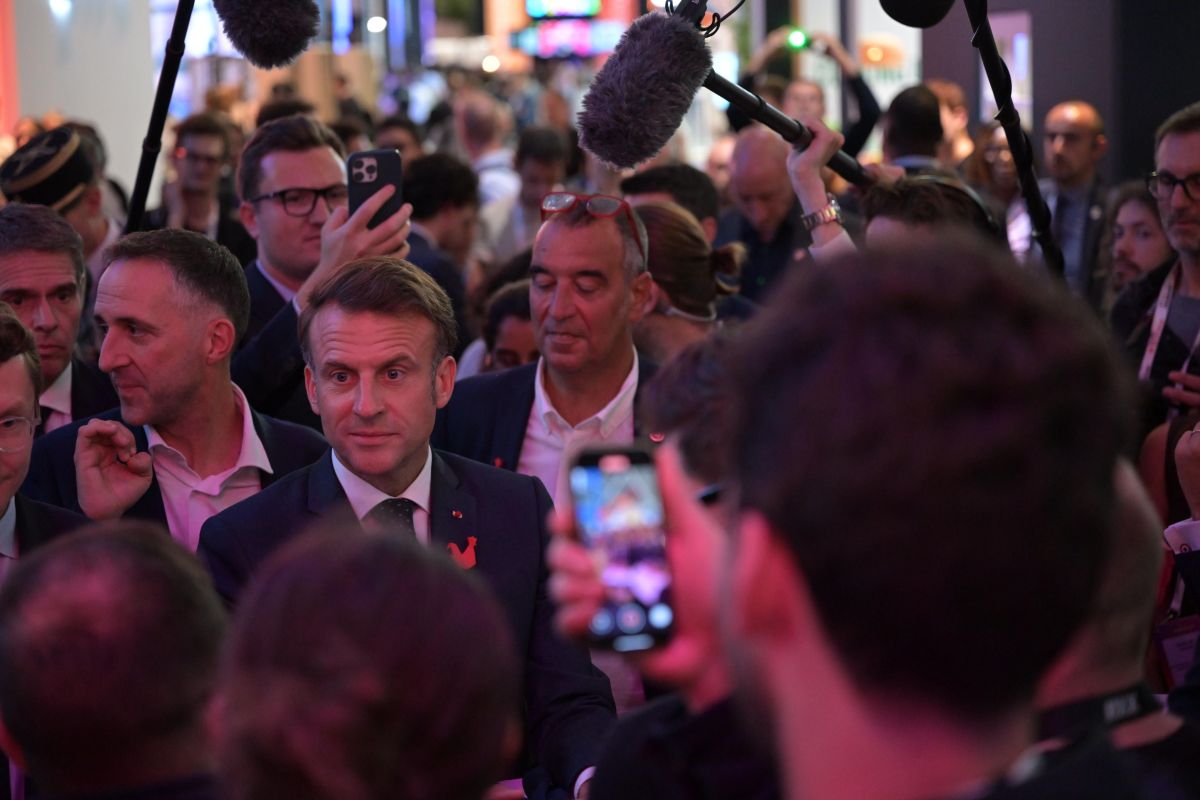
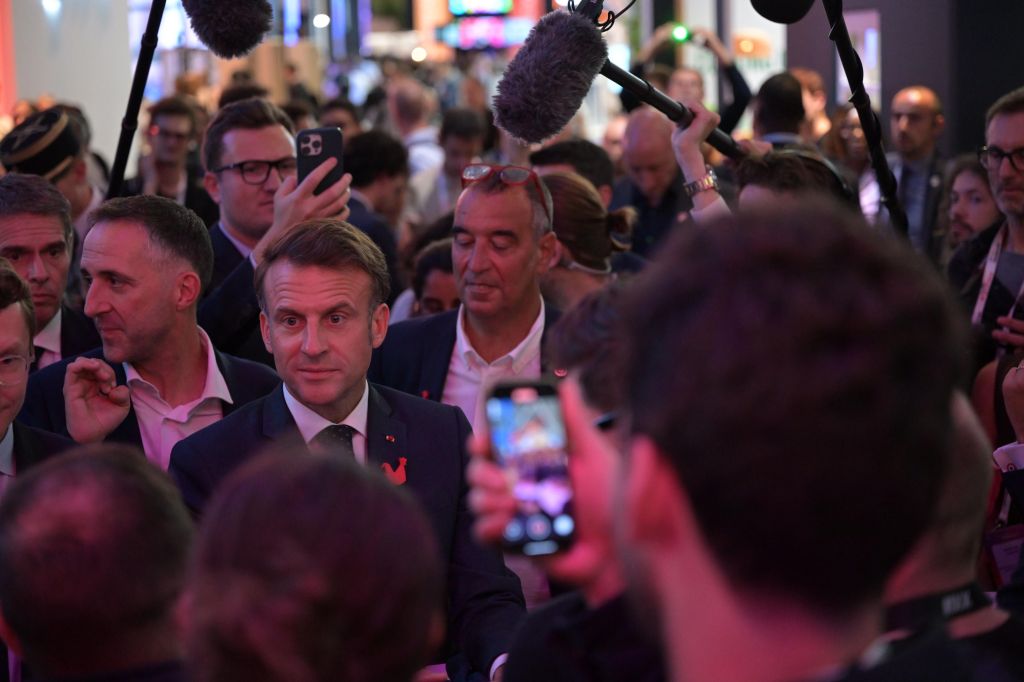
President of the French Republic, Shri Emmanuel Macron at Vivatech

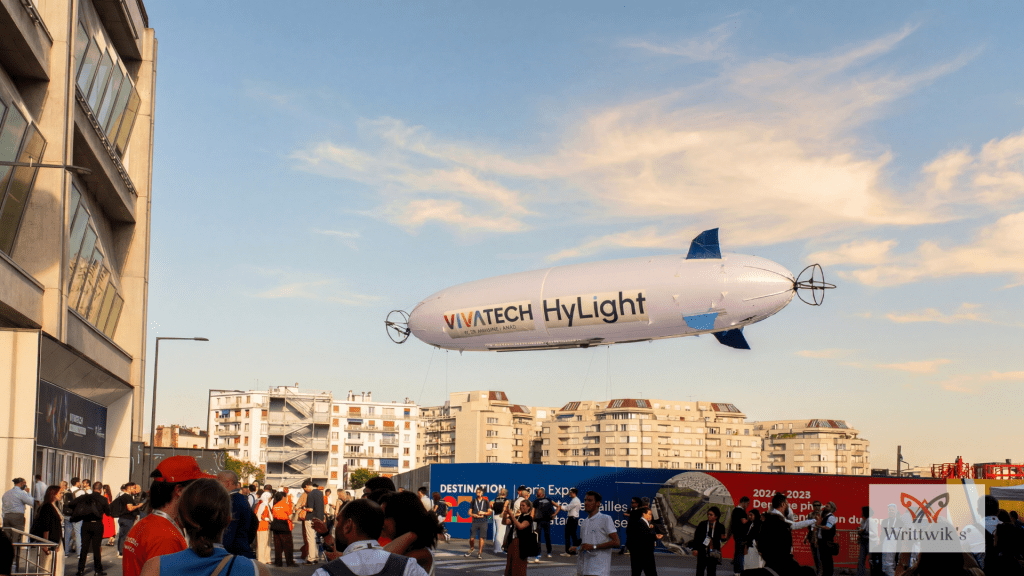
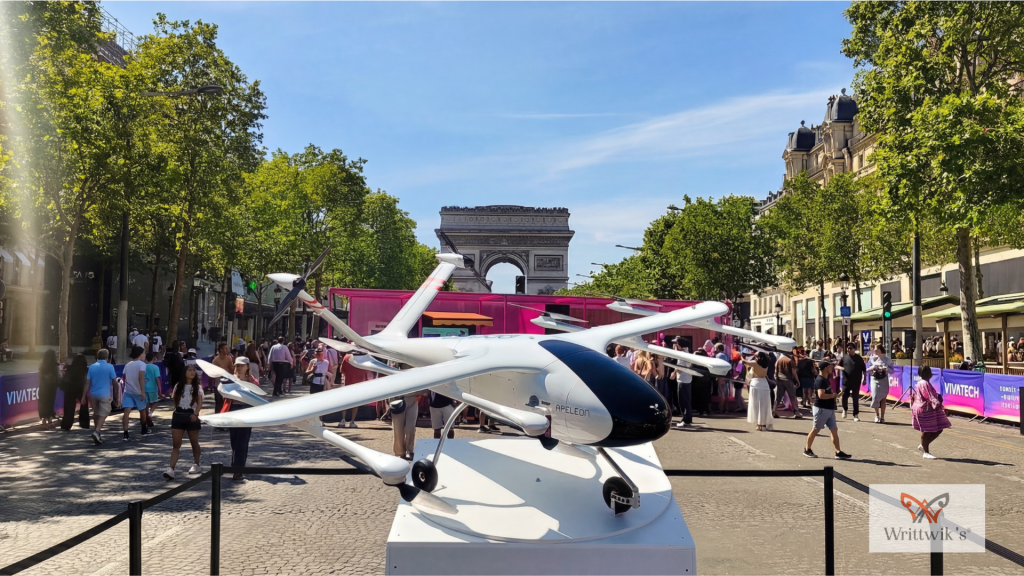
A couple of days ago, I asked Kaushik Kalyan Kotte, who is working with Brandindia.fr on the visual documentation of VivaTech, to write our inaugural curtain-raiser. His first reflection began outside the exhibition halls, on the Champs-Élysées, where technology briefly stepped into the city before becoming a professional universe of conferences, start-ups, investors, institutions and carefully controlled conversations.

His article captured that first moment of encounter: the city receiving technology almost like a public installation, open to pedestrians, tourists, families, influencers, curious Parisians and passing observers.

This second piece begins from another place. It begins from memory. My memory.

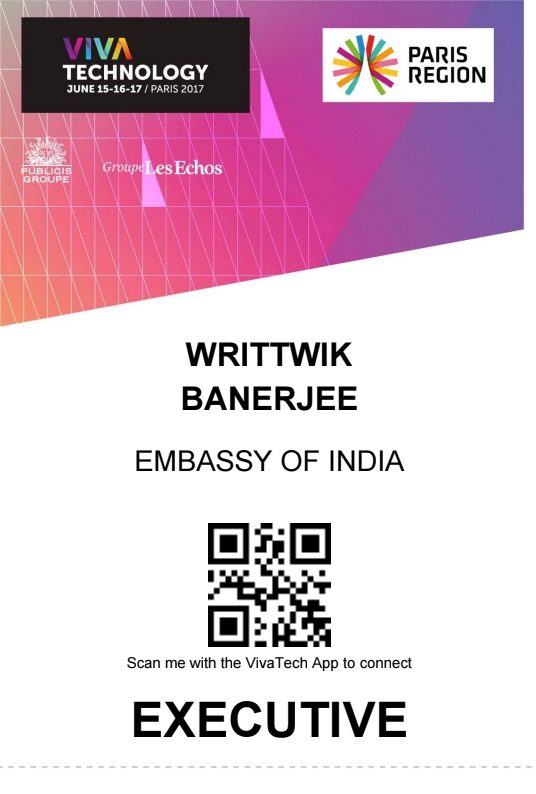
When I attended VivaTech in 2017, the event was still in its early years, and France was beginning to imagine the contours of the Macron era: Emmanuel Macron had just become the youngest president in French history barely a month earlier, and there was a wider frenzy around start-ups, innovation, entrepreneurship and the promise of a new technological ambition. I did not attend the event as a journalist, nor as a technology specialist. I had been selected by the Indian Embassy in Paris to be part of it as an executive.

First edition of Vivatech in 2017

At the time, start-ups were already fashionable, artificial intelligence was beginning to enter public conversations, and technology still carried a language of optimism that feels almost innocent when compared to what we hear today. Innovation was mostly discussed as opportunity. It had not yet fully become the language of sovereignty, defence, ethics, talent capture and geopolitical anxiety.

I remember being impressed but not convinced.

I looked around, listened, observed, and yet struggled to find anything substantial to write about. Not because VivaTech lacked ambition, but because I did not yet know what question I was supposed to ask. The event seemed distant from the subjects that had shaped my own intellectual and professional world: diplomacy, culture, India-France relations, language, migration, soft power, identity and the strange ways in which nations try to explain themselves to one another.

And yet, curiously, I kept returning.

Some years I went simply as an attendee, often on the last day, when the great institutional choreography had already softened and the event became more accessible to ordinary visitors. Last year, I was press accredited for Brandindia.fr. I walked through the halls, collected notes, followed conversations, and still published nothing. Again, the problem was not the absence of material. The problem was the absence of the right inner voice.
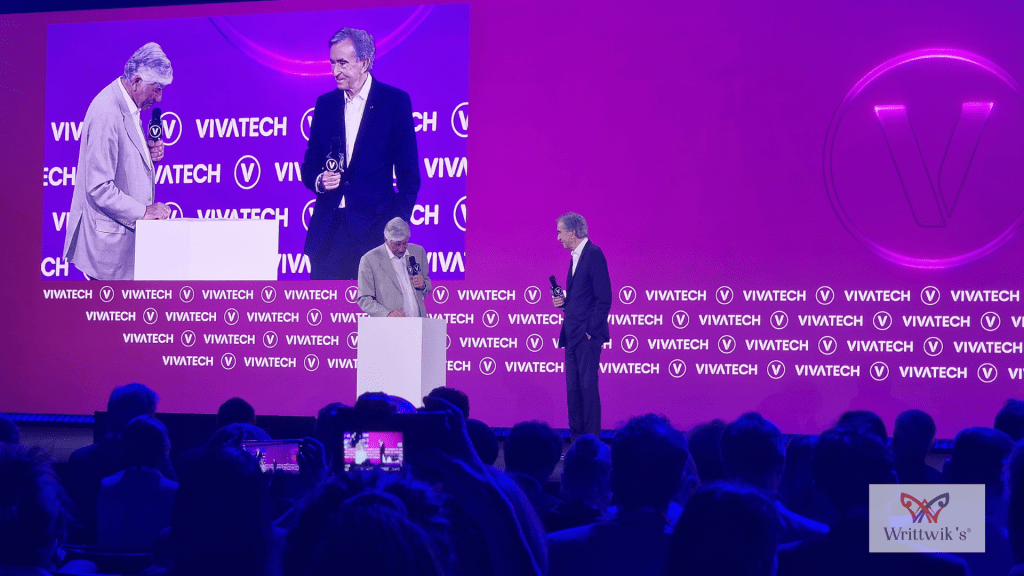
Maurice Lévy, CEO of Publicis and Bernard Arnault, CEO LVMH at the VivaTech 2026, Inauguration

I did not want to write a mechanical article on “the future of technology”. Others do that much better. I also did not want to pretend to be a start-up analyst, venture capitalist or gadget commentator. That is not why you come to Brandindia. You read Brandindia because, for better or worse, I write from where I stand.
This year, VivaTech’s tenth anniversary has given me the missing entry point. The special supplement published by Les Echos offers a clear timeline of the event’s evolution: its launch in 2016, the rise of French Tech, the focus on diversity, open innovation, the pandemic interruption, hybrid formats, global expansion, the explosion of artificial intelligence, and now the language of scaling up, sovereign AI and digital sovereignty.

At first glance, it looks like a chronology of technological progress. But the more I looked at it, the less I saw a simple technology timeline. I saw a timeline of our collective anxieties.

Ten years ago, we were fascinated by cloud computing, virtual reality and the promise of digital transformation. Then came questions of data, privacy, connectivity and platform power. Covid brutally reminded us that innovation without resilience is fragile. The metaverse briefly promised a new world before generative AI arrived and changed the tone of the conversation entirely. Now, almost every serious discussion leads back to regulation, sovereignty, cybersecurity, infrastructure, talent, energy, defence and CONTROL.

In other words, the technologies changed, but the underlying questions remained strikingly constant. Who owns the infrastructure? Who controls the data? Who attracts the talent? Who captures the intellectual property? Who writes the rules? And ultimately, who shapes the future before the rest of us are invited to adapt to it?

This is why VivaTech feels very different today from the event I first discovered in 2017. Back then, it was still possible to see it primarily as a celebration of innovation. Today, it increasingly resembles a geopolitical observatory disguised as a technology fair.

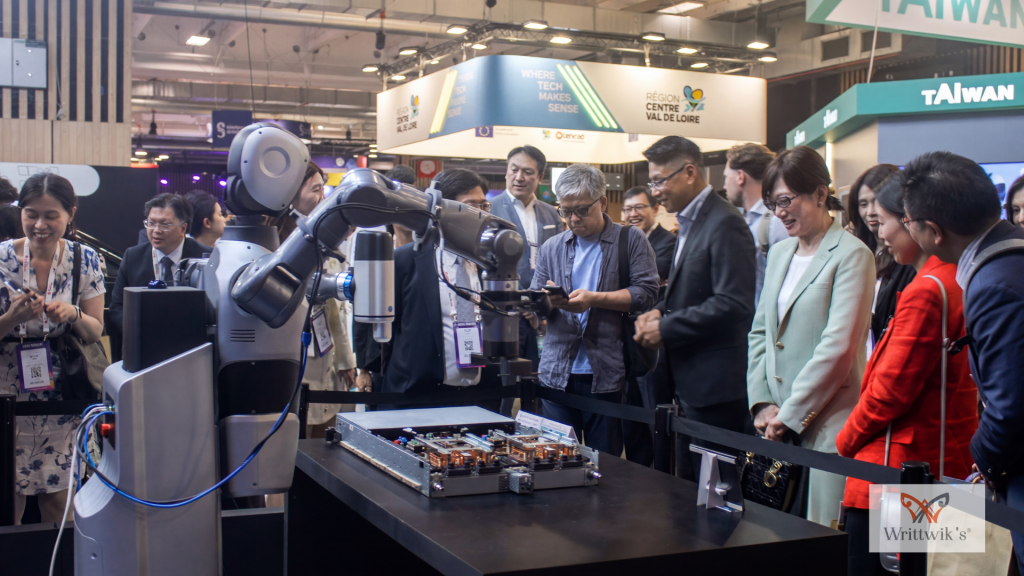
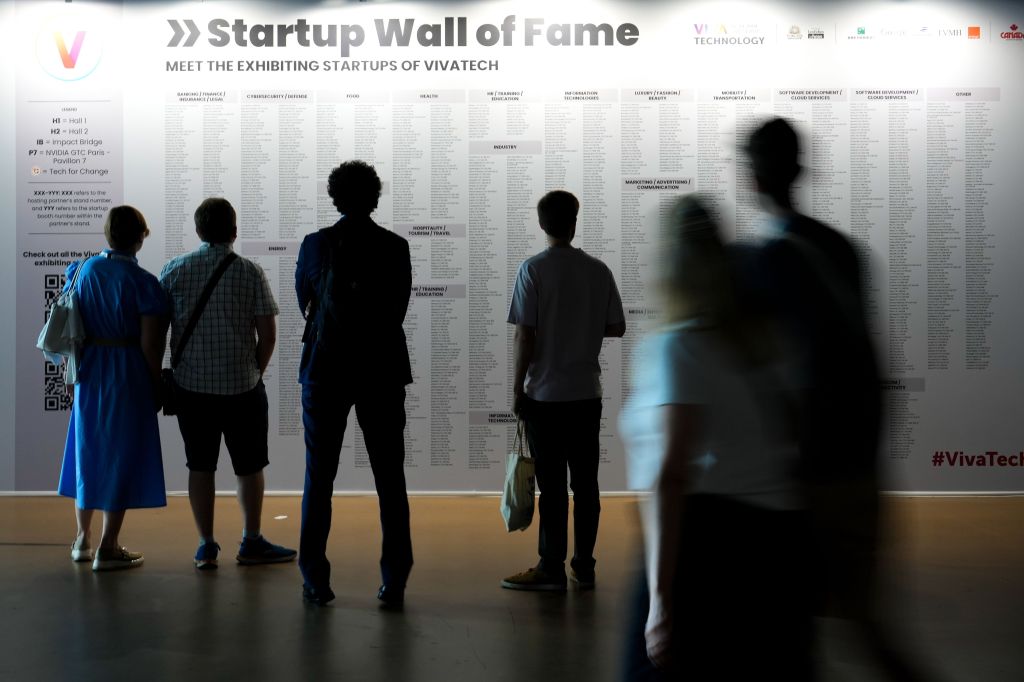
Walk through the halls and, of course, you will find start-ups, demonstrations, investors, screens, robots, founders, delegations and impressive slogans. But if one listens carefully, one also hears the vocabulary of international affairs: trust, resilience, strategic autonomy, influence, sovereignty, security, talent, regulation, ethics and, increasingly, espionage.

The diplomat, the engineer, the defence planner, the founder and the policymaker may not always sit at the same table, but they are now circling the same questions. This is where India enters the picture, and perhaps also where my own discomfort begins.

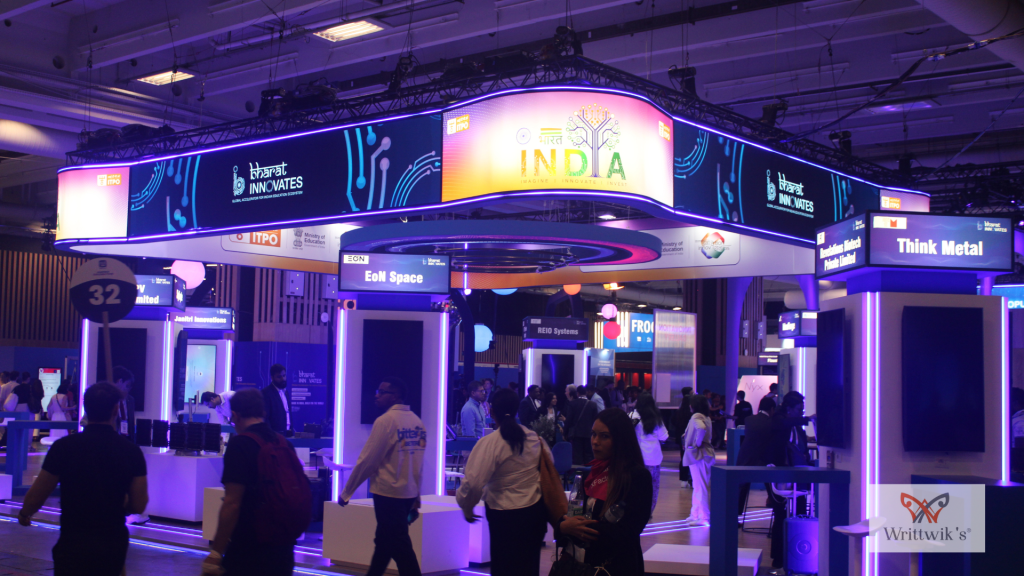
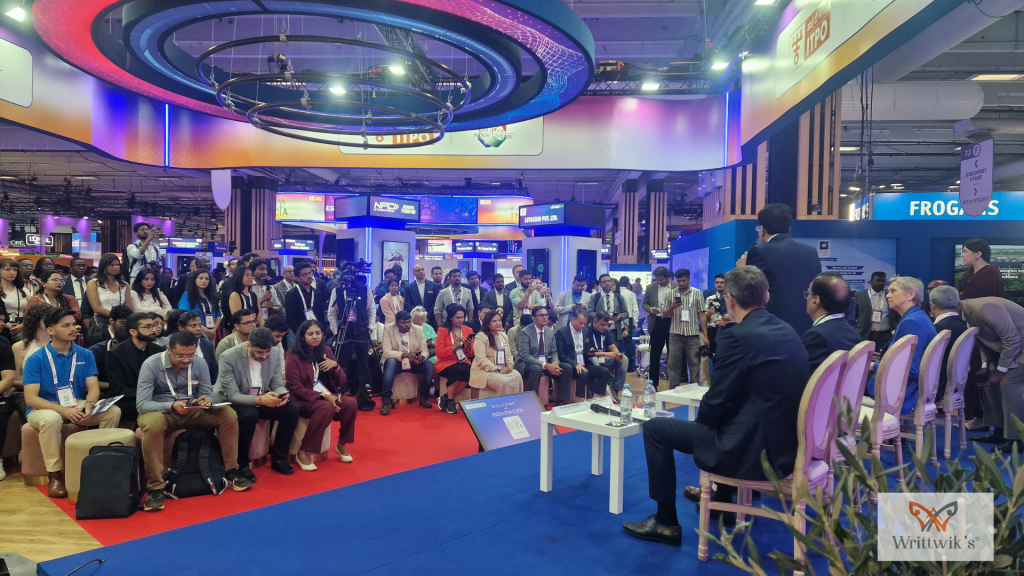
India Pavillion at Vivatech 2026

India is now regularly presented as one of the great technology stories of our time. The start-up ecosystem is enormous, the talent pool undeniable, the digital public infrastructure admired, and the ambition increasingly global. In speeches and panels, India appears as a key partner, a market, a talent reservoir, a strategic democracy, a digital society and a future-shaping power. And yet, from Paris, I often find India more visible as an idea than as a narrative. This is not my criticism thrown from a distance. It is an editorial concern.

An Indian start-up delegation supported by government channels has already reached Paris for a residency programme linked to VivaTech. Naturally, I tried to connect with them in order to build a proper Brandindia editorial around their presence. After two reminders to the Embassy’s economic wing, I received no reply.

This may be a simple administrative gap, and one should not convert silence into conspiracy. But editorially, it does raise a question: why does India so often intend to generate substance without generating visibility? Why do we speak so much about Indian innovation while so few structured stories circulate internationally about the people building it?

Is it a communication problem? Is it bureaucratic caution? Is it a kind of post-colonial paranoia, where visibility is desired but not fully trusted? Or is it simply that India has become excellent at producing talent and technology, while still struggling to narrate them with confidence in global spaces?

The paradox becomes sharper when one observes what is happening around Indian talent. While official structures sometimes hesitate to communicate, the parallel universe of strategic headhunters, recruiters, investors and what I would call “talent jammers” is already fully active. They identify key minds, offer incentives, create pathways, structure opportunities and, in many cases, ensure that intellectual property remains locked within legal and financial architectures controlled elsewhere.

The battle is not only for markets anymore. It is for engineers, founders, researchers, patents, algorithms, databases and future leverage. So, when India speaks of sovereignty, the question cannot be only about national pride. It must also be about narrative capacity, institutional coordination and the ability to protect value without suffocating talent. A country may produce brilliant minds, but if others explain them better, finance them faster and structure their intellectual property more intelligently, then the story of innovation slowly moves away from the place where it was born.

This is one of the central questions I want to carry into VivaTech this year.

The second question concerns Europe itself. Germany is the Country of the Year at VivaTech 2026, which is symbolically important because the Franco-German relationship remains central to the European project. Yet outside the polished language of partnership, one can also sense irritation, hesitation and competition. French media reports and strategic debates around major defence-industrial projects such as SCAF remind us that European cooperation is not always as linear as its official vocabulary suggests.

For those of us who do not fully understand this geostrategic mumbo jumbo — and I include myself with full honesty — it sometimes feels like watching several chess games unfold on the same board, while each player continues to speak publicly about unity.

This is precisely why VivaTech matters.

It offers a surface of optimism, but underneath that optimism one can read the tensions of our time. France speaks of sovereignty. Europe speaks of regulation. Germany brings industrial power. India brings talent and scale, but it also carries a more complex economic and political logic: the global positioning of Indian talent abroad has long functioned as soft power, national pride and a source of remittance, even when the deeper question of how to retain, protect and narrate that talent remains unresolved. The United States brings platforms, capital and acceleration, but also the power to close the gates when frontier technologies become too strategic to remain universally accessible. China brings execution and state-backed technological ambition. Everyone speaks of cooperation, but everyone is also preparing for concurrence.

And somewhere inside this tension lies the real story of technology today.

For Brandindia, I do not want to cover VivaTech through the usual language of “top innovations” or “coolest start-ups”. That is not my strength, and it would not be honest. Instead, I want to read VivaTech through three lenses that correspond more closely to the way I understand the world: sovereignty and ethics, cybersecurity and defence, and creative media.

Sovereignty and ethics because artificial intelligence and digital infrastructure are no longer neutral tools. They carry values, biases, dependencies and power structures.

Cybersecurity and defence because trust has become an infrastructure, and the invisible systems protecting our institutions, citizens, athletes, companies and states are now part of national resilience.

Creative media because technology does not only transform industries; it transforms imagination, authorship, language, images, storytelling and cultural memory.

Photo by VivaTech 2025

This last point matters deeply to me. I spent more than twelve years engaging with the Indian film industry as a co-production analyst, had my articles published in platforms linked to India’s official cultural and diplomatic outreach, and spent hundreds of hours with film professionals in India and Europe. Yet I often struggled to understand what long-term vision the Indian media and film ecosystem wanted to build in order to position itself firmly in a rapidly changing world.

That question has become even more urgent today.

If technology changes how societies create and circulate stories, then it also changes soft power. If the media industry is squeezed between state-supported cultural frameworks, private channels weaponising emotion, algorithmic amplification and increasingly sophisticated forms of psychological influence, then culture itself becomes vulnerable. It changes how India is seen, how France explains itself, how Europe defends its cultural model, and how smaller voices survive inside systems shaped by platforms, governments, agencies and markets. Perhaps this is why, ten years after my first encounter with VivaTech, I am finally ready to write about it.

Not because I suddenly understand technology better than before. I do not.

But because technology has moved closer to the questions I have always followed: who speaks, who is heard, who is represented, who is recruited, who is translated, who is erased, who controls the frame, and who gets to tell the story.

Ten years ago, VivaTech asked what technology could do. Today, the more interesting question is what societies choose to do with technology and what technology, quietly but powerfully, is doing to societies in return.

This is the question I will carry with me as VivaTech 2026 opens…

References:

INDIAai | Pillars

Bharat Innovates 2026 | 14-16 juin | Accélérateur mondial pour l’écosystème éducatif indien

Germany, France scrap joint fighter jet program

L’Allemagne et la France affichent désormais leurs désaccords sur les propositions défendues par Macron

India’s start-ups are not lacking innovation but imagination | The Indian Express

VivaTech 2026 : humanoïdes, souveraineté numérique et IA à l’honneur pour cette dixième édition – Les Echos

All photos featuring the logo were produced by the Brandindia.fr team.

VivaTech 2026: First Contact on the Champs-Élysées

« I could not stop asking myself: can a machine understand memory? Can a prompt carry enough of a feeling to become a perfume? Maybe the answer is not simple. But what I saw was clear. People were curious. They were ready to try. They were ready to give a part of their imagination to a machine and receive something personal in return. »

When Technology Steps Into the City

By Kaushik Kalyan Kotte
Photography and Visual Documentation, Brandindia.fr

Vivatech Diiscovery at Champs-Elysées

Before the industry leaders arrive, before the main stages open, and before VivaTech becomes a full professional universe of keynotes, investors, founders and global conversations, there was this first contact on the Champs-Élysées.

I was in fact asked to do what felt like a simple assignment: take photographs, observe the space, and document every aspect of the VivaTech teaser on the Champs-Élysées. I thought my role would remain behind the camera. I would look, frame, capture and move on.

But little did I know that Writtwik would ask me to go beyond the photographs and write the curtain-raiser of the summit through my own eyes!

That was not expected. I have always seen myself more as a visual person than as someone who writes. Recently, I had gone to watch Spielberg’s latest film, Disclosure Day, and in a strange way, this assignment felt like my own small disclosure. To be asked to turn my visuals into a story, and that too a written one, came almost like a shock. I wouldn’t say that this was a negative shock, but the kind that shakes your comfort zone and makes you realise that maybe you have something to say beyond the image.

Photo from VivaTech press kit

So this piece is not written as an expert report on technology. It is my first attempt to look at VivaTech through the eyes of someone who came with a camera, but slowly realised that the camera was also asking him questions.

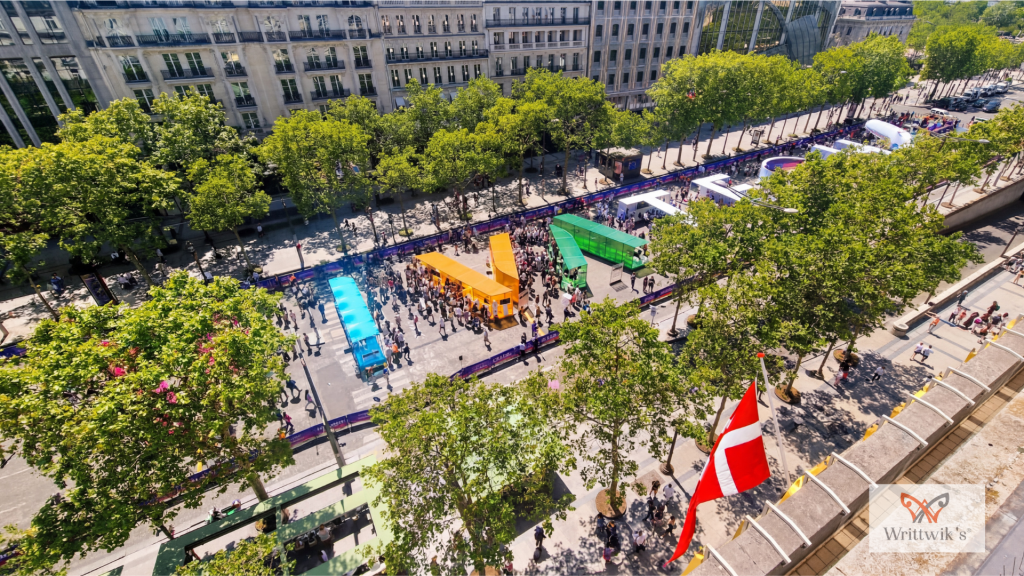
On 14 June, 2026 one of the most symbolic avenues of Paris became something slightly different. People who may have come simply to walk near the Arc de Triomphe suddenly found themselves inside a public preview of the future.

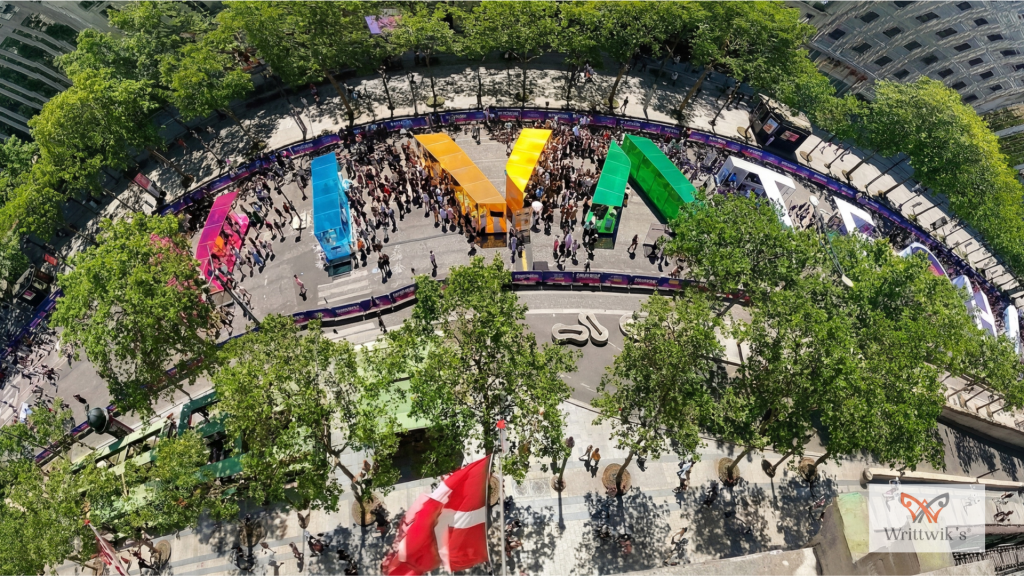
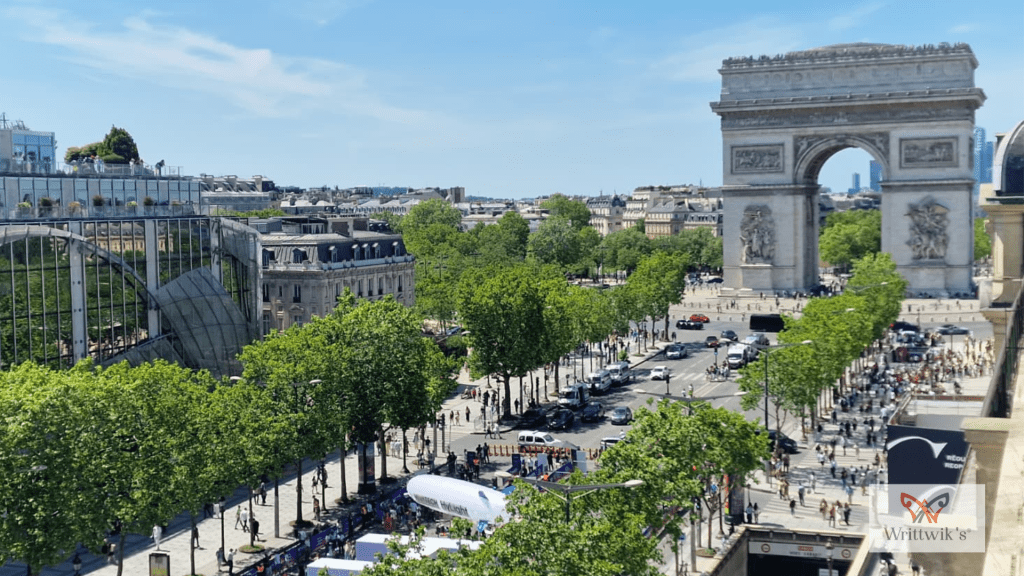
From a higher view, especially from the rooftop of the Maison du Danemark, the imposing Danish House, the stalls were arranged into the letters “VIVATECH”, with the Arc de Triomphe in the background. It was a very strong visual moment for me.. There were families, children, visitors, tourists, professionals, photographers, and people who were not necessarily expecting to meet technology in this way.

As a photographer and videographer for Brandindia.fr, I felt a real pleasure to enter this space with my camera. For me, the camera was not only a tool to capture an event. It became a way of observing how people react when innovation leaves the exhibition hall and comes into public life.

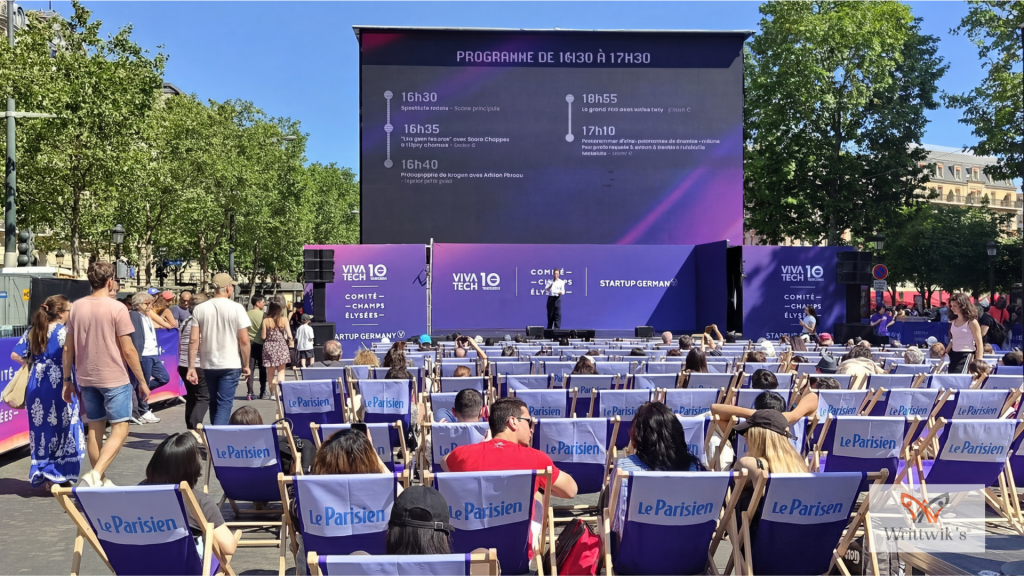
The first thing that struck me was the atmosphere. It was not a closed technology conference. It was open, visual, almost theatrical. The Champs-Élysées became a stage, and technology became part of the street. Children and elders were equally attracted by the installations. Some people were trying to understand what they were seeing. Others were simply filming it on their phones. Around me, there was excitement, confusion, surprise, and that very human desire to go closer to anything that shines, moves, speaks or promises something new.

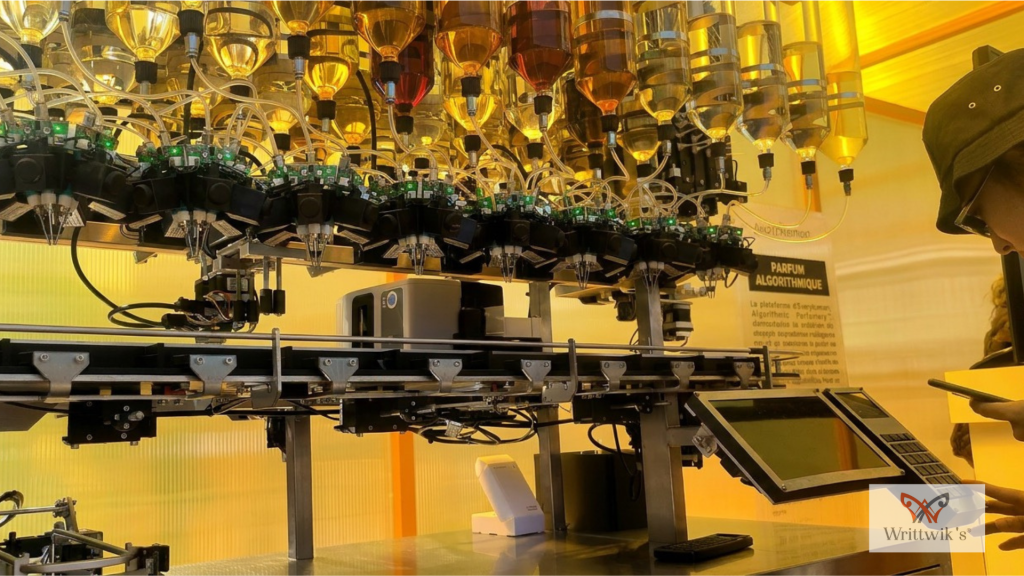
One of the most fascinating installations was the algorithmic perfume experience. People were not choosing a perfume from a normal catalogue. They were writing a prompt. A memory, a feeling, a person, a place, or an emotion. The machine then interpreted the words and created a fragrance in real time. As someone coming from a visual and creative background, I found this very interesting. It made me think about how far artificial intelligence is entering the world of sensory experience. We often speak about AI producing texts, images or videos, but here it was trying to translate emotion into smell.

I could not stop asking myself: can a machine understand memory? Can a prompt carry enough of a feeling to become a perfume? Maybe the answer is not simple. But what I saw was clear. People were curious. They were ready to try. They were ready to give a part of their imagination to a machine and receive something personal in return.

Then came the robots.

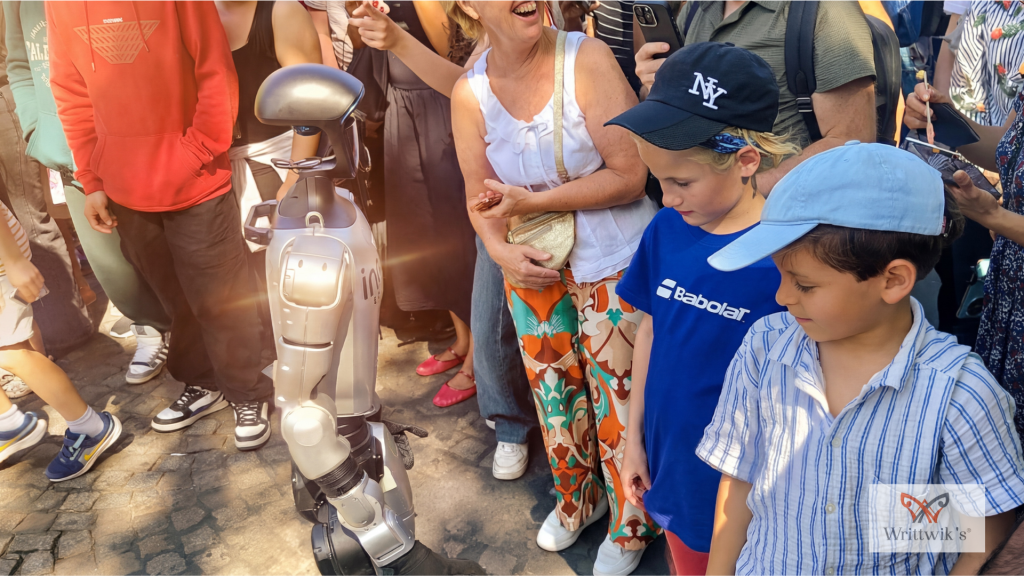
There was a small humanoid robot moving through the crowd, almost at the height of a child. What stayed with me was not only the robot itself, but the faces of the children looking at it. They were not laughing in a simple way. They were not afraid either. They were studying it very seriously, as if they were trying to understand whether this thing belonged to their world or to another one. For me, this was one of the strongest visual moments of the afternoon.

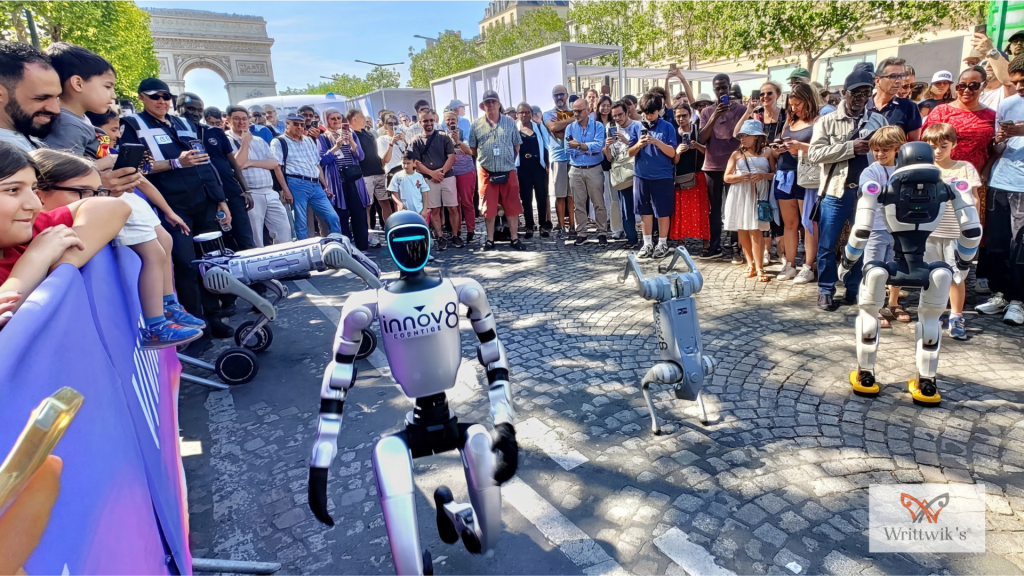
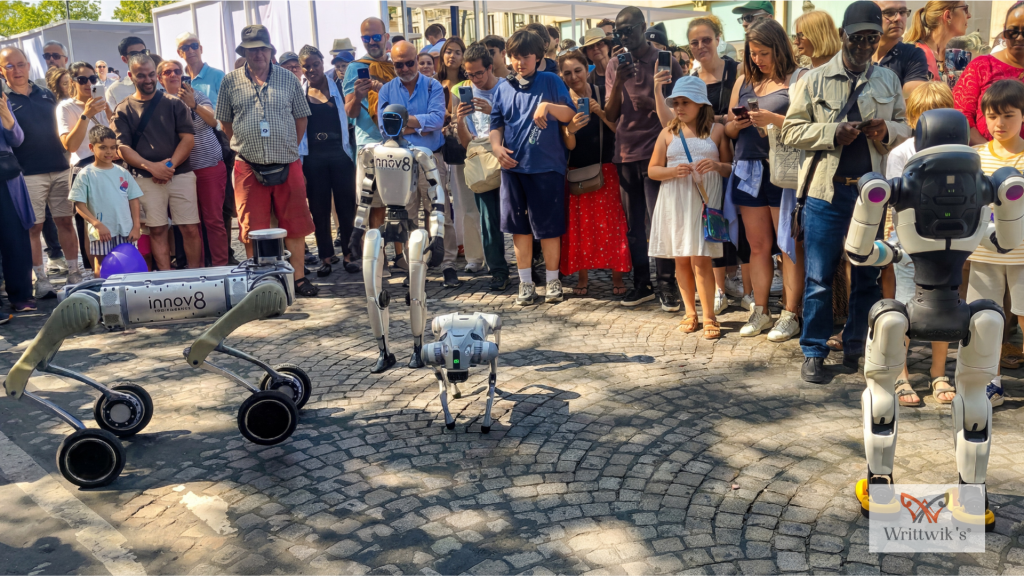
Later, the robot demonstration became a real street performance. Two humanoid robots and two robotic dogs moved in front of the public, with the Arc de Triomphe in the background. The operators almost felt like modern snake charmers, guiding machines instead of animals, creating a circle of attention in the middle of the city. The robots danced, gestured and interacted. The crowd followed every movement.

As a photographer, I was trying to capture not only the robots, but the relationship between the robots and the people around them. That relationship is where the story is. Technology alone is impressive, but technology inside human space becomes more meaningful. The faces, the gestures, the distance people keep, the way they lean forward, the way they record, the way children look directly and adults look through their screens — all of this tells us something about the time we are entering.

I also noticed technologies created to assist people with mobility or physical challenges. This was important for me because innovation should not only be about spectacle. It should also be about support, accessibility and dignity. When technology helps a person move, participate or experience a public space with more freedom, it becomes more than a product. It becomes part of human evolution.

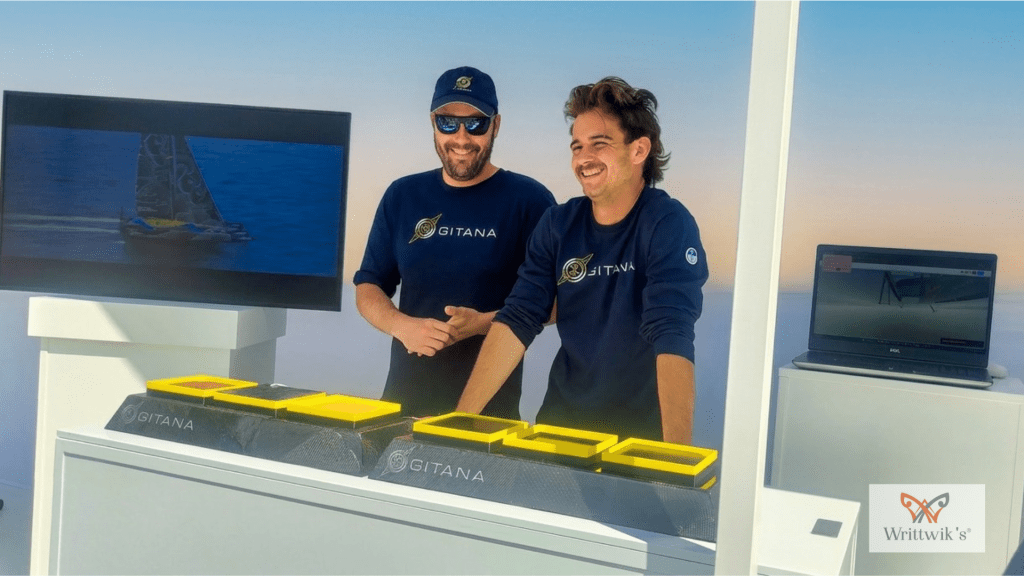
Gitana: an offshore racing stable founded by Baron Benjamin de Rothschild

That is why, for me, this first VivaTech encounter was not only about photographing an event. It was about capturing a projection of human evolution.

At the same time, I also felt that the experience could become overwhelming. There was always another object, another screen, another demonstration, another crowd gathering around the newest thing. Innovation as spectacle can be powerful, but after a while it also raises a question: what remains after the surprise?

This is where I feel Brandindia.fr gives me a special space. It allows me not only to capture images, but to participate in a deeper visual and editorial narrative. I chose to work with Brandindia.fr because it does not look at technology only as a trend. It looks at technology as part of culture, diplomacy, business, creativity, ethics and human behaviour. For someone like me, coming from visual merchandising, spatial design and creative direction, this is important. I am interested in how things are placed, how people move around them, how brands create emotion, and how spaces tell stories.

Photo from the press kit of VivaTech 2025

VivaTech on the Champs-Élysées gave me exactly that kind of story. It was a designed space, but also a public emotion. It was branding, but also curiosity. It was technology, but also theatre. It was Paris, but also the world arriving in Paris.

The main VivaTech event from 17 to 20 June at Porte de Versailles will now take this first contact much further. The leaders, entrepreneurs, innovators, investors and visionaries will come with their ideas, their products and their ambitions. I am looking forward to capturing not only what they show, but also what they represent. What kind of future are they proposing? Who is included in that future? Who is watching from outside? What is useful, what is beautiful, what is ethical, and what is simply impressive for a few seconds?

Photo from the press kit of VivaTech 2025

The Champs-Élysées preview was only a beginning. It gave me the first images, the first questions and the first emotion.

Now I am ready to go deeper into VivaTech 2026, with my camera, with curiosity, and with gratitude to Brandindia.fr and to my mentor Writtwik Banerjee for believing in my eye and giving me this opportunity.

For me, the future is not only something to be announced on a stage. It is something to be observed in people’s faces.

Acknowledgements

This article is based on my own observations, photographs and field experience during the VivaTech 2026 preview on the Champs-Élysées. Editorial and AI-assisted tools were used transparently to help match the visual material with the written narrative, and refine the overall flow. The purpose was to support the transformation of a visual assignment into a written piece, without replacing my own experience or point of view. I also thank Writtwik for encouraging me to look beyond the camera and develop this visual experience into a written story. Images used from the VivaTech press kit are mentioned where applicable. No AI-generated image has been used as documentary photography.

Vivatech 2026

Brandindia returns to VivaTech 2026 with a clear editorial ambition: to look beyond the spectacle of innovation and examine the deeper shifts that technology is creating in business, diplomacy, culture and society.


For Brandindia, VivaTech 2026 offers a timely opportunity to explore these questions through an India–France and wider global lens. India has become one of the world’s most dynamic digital societies, with a fast-growing innovation ecosystem, a major talent base, and an increasingly strategic role in global technology debates. France and Europe, meanwhile, are placing sovereignty, regulation, ethics and resilience at the heart of their technological vision.


Our VivaTech coverage will focus on the ideas, people and institutions shaping this conversation. We will look at cybersecurity as a question of resilience and trust; artificial intelligence as both a creative and ethical challenge; creative industries as a frontier of soft power; and technological sovereignty as a defining issue for democracies, businesses and societies.

Brandindia’s approach is not to celebrate technology blindly, nor to fear it simplistically. Our objective is to build a serious, accessible and independent reflection on how technology is changing the way we live, work, govern, create and imagine the future.

Through interviews, analysis and field observations from VivaTech 2026, Brandindia will seek to connect innovation with responsibility, entrepreneurship with public interest, and global ambition with cultural intelligence.

Thank you.

Intangible Heritage in an Age of Outsourcing

« Craftsmanship today exists in a strange state of tension. France continues to celebrate its métiers d’art, yet many traditional practices are fading, disappearing silently or being outsourced elsewhere. »

Foire de Paris, Patricia Heym and the Quiet Resistance of Craftsmanship

The piece you are about to read emerged from something I still struggle to explain. Perhaps because it took me a while to return to writing. Or perhaps because, somewhere along the way, I lost the reassuring illusion that narratives arrive naturally, perfectly structured, elegantly tied together like the final scene of an arthouse film screened in a half-empty Parisian cinema where everyone pretends to understand silence better than life itself. A few days ago, Kaushik, my cameraman, occasional philosopher and patient witness to my editorial spirals, gently told me: “You need balance. Don’t become too pushy with the narrative.” I stared at him in confusion while simultaneously trying to untangle microphone wires, reply to three WhatsApp messages, and unsuccessfully locate the press badge that was hanging around my own neck!

Balance. The word sounded suspiciously luxurious. The past year has not been particularly gentle neither personally nor collectively. And perhaps that is why this story exists.

Because despite everything, I continue to believe that the stories we encounter in everyday life deserve to be documented. They deserve more than accelerated consumption through disappearing reels and algorithmic fragments. They deserve texture, pauses, contradictions and breath. Above all, they deserve to make people feel involved.

That has always been the intention behind BrandIndia.

Which is precisely why I approached the Foire de Paris a fair, that has existed consistently for more than a century — and asked whether I could become part of it.

Not because I was searching for spectacle. But because I needed movement.

Foire de Paris is not merely a consumer fair. It is a concentration of human energy: inventions, regional identities, gestures, conversations, sales pitches, failed prototypes, artisanal obsessions, improbable culinary combinations and exhausted exhibitors surviving on caffeine and optimism. Somewhere between a honey producer from rural France, a Korean skincare stand, a salesman demonstrating miracle kitchen knives with terrifying enthusiasm, and elderly Parisian couples comparing mattresses with the seriousness of geopolitical negotiations, one begins to realise that fairs are perhaps among the last truly democratic theatres of human interaction.

And strangely, I needed precisely that. Because outside the fairgrounds, the world had started to feel unbearable.

I no longer read newspapers the way I once did. I barely watch news channels anymore. The violence of permanent information, outrage and performance has exhausted me. Increasingly, I find myself gravitating instead towards materials, crafts, textures, conversations, objects shaped by hands rather than by algorithms.

Perhaps it is escapism.

Or perhaps it is survival.

So there I was, walking through the aisles of the Foire de Paris, carrying too many thoughts, insufficient sleep and an increasingly expensive coffee in hand when one question quietly began returning to me:

What remains when the gesture disappears?


For days, I walked through the fair observing not merely products, but traces of invisible worlds hands that still shape, assemble, stitch, carve and imagine despite the accelerating rhythm of industrial production. Beneath the commercial energy of the fair lingered something more fragile: the ebbing pulse of heritage.


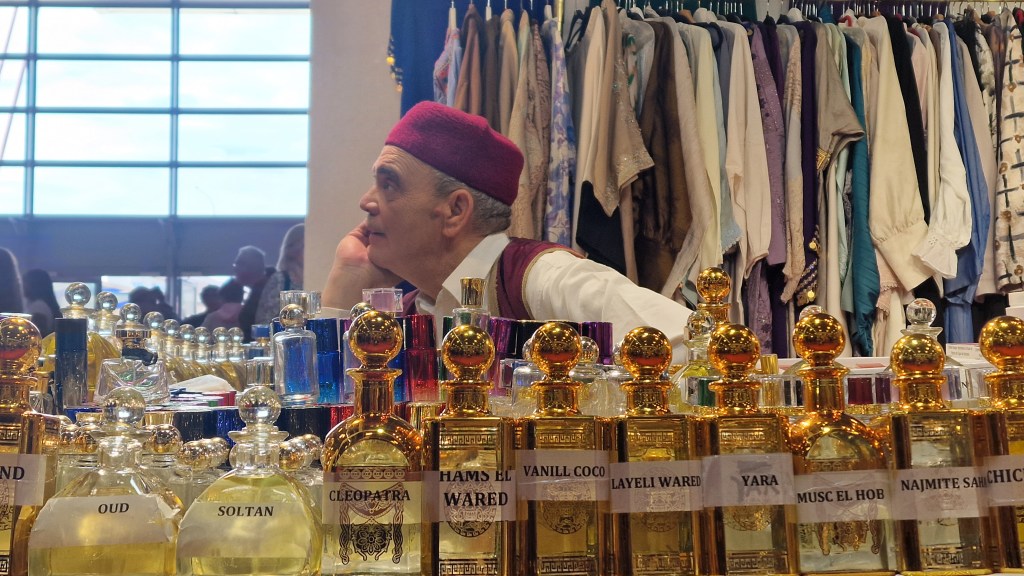
Craftsmanship today exists in a strange state of tension. France continues to celebrate its métiers d’art, yet many traditional practices are fading, disappearing silently or being outsourced elsewhere. In one conversation at the fair, I was struck to learn how many French artisans increasingly turn towards Indian craftsmen rather than Chinese production not only because of cost, but because of finishing, patience, adaptability and the continuity of manual skill.


India, in that sense, has become indispensable to the global craft ecosystem. A country exporting not merely products, but gestures, techniques, time.
And yet, presence alone does not create narrative. As I wandered through the aisles of the fair, my thoughts repeatedly returned to someone I had met months earlier within the modest setting of English classes: Patricia Heym. Strangely, her story began to resonate differently here, in the middle of this vast celebration of consumption and invention.


Because what Patricia creates is not simply fashion. Nor nostalgia disguised as luxury. Her work feels closer to a form of resistance a quiet refusal to let materials, memory and craftsmanship dissolve into anonymity.


Coming from Époisses, near Dijon in Burgundy, Patricia carries within her an inherited cultural universe shaped by textiles, refinement and transmission. Yet what struck me most was not lineage itself, but her determination to exist beyond inherited identities. Neither fille de, nor femme de, nor mère de could entirely define her trajectory. She needed to build a language of her own — diverse, delicate and deeply self-fashioned.
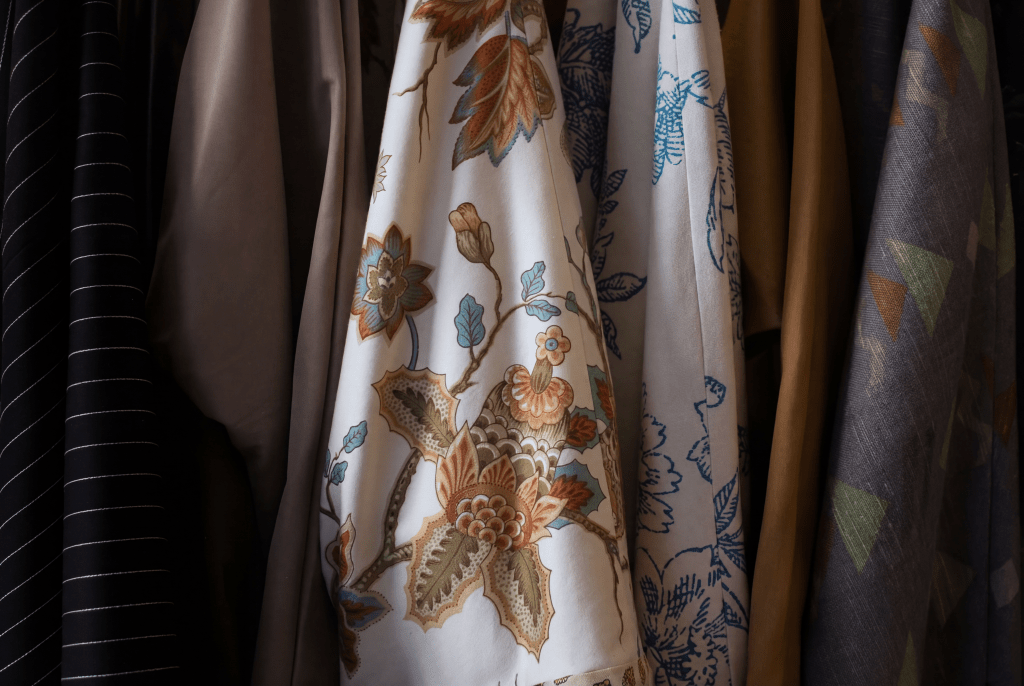
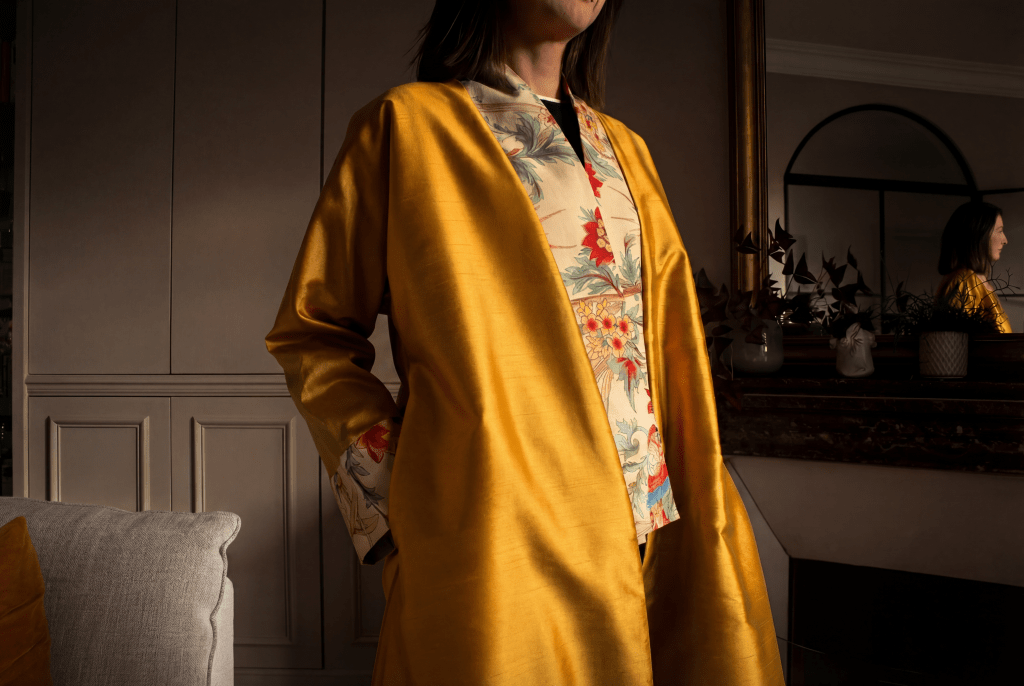
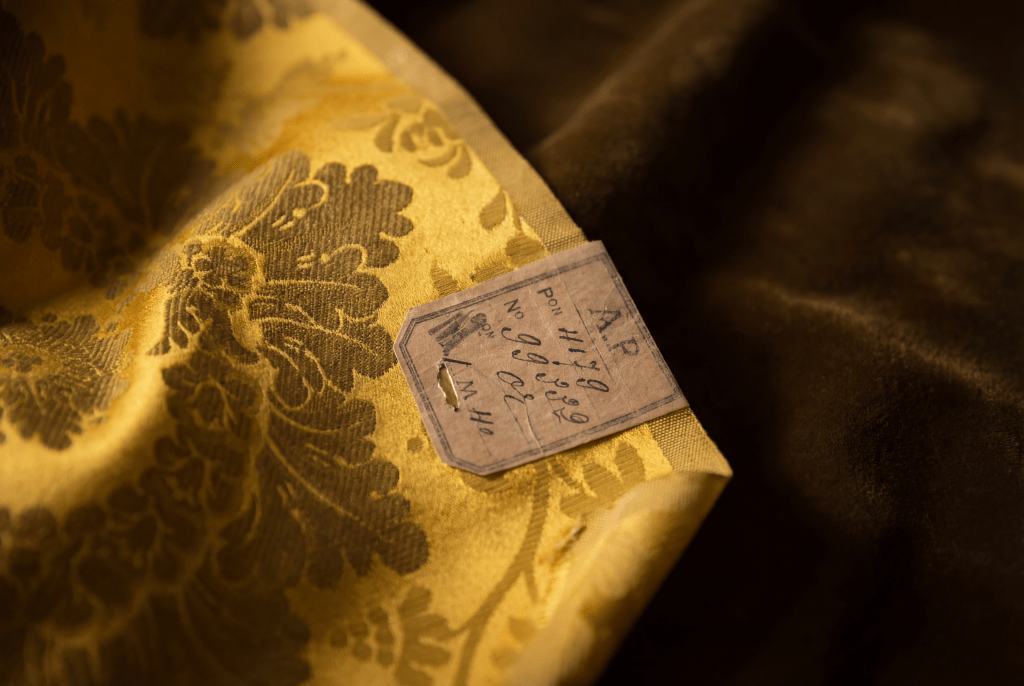
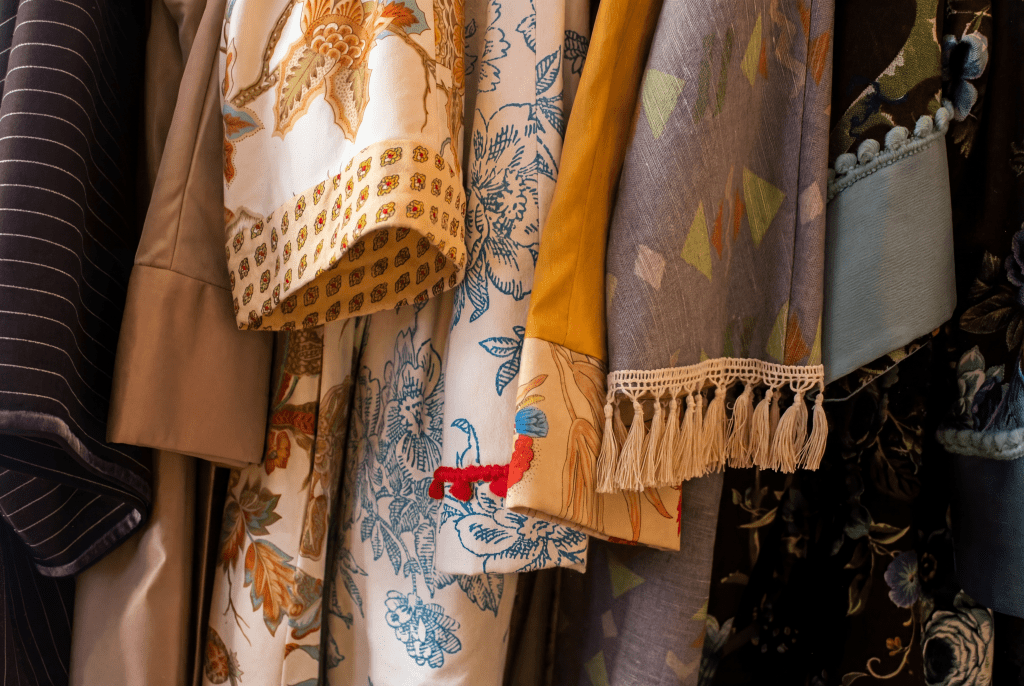
What emerged through her work is therefore more than a house of garments. It is a dialogue between geographies, textures and memories. Traditional silks preserved by her grandfather encounter the architectural fluidity of Japanese kimonos. Burgundy quietly converses with the Silk Roads. Fabric becomes language. The coat becomes testimony.


I sometimes wonder whether stories like these still find readers today. I am constantly told by younger generations in Paris and in India’s major cities that people no longer read — they scroll, consume, swipe, listen. Narratives are reduced to fragments of sound and accelerated images.
Perhaps they are right. And yet, I remain convinced that certain stories require slowness. They demand context, texture and breath. Without narrative, craftsmanship risks becoming aesthetic without memory. A beautiful object detached from the civilisation that shaped it.


This conversation with Patricia is therefore not simply an interview. It is an attempt however modest to document a world that still believes in the intelligence of the hand, in the dignity of making, and in the poetry hidden within material itself.
What follows, therefore, is less a portrait than a tête-à-tête on transmission, freedom, craftsmanship and the fragile future of intangible cultural heritage in an increasingly standardised world.

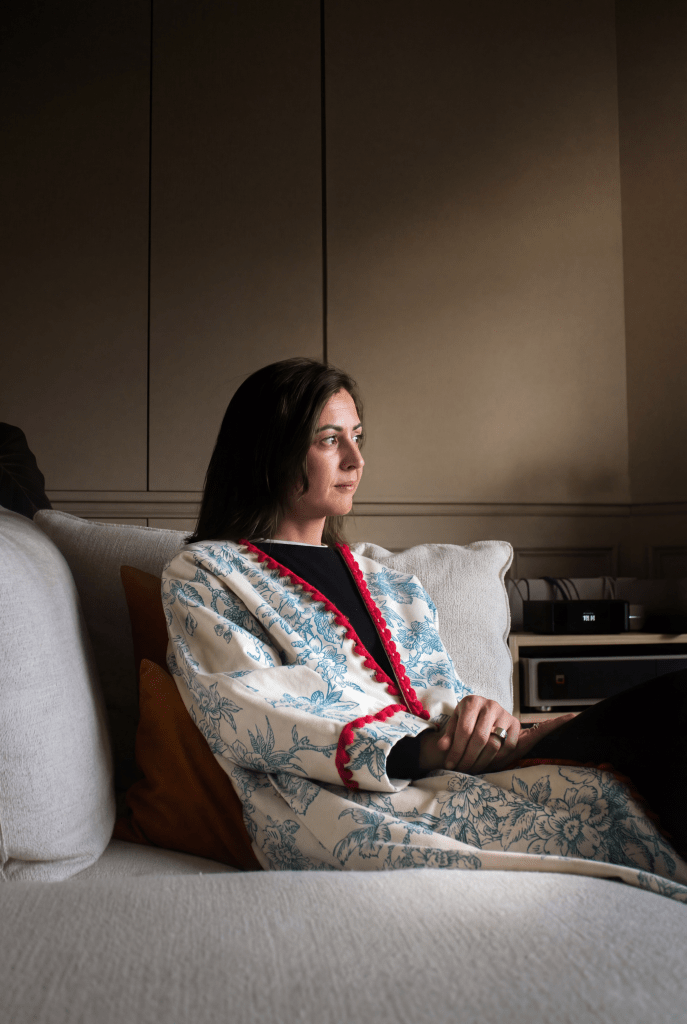
Bérénice, Patricia’s daughter

Writtwik: Before speaking about your journey, how would you describe the world of HEYM Paris to someone discovering it for the first time?

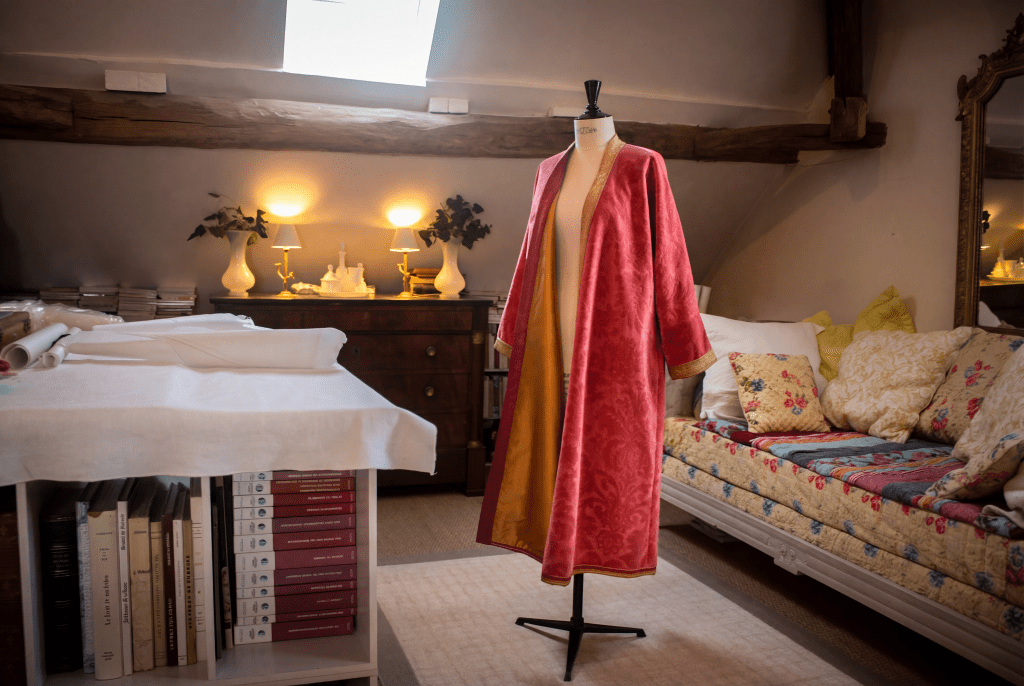
Patricia: A long time ago, in the world of a globetrotter someone who collected objects and textiles from distant lands and civilizations I found myself searching for a piece that could transport me through its rarity. An immense fringed stole, made of Uzbek ikat, captivated me. Blues, plums, greens, and a touch of white shimmered through this silk blended with cotton. The material vibrated like a landscape. I turned it into a coat. A coat from the steppes of Central Asia, with fringes that danced to the ground, lined with an imperial yellow damask. One day, while visiting an Austrian diplomat friend, he could not resist hanging my coat in his living room—as one would display a work of art. That gesture embarrassed me. And yet, without my realizing it, it pointed to something very true. That coat was already my universe.

A coat that was both refuge and manifesto. A coat of travel. A coat of presence. A coat shaped by fabrics that tell the story of the world.

An eternal coat. A coat of appearance. That is where everything began. HEYM Paris was born from that coat.

Writtwik: HEYM seems deeply rooted in a family story. Could you tell us about this intimate origin?

Patricia: The house bears my grandfather’s name. Above all, it is a tribute. Why him? Because he was the one who began this collection of fabrics, without ever imagining it would one day become foundational. He was an art lover, an aesthete, a scholar, deeply devoted to beauty. He collected rare silks and offered fabrics to my grandmother so she could create elegant garments. He himself would sew his ties and waistcoats in silk. From that moment on, something was transmitted. A kind of instinctive passion.

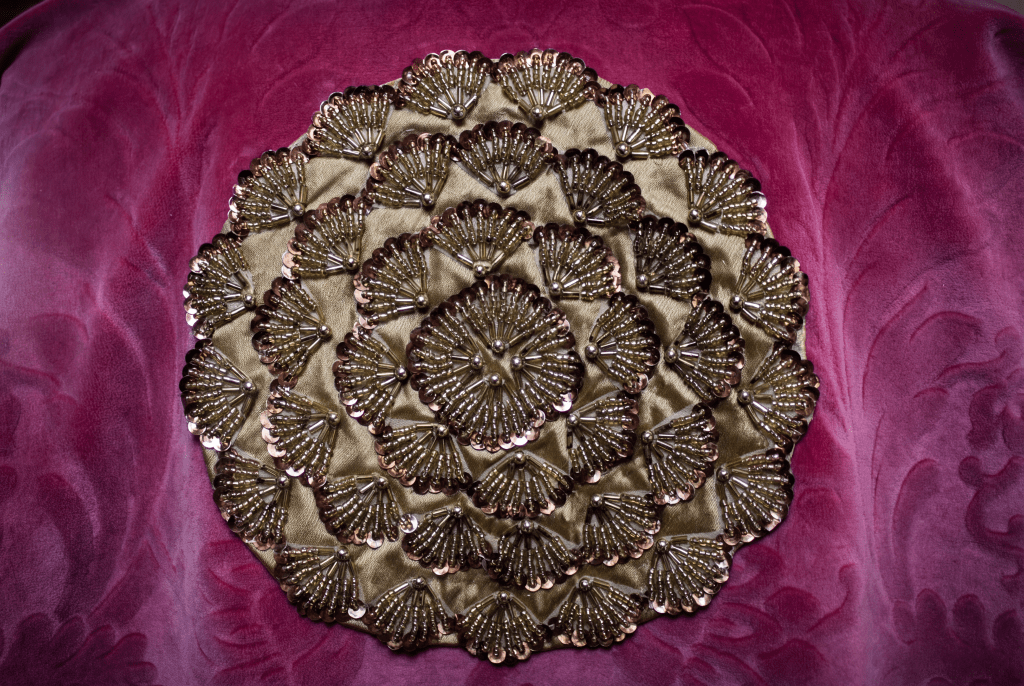
Across nearly a century, my grandmother, my mother, my daughters, and myself—we have all immersed ourselves in this living material, always driven by the same idea: to seek out the exceptional piece that will give birth to creation. Fabric became a language. A way of living. A way of inhabiting the world.

Writtwik: When did you decide to bring this private story into the public sphere?

Patricia: It began with a kind of vertigo. I realized that fabrics were everywhere in the attic, in trunks, in boxes, in every room of the house, and the most precious ones carefully stored in a chest. Then came a simple sentence from my husband: “A material that is not valued is worth nothing.

At that moment, I imagined these treasures being auctioned off in lots for a few euros. I found it deeply unjust. So I asked myself a practical question: what form could hold all of this? I could not create an entire wardrobe. Nor redecorate multiple homes. There was not enough of a lifetime for that. Almost instinctively, I turned toward a single piece: the coat.

A simple, essential form capable of revealing the material without constraining it.

Writtwik: You have moved through very different worlds—textile, cinema, cultural tourism. Do you see them as detours or essential building blocks?

Patricia: Yes, they were detours—side paths, explorations. But they were necessary. Each experience refined my gaze. Whether guiding in a château, working in contemporary art, or briefly entering cinema and theatre, I was always searching for a form of creative freedom. In truth, my way of seeing was shaped much earlier—in childhood, alongside my grandfather. He taught me to look.

Writtwik: You speak of a quest for freedom. Was there a precise moment when you felt the need to change direction?

Patricia: Very early on, through music and dance, I felt a need to shift direction—as if I wasn’t yet on the right path. Later, arriving in Paris brought distance, clarity, and a sense of freedom. In hindsight, I no longer call it a quest for freedom. It is a freedom that imposed itself naturally.

Writtwik: You have often refused to be defined as “wife of,” “daughter of,” or “mother of.” How would you define your identity today?

Patricia: I have always tried to build myself independently. My identity lies in autonomy of thought, character, and perspective. A need to listen deeply, to reflect, and to continue learning. Perhaps I stand slightly apart—but I embrace that position.

Writtwik: Has working in the background given you a particular form of freedom?

Yes. Remaining in the background allowed me to escape expectations and preserve a more intact freedom. It strengthened a quiet, internal rebellion. Creating without needing to please. In retrospect, it was not an absence—but a strength.

Writtwik: Your connection with Japan seems strong. What has it awakened in you?

Patricia: A sense of restraint. Delicacy. The boldness of pattern combinations. But beyond Japan, it is Asia more broadly that inspires me—Korea, China, and the historical circulation of forms along the Silk Roads. I do not invent anything. I continue a movement that has existed for centuries.

Writtwik: How do you build a dialogue between kimono and coat without falling into clichés?

Patricia: The connection is not obvious, it is even misleading. The kimono and Western coat are constructed differently. But they share a technical foundation: the T-shaped cut. My work is not about direct cultural dialogue, but about continuity of forms across time and geography. The goal is to create timeless pieces—avoiding folklore, avoiding clichés—while understanding influences deeply enough to translate them into poetry.

Writtwik: In a world of outsourcing, is defending craftsmanship a choice, a commitment, or a necessity?

Patricia: I celebrate craftsmanship. I have always been fascinated by the hand. Today, society seems disconnected from the act of making—as if thinking and doing were separate. But they are inseparable. The rare does not come from the hand alone, but from a mind shaped alongside it.

Writtwik: What do you seek to transmit through HEYM: savoir-faire, sensibility, or a vision of the world?

Patricia: All three. A garment must adapt to the body—not the other way around. It must be as beautiful inside as it is outside. I work with existing materials, often historical ones, reconnecting with a time when fabrics circulated freely between decorative arts and clothing. There is also a philosophy: to reveal imperfections rather than hide them—drawing inspiration from Kintsugi. Ultimately, it is about continuity, transmission, and restoring value to time, quality, and craftsmanship.

Patricia at her estate in Epoisses, near Dijon, Burgundy, France

Writtwik: If you had to summarise HEYM in one emotion rather than an object?

Patricia: Precision. A lived precision-of gesture, material, and time. An emotion that does not seek to seduce, but imposes itself through balance and necessity.

Acknowledgements

Special thanks to Paul Mourier, Patricia’s better half, who recently concluded his duties as Préfet of the Bourgogne-Franche-Comté region, for his warmth, kindness and encouragement towards this cultural exchange. A special mention as well for the wonderful lunch he prepared for us had he not chosen the demanding life of one of France’s top public servants, he could very well have given serious competition to a Michelin-starred chef.

My sincere gratitude to Hortense for graciously allowing us to film in her apartment and helping create an atmosphere that perfectly echoed the intimacy of this conversation.

A heartfelt thank you to Bérénice for accepting to take part in the shoot with such elegance and spontaneity.

Special thanks to the teams of the Foire de Paris for granting BrandIndia.fr the opportunity to document, observe and engage with one of France’s most enduring public institutions celebrating craftsmanship, innovation and everyday culture.

Visual documentation and camera:
Kaushik Kalyan Kotte, acclaimed Architect and Visual merchandiser, currently pursuing a Master’s degree in Luxury Management at Collège de Paris.

Editorial & Creative Assistance Disclaimer

This feature was independently conceived, researched and directed by BrandIndia.fr / Writtwik Banerjee. Certain stages of the editorial process — including translation support, structural realignment of drafts, design thinking, formatting assistance and content deployment strategy were developed with the support of ChatGPT Plus by OpenAI as an AI-assisted creative and linguistic tool.

All interviews, reflections, field observations, editorial positioning and final narrative direction remain original to the author.

© Writtwik’s — the language consulting company of Writtwik Banerjee, registered with the French National Institute of Industrial Property (INPI).