

Foire de Paris, Patricia Heym and the Quiet Resistance of Craftsmanship
The piece you are about to read emerged from something I still struggle to explain. Perhaps because it took me a while to return to writing. Or perhaps because, somewhere along the way, I lost the reassuring illusion that narratives arrive naturally, perfectly structured, elegantly tied together like the final scene of an arthouse film screened in a half-empty Parisian cinema where everyone pretends to understand silence better than life itself. A few days ago, Kaushik, my cameraman, occasional philosopher and patient witness to my editorial spirals, gently told me: “You need balance. Don’t become too pushy with the narrative.” I stared at him in confusion while simultaneously trying to untangle microphone wires, reply to three WhatsApp messages, and unsuccessfully locate the press badge that was hanging around my own neck!
Balance. The word sounded suspiciously luxurious. The past year has not been particularly gentle neither personally nor collectively. And perhaps that is why this story exists.
Because despite everything, I continue to believe that the stories we encounter in everyday life deserve to be documented. They deserve more than accelerated consumption through disappearing reels and algorithmic fragments. They deserve texture, pauses, contradictions and breath. Above all, they deserve to make people feel involved.
That has always been the intention behind BrandIndia.
Which is precisely why I approached the Foire de Paris a fair, that has existed consistently for more than a century — and asked whether I could become part of it.
Not because I was searching for spectacle. But because I needed movement.
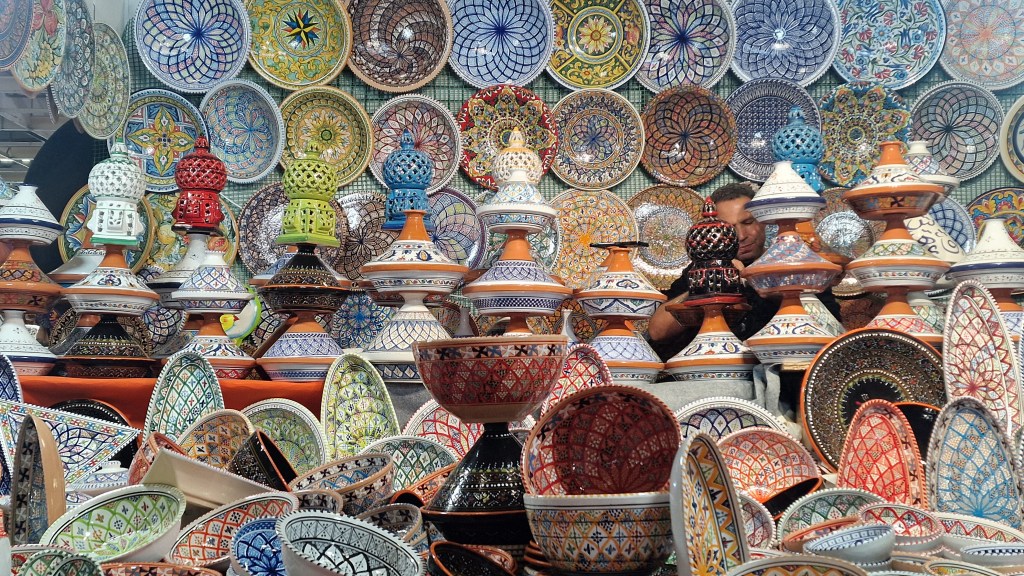
Foire de Paris is not merely a consumer fair. It is a concentration of human energy: inventions, regional identities, gestures, conversations, sales pitches, failed prototypes, artisanal obsessions, improbable culinary combinations and exhausted exhibitors surviving on caffeine and optimism. Somewhere between a honey producer from rural France, a Korean skincare stand, a salesman demonstrating miracle kitchen knives with terrifying enthusiasm, and elderly Parisian couples comparing mattresses with the seriousness of geopolitical negotiations, one begins to realise that fairs are perhaps among the last truly democratic theatres of human interaction.
And strangely, I needed precisely that. Because outside the fairgrounds, the world had started to feel unbearable.
I no longer read newspapers the way I once did. I barely watch news channels anymore. The violence of permanent information, outrage and performance has exhausted me. Increasingly, I find myself gravitating instead towards materials, crafts, textures, conversations, objects shaped by hands rather than by algorithms.
Perhaps it is escapism.
Or perhaps it is survival.
So there I was, walking through the aisles of the Foire de Paris, carrying too many thoughts, insufficient sleep and an increasingly expensive coffee in hand when one question quietly began returning to me:
What remains when the gesture disappears?
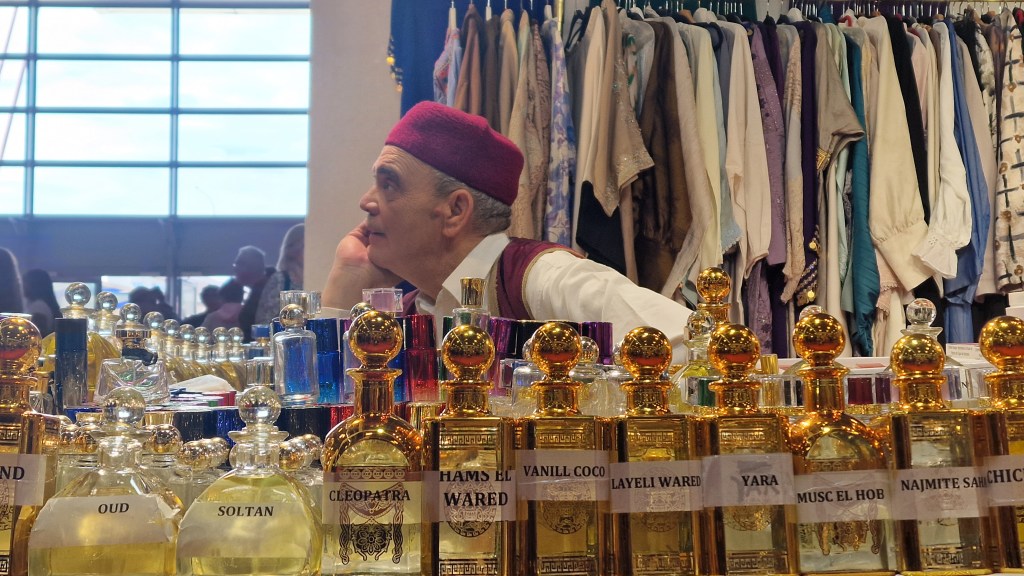
For days, I walked through the fair observing not merely products, but traces of invisible worlds hands that still shape, assemble, stitch, carve and imagine despite the accelerating rhythm of industrial production. Beneath the commercial energy of the fair lingered something more fragile: the ebbing pulse of heritage.
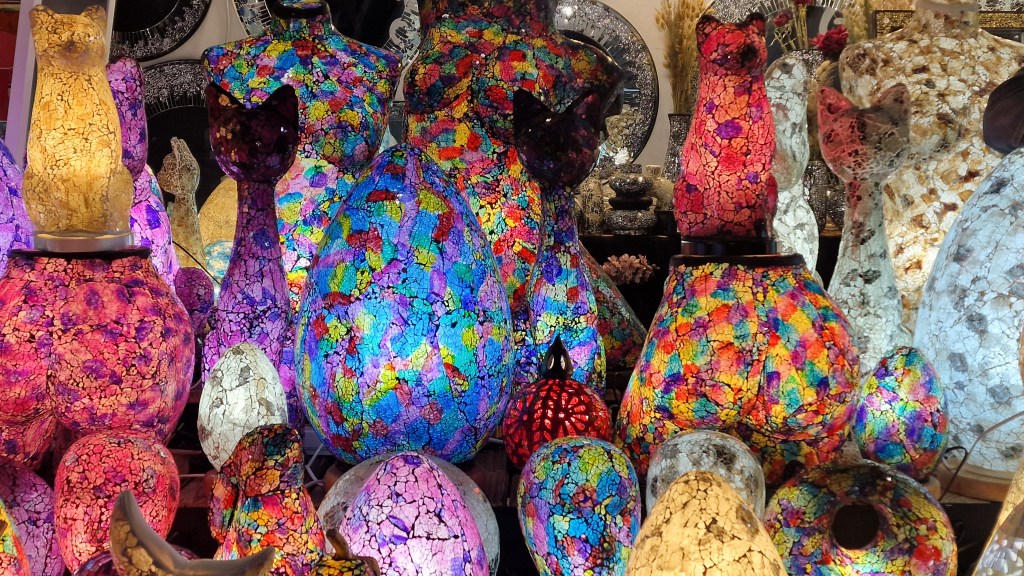
Craftsmanship today exists in a strange state of tension. France continues to celebrate its métiers d’art, yet many traditional practices are fading, disappearing silently or being outsourced elsewhere. In one conversation at the fair, I was struck to learn how many French artisans increasingly turn towards Indian craftsmen rather than Chinese production not only because of cost, but because of finishing, patience, adaptability and the continuity of manual skill.
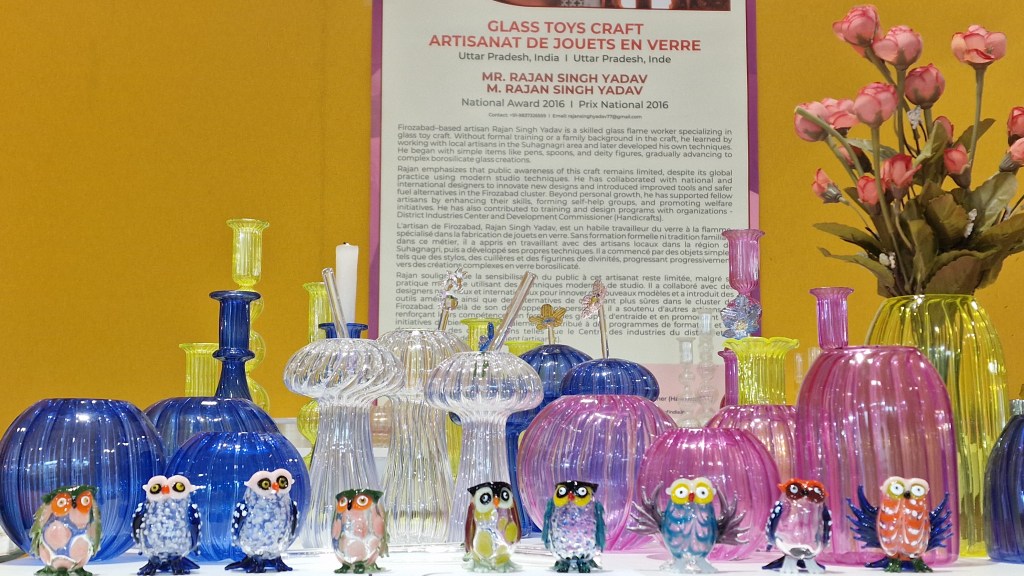
India, in that sense, has become indispensable to the global craft ecosystem. A country exporting not merely products, but gestures, techniques, time.
And yet, presence alone does not create narrative. As I wandered through the aisles of the fair, my thoughts repeatedly returned to someone I had met months earlier within the modest setting of English classes: Patricia Heym. Strangely, her story began to resonate differently here, in the middle of this vast celebration of consumption and invention.
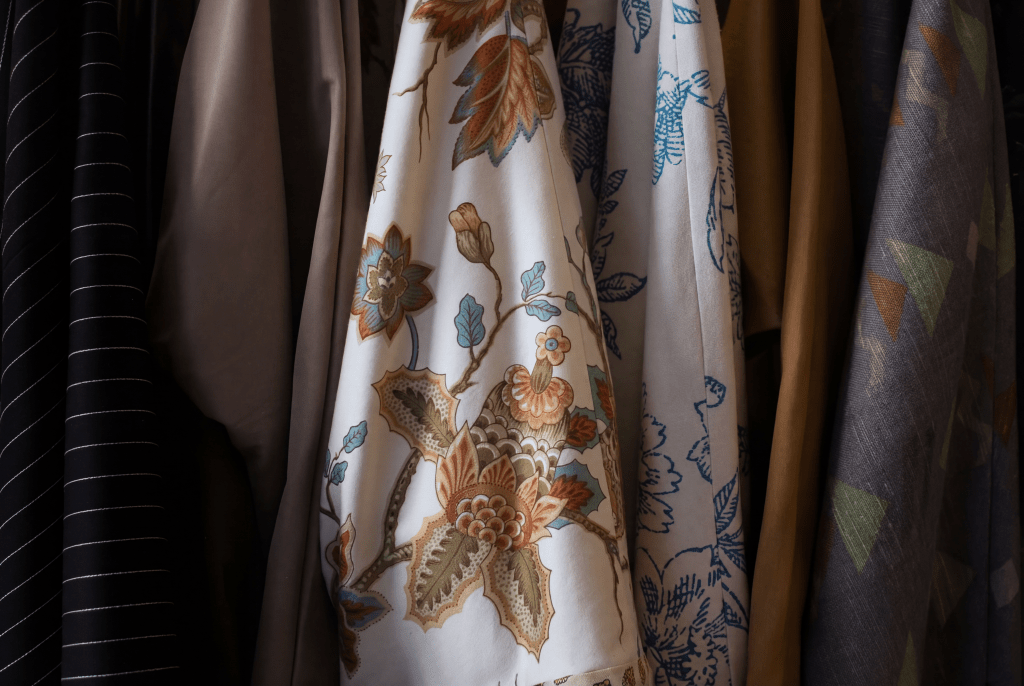
Because what Patricia creates is not simply fashion. Nor nostalgia disguised as luxury. Her work feels closer to a form of resistance a quiet refusal to let materials, memory and craftsmanship dissolve into anonymity.
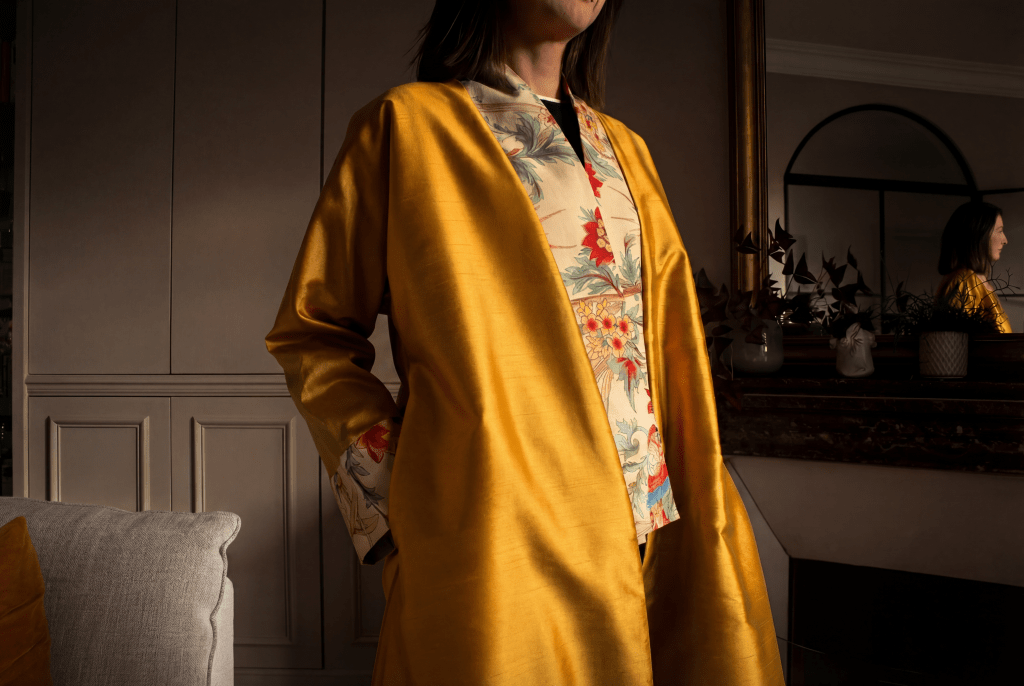
Coming from Époisses, near Dijon in Burgundy, Patricia carries within her an inherited cultural universe shaped by textiles, refinement and transmission. Yet what struck me most was not lineage itself, but her determination to exist beyond inherited identities. Neither fille de, nor femme de, nor mère de could entirely define her trajectory. She needed to build a language of her own — diverse, delicate and deeply self-fashioned.
What emerged through her work is therefore more than a house of garments. It is a dialogue between geographies, textures and memories. Traditional silks preserved by her grandfather encounter the architectural fluidity of Japanese kimonos. Burgundy quietly converses with the Silk Roads. Fabric becomes language. The coat becomes testimony.
I sometimes wonder whether stories like these still find readers today. I am constantly told by younger generations in Paris and in India’s major cities that people no longer read — they scroll, consume, swipe, listen. Narratives are reduced to fragments of sound and accelerated images.
Perhaps they are right. And yet, I remain convinced that certain stories require slowness. They demand context, texture and breath. Without narrative, craftsmanship risks becoming aesthetic without memory. A beautiful object detached from the civilisation that shaped it.
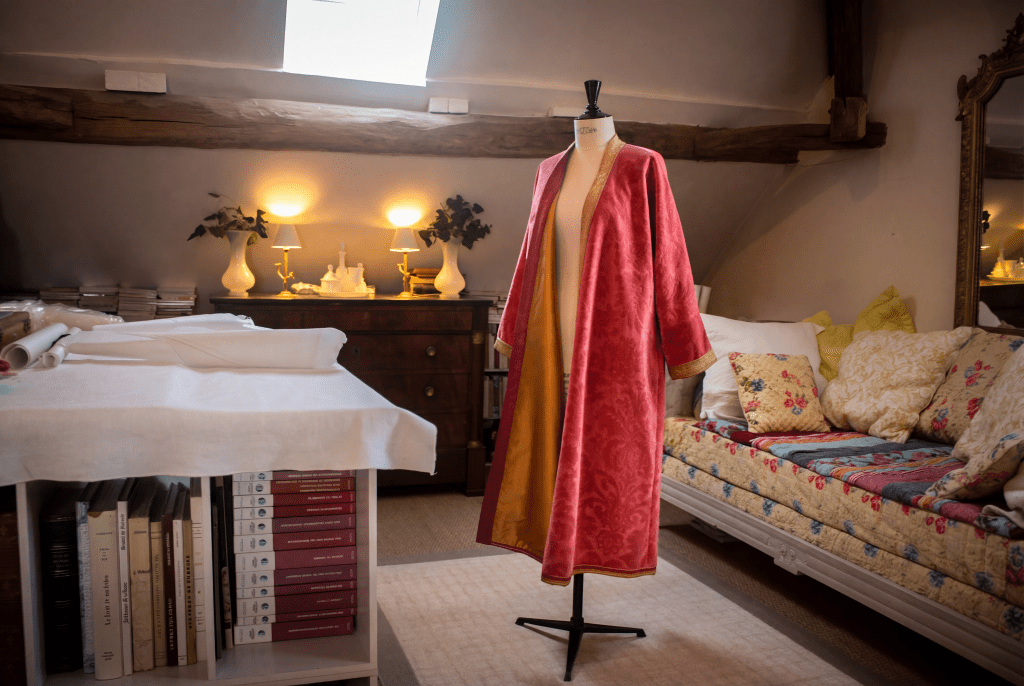
This conversation with Patricia is therefore not simply an interview. It is an attempt however modest to document a world that still believes in the intelligence of the hand, in the dignity of making, and in the poetry hidden within material itself.
What follows, therefore, is less a portrait than a tête-à-tête on transmission, freedom, craftsmanship and the fragile future of intangible cultural heritage in an increasingly standardised world.
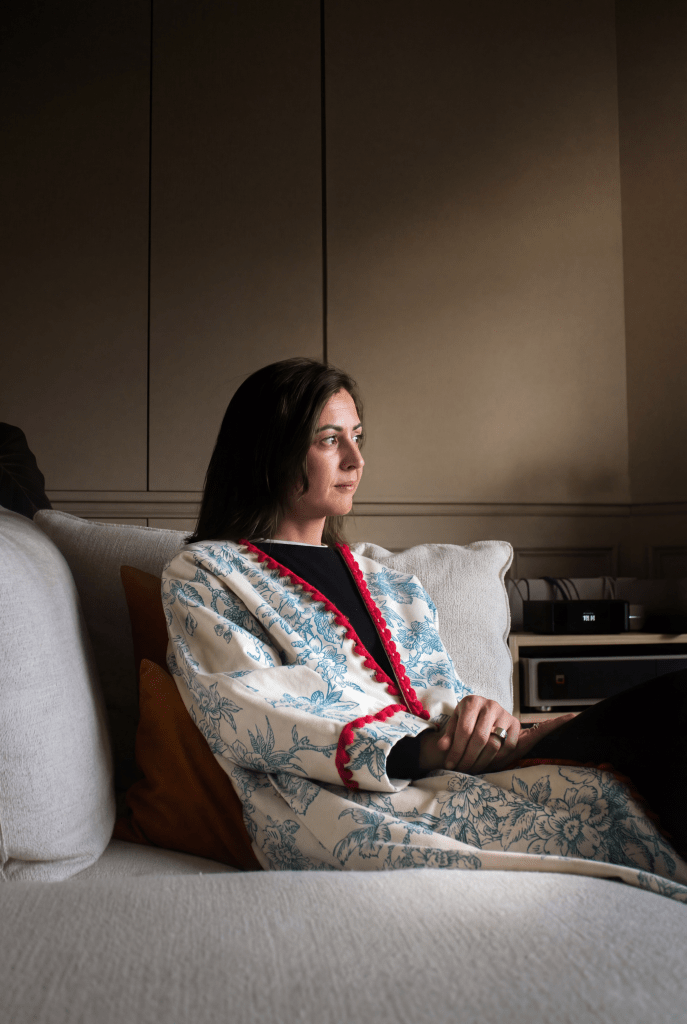
Writtwik: Before speaking about your journey, how would you describe the world of HEYM Paris to someone discovering it for the first time?
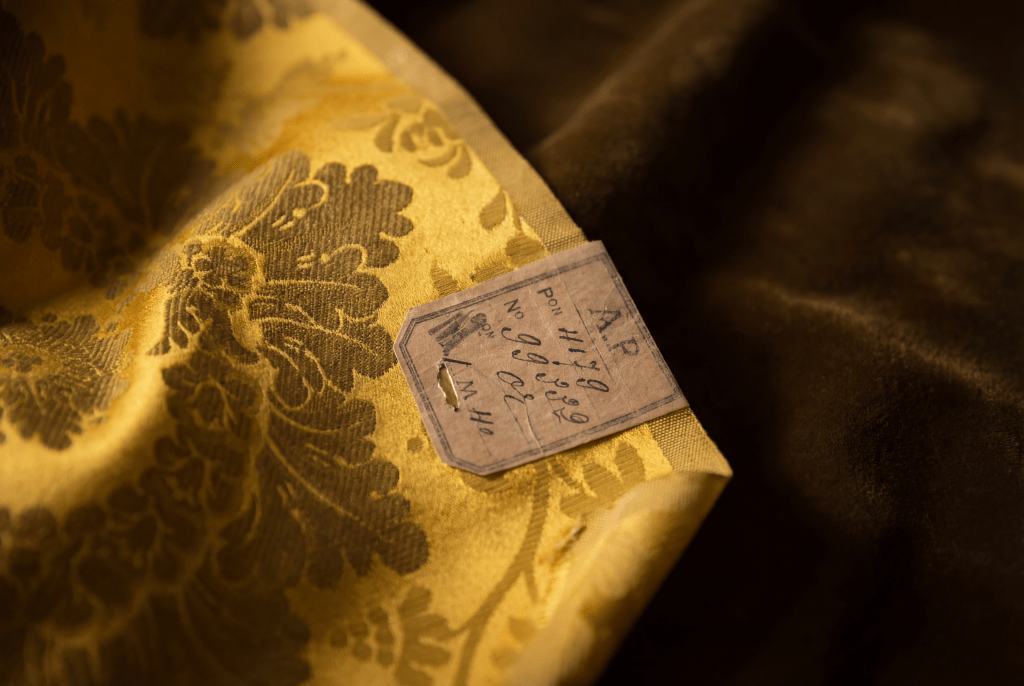
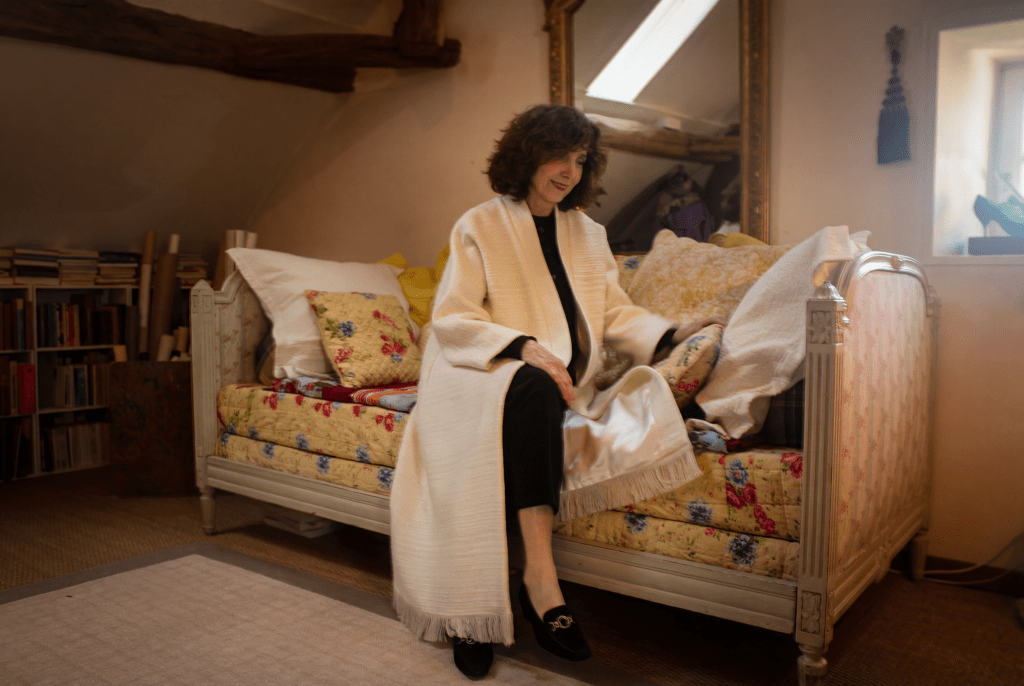
Patricia: A long time ago, in the world of a globetrotter someone who collected objects and textiles from distant lands and civilizations I found myself searching for a piece that could transport me through its rarity. An immense fringed stole, made of Uzbek ikat, captivated me. Blues, plums, greens, and a touch of white shimmered through this silk blended with cotton. The material vibrated like a landscape. I turned it into a coat. A coat from the steppes of Central Asia, with fringes that danced to the ground, lined with an imperial yellow damask. One day, while visiting an Austrian diplomat friend, he could not resist hanging my coat in his living room—as one would display a work of art. That gesture embarrassed me. And yet, without my realizing it, it pointed to something very true. That coat was already my universe.
A coat that was both refuge and manifesto. A coat of travel. A coat of presence. A coat shaped by fabrics that tell the story of the world.
An eternal coat. A coat of appearance. That is where everything began. HEYM Paris was born from that coat.
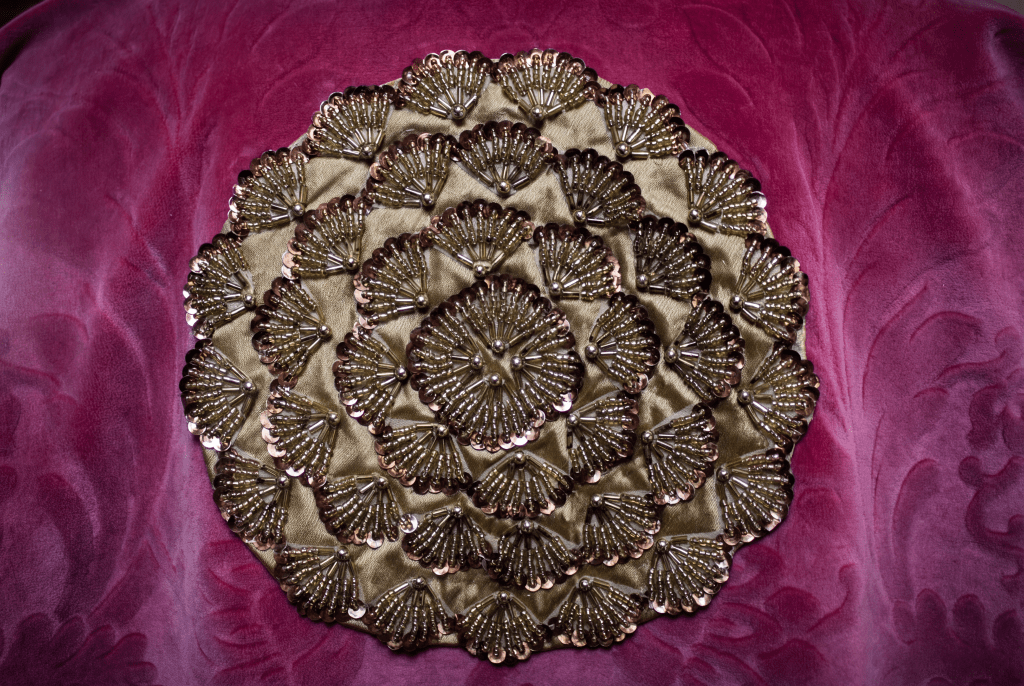
Writtwik: HEYM seems deeply rooted in a family story. Could you tell us about this intimate origin?
Patricia: The house bears my grandfather’s name. Above all, it is a tribute. Why him? Because he was the one who began this collection of fabrics, without ever imagining it would one day become foundational. He was an art lover, an aesthete, a scholar, deeply devoted to beauty. He collected rare silks and offered fabrics to my grandmother so she could create elegant garments. He himself would sew his ties and waistcoats in silk. From that moment on, something was transmitted. A kind of instinctive passion.
Across nearly a century, my grandmother, my mother, my daughters, and myself—we have all immersed ourselves in this living material, always driven by the same idea: to seek out the exceptional piece that will give birth to creation. Fabric became a language. A way of living. A way of inhabiting the world.
Writtwik: When did you decide to bring this private story into the public sphere?
Patricia: It began with a kind of vertigo. I realized that fabrics were everywhere in the attic, in trunks, in boxes, in every room of the house, and the most precious ones carefully stored in a chest. Then came a simple sentence from my husband: “A material that is not valued is worth nothing.”
At that moment, I imagined these treasures being auctioned off in lots for a few euros. I found it deeply unjust. So I asked myself a practical question: what form could hold all of this? I could not create an entire wardrobe. Nor redecorate multiple homes. There was not enough of a lifetime for that. Almost instinctively, I turned toward a single piece: the coat.
A simple, essential form capable of revealing the material without constraining it.
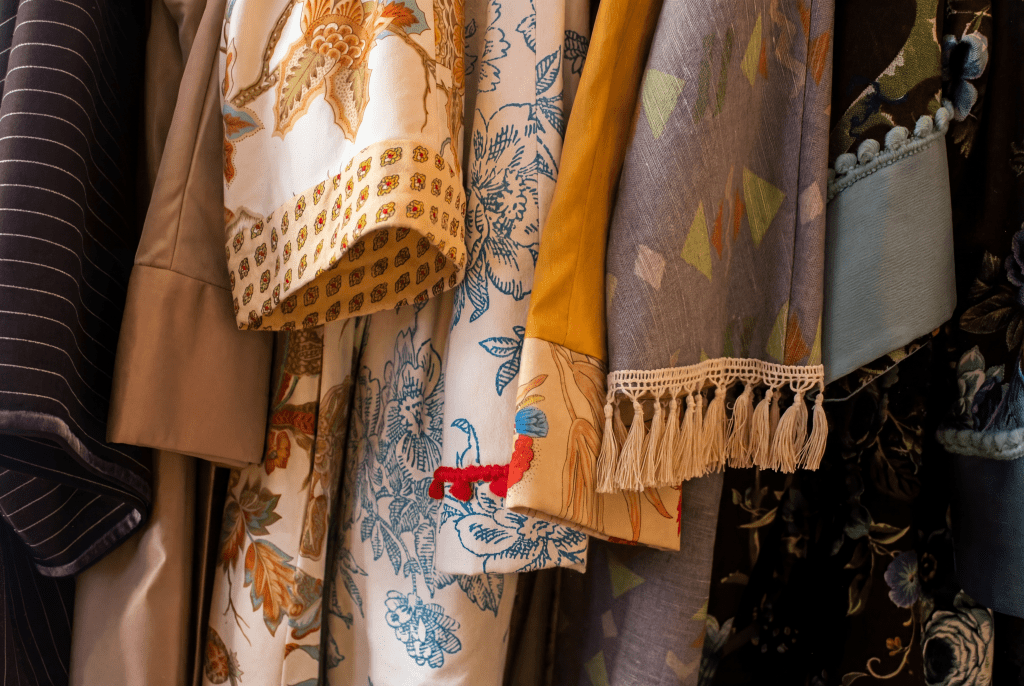
Writtwik: You have moved through very different worlds—textile, cinema, cultural tourism. Do you see them as detours or essential building blocks?
Patricia: Yes, they were detours—side paths, explorations. But they were necessary. Each experience refined my gaze. Whether guiding in a château, working in contemporary art, or briefly entering cinema and theatre, I was always searching for a form of creative freedom. In truth, my way of seeing was shaped much earlier—in childhood, alongside my grandfather. He taught me to look.
Writtwik: You speak of a quest for freedom. Was there a precise moment when you felt the need to change direction?
Patricia: Very early on, through music and dance, I felt a need to shift direction—as if I wasn’t yet on the right path. Later, arriving in Paris brought distance, clarity, and a sense of freedom. In hindsight, I no longer call it a quest for freedom. It is a freedom that imposed itself naturally.
Writtwik: You have often refused to be defined as “wife of,” “daughter of,” or “mother of.” How would you define your identity today?
Patricia: I have always tried to build myself independently. My identity lies in autonomy of thought, character, and perspective. A need to listen deeply, to reflect, and to continue learning. Perhaps I stand slightly apart—but I embrace that position.
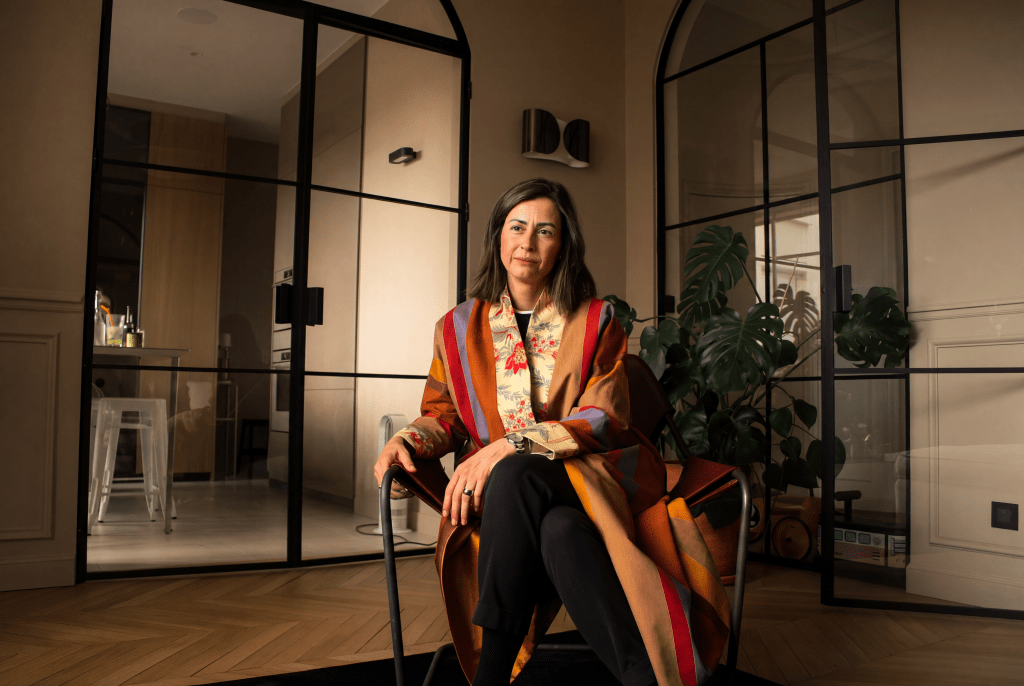
Writtwik: Has working in the background given you a particular form of freedom?
Yes. Remaining in the background allowed me to escape expectations and preserve a more intact freedom. It strengthened a quiet, internal rebellion. Creating without needing to please. In retrospect, it was not an absence—but a strength.
Writtwik: Your connection with Japan seems strong. What has it awakened in you?
Patricia: A sense of restraint. Delicacy. The boldness of pattern combinations. But beyond Japan, it is Asia more broadly that inspires me—Korea, China, and the historical circulation of forms along the Silk Roads. I do not invent anything. I continue a movement that has existed for centuries.
Writtwik: How do you build a dialogue between kimono and coat without falling into clichés?
Patricia: The connection is not obvious, it is even misleading. The kimono and Western coat are constructed differently. But they share a technical foundation: the T-shaped cut. My work is not about direct cultural dialogue, but about continuity of forms across time and geography. The goal is to create timeless pieces—avoiding folklore, avoiding clichés—while understanding influences deeply enough to translate them into poetry.
Writtwik: In a world of outsourcing, is defending craftsmanship a choice, a commitment, or a necessity?
Patricia: I celebrate craftsmanship. I have always been fascinated by the hand. Today, society seems disconnected from the act of making—as if thinking and doing were separate. But they are inseparable. The rare does not come from the hand alone, but from a mind shaped alongside it.
Writtwik: What do you seek to transmit through HEYM: savoir-faire, sensibility, or a vision of the world?
Patricia: All three. A garment must adapt to the body—not the other way around. It must be as beautiful inside as it is outside. I work with existing materials, often historical ones, reconnecting with a time when fabrics circulated freely between decorative arts and clothing. There is also a philosophy: to reveal imperfections rather than hide them—drawing inspiration from Kintsugi. Ultimately, it is about continuity, transmission, and restoring value to time, quality, and craftsmanship.
Writtwik: If you had to summarise HEYM in one emotion rather than an object?
Patricia: Precision. A lived precision-of gesture, material, and time. An emotion that does not seek to seduce, but imposes itself through balance and necessity.
Acknowledgements
Special thanks to Paul Mourier, Patricia’s better half, who recently concluded his duties as Préfet of the Bourgogne-Franche-Comté region, for his warmth, kindness and encouragement towards this cultural exchange. A special mention as well for the wonderful lunch he prepared for us had he not chosen the demanding life of one of France’s top public servants, he could very well have given serious competition to a Michelin-starred chef.
My sincere gratitude to Hortense for graciously allowing us to film in her apartment and helping create an atmosphere that perfectly echoed the intimacy of this conversation.
A heartfelt thank you to Bérénice for accepting to take part in the shoot with such elegance and spontaneity.
Special thanks to the teams of the Foire de Paris for granting BrandIndia.fr the opportunity to document, observe and engage with one of France’s most enduring public institutions celebrating craftsmanship, innovation and everyday culture.
Visual documentation and camera:
Kaushik Kalyan Kotte, acclaimed Architect and Visual merchandiser, currently pursuing a Master’s degree in Luxury Management at Collège de Paris.
Editorial & Creative Assistance Disclaimer
This feature was independently conceived, researched and directed by BrandIndia.fr / Writtwik Banerjee. Certain stages of the editorial process — including translation support, structural realignment of drafts, design thinking, formatting assistance and content deployment strategy were developed with the support of ChatGPT Plus by OpenAI as an AI-assisted creative and linguistic tool.
All interviews, reflections, field observations, editorial positioning and final narrative direction remain original to the author.
© Writtwik’s — the language consulting company of Writtwik Banerjee, registered with the French National Institute of Industrial Property (INPI).
En savoir plus sur Serendipity
Abonnez-vous pour recevoir les derniers articles par e-mail.


