Blog

à la Une

Berlin’s Energy Transition Dialogue: Perception, Self-Induced Guilt, and Citizen Participation for Informed Action

Frankly speaking, as a writer, my pen is driven not by commissions but by a profound connection to certain topics and social issues. This personal approach means I sometimes find it challenging to venture beyond the boundaries of what’s familiar to me. I could have easily wrapped up my engagement with the energy transition summit after my last two posts and moved on to the next story in my arsenal, but there’s more that needs to be said.

As I reflect on the recently concluded energy summit, a familiar adage comes to mind: time heals all. Indeed, in the hustle of life, the urgency of our planet’s climate challenges might slip from our immediate concerns, despite earnest calls for action, such as those from Dr. Fatih Birol, Executive Director of the International Energy Agency. Yet, amidst this ebb and flow of urgency, I can’t help but share my experiences from the Berlin Energy Transition Dialogue, a rendezvous that encapsulated more than mere discussions—it was a platform for action.
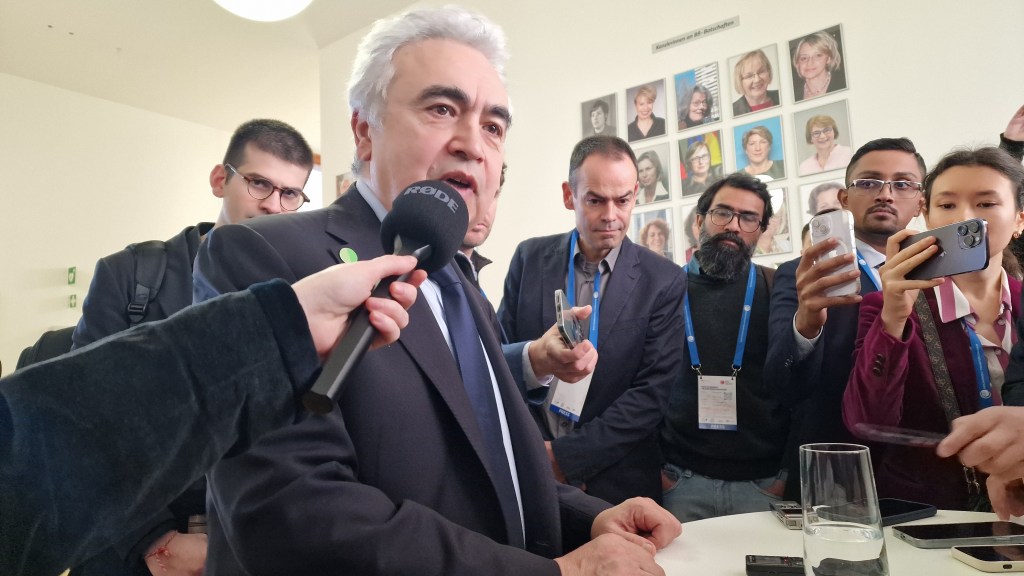
Presse Conference of Dr.Fatih Birol, Executive Director, Internaltional Energy Agency, Berlin Energy Transition Dialogue 2024 in Berlin, 19.03.2024. Photo: Writtwik

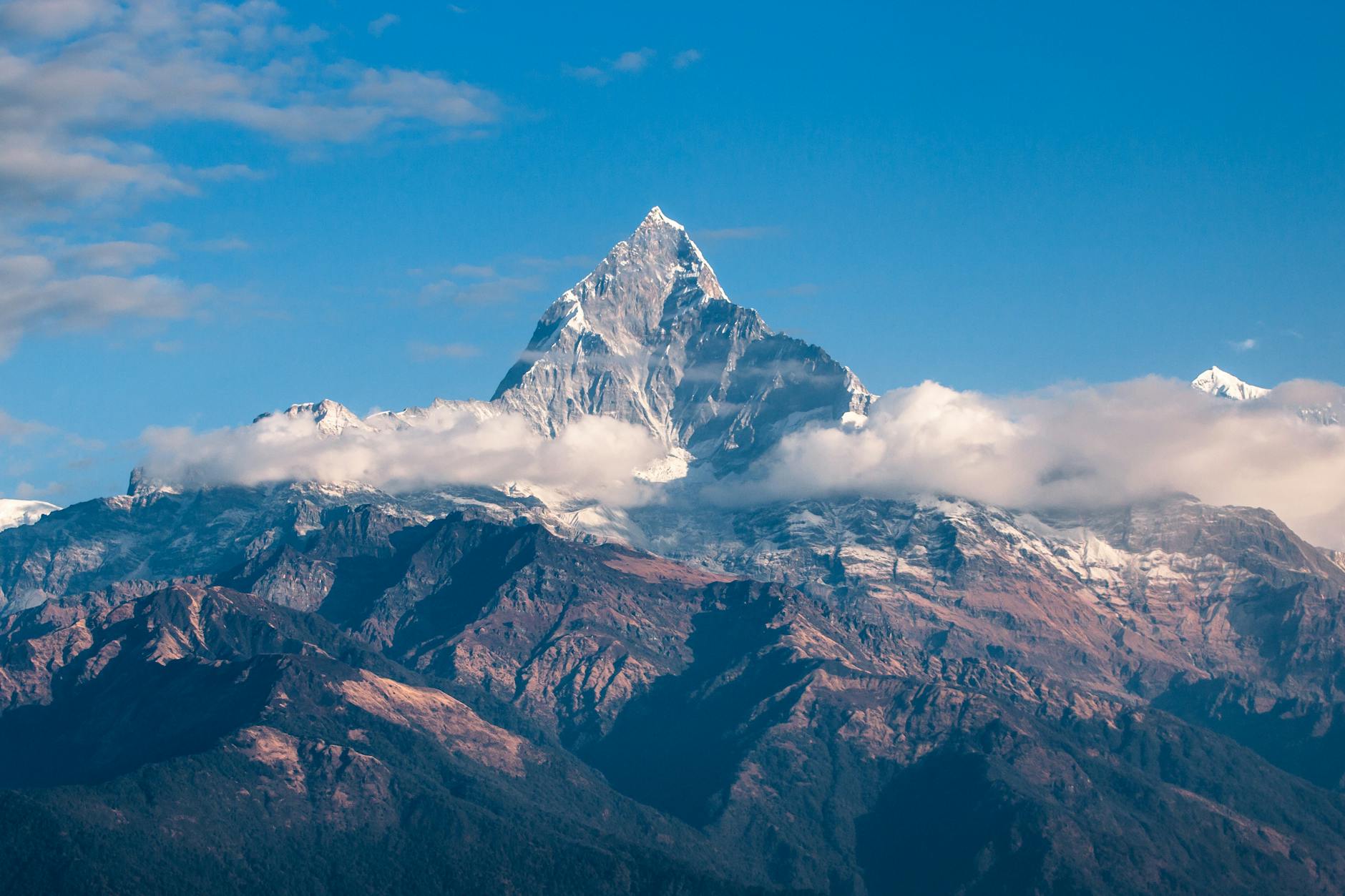
Through the power of visual imagination, picture a scenario where leaders from more than 75 nations converge, not for idle chatter but to earnestly address one of the gravest challenges of our times—the future of our planet’s energy. This wasn’t just another conference. Here, the ambition was crystal clear: a colossal task to triple our renewable energy capacity by the year 2030. It felt like we were collectively setting out to conquer three Mount Everests, having just scaled the first.

But here’s the crux: Despite a record year for renewable energy installations, we’re still trailing on this ambitious path. The Dialogue was more than an acknowledgment of this gap; it was a call to bridge it effectively.
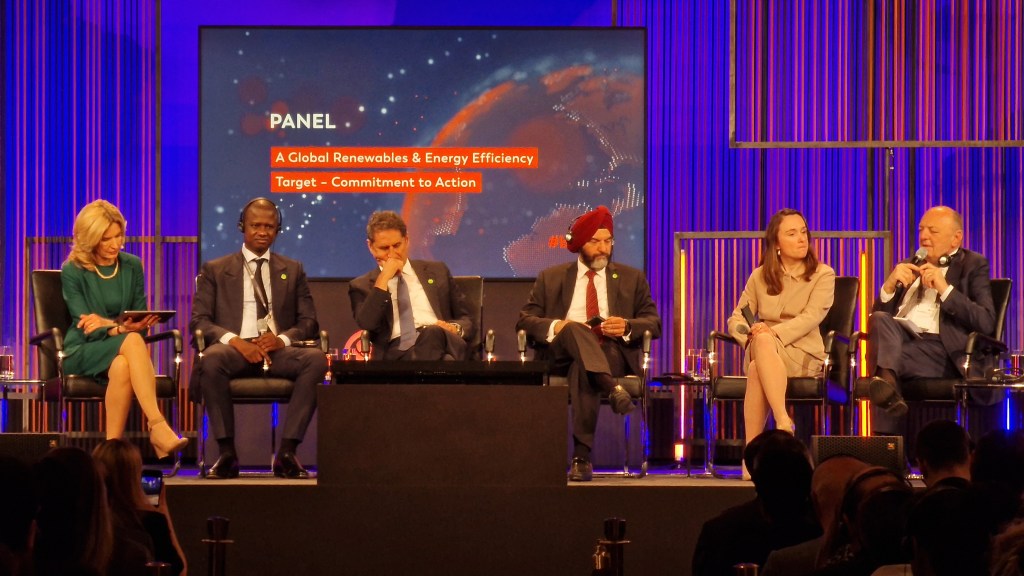
Inaugural Address, Berlin Energy Transition Dialogue 2024 in Berlin, 19.03.2024. Photo: Writtwik

What set this conference apart was its focus on tangible outcomes. It wasn’t just about discussions; it was a crucible of action—think of it as a global workshop where brilliant minds converged to forge a sustainable future. Take, for instance, Ndiarka Mbodji, the dynamic CEO of Kowry Energy. Her pragmatic approach to making energy transition plans a reality is akin to charting a map for others in this unchartered territory.

The dialogue didn’t just revolve around saving our planet; it also underscored the critical economic facet, from creating job opportunities to illuminating millions of homes still in the dark. German Foreign Minister Baerbock’s remarks encapsulated the essence of this race towards renewable energy—not just an environmental quest but a marathon for economic and technological supremacy.

Amidst these discussions, a clarion call for global investment resonated through the halls, akin to a worldwide crowdfunding initiative for the planet, where each contribution, big or small, counts.

This story, however, extends beyond Germany’s borders. It’s a global narrative where countries contribute their unique strengths and knowledge towards a collective goal. We’re not just aiming for a distant target by 2030; we’re collectively striving to reshape our world.
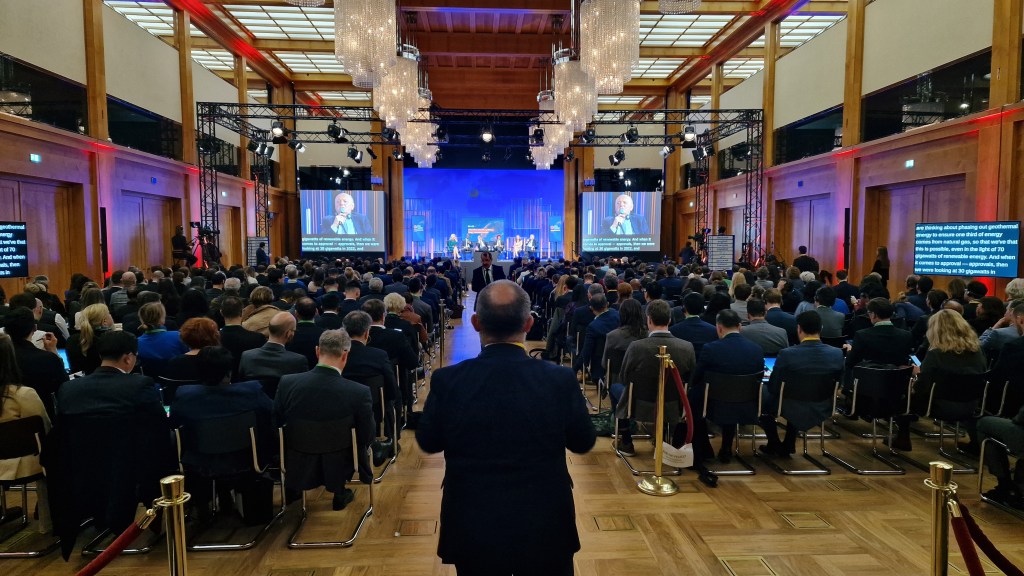
Inaugural Address, Berlin Energy Transition Dialogue 2024 in Berlin, 19.03.2024. Photo: Writtwik

Yet, life goes on, and as it does, I find myself engrossed in Netflix’s « Three Body Problem. » Its slow-paced storyline is a stark contrast to the rapid pace of global climate action. As someone who writes when a topic resonates deeply, continuing this narrative might seem unorthodox. But, in the spirit of honest discourse, I feel compelled to dig deeper.

Frankly speaking, as a writer, my pen is driven not by commissions but by a profound connection to certain topics and social issues. This personal approach means I sometimes find it challenging to venture beyond the boundaries of what’s familiar to me. I could have easily wrapped up my engagement with the energy transition summit after my last two posts and moved on to the next story in my arsenal, but there’s more that needs to be said.
Reflecting on my own journey, I am reminded that my initial engagement with climate issues didn’t naturally stem from my upbringing. In the rhythm of an Indian household, life often follows a script that’s less about global issues and more about the daily cycle – you wake up, go to work, come home, eat, sleep, and repeat. You’re expected to adhere to societal norms – pray when you should, follow the path laid out for you, and one day, perhaps unceremoniously, exit the stage of life, incognito. Breaking free from this pattern to embrace a larger cause, like climate awareness, required me to consciously step out of this cycle and look at the world through a different lens.
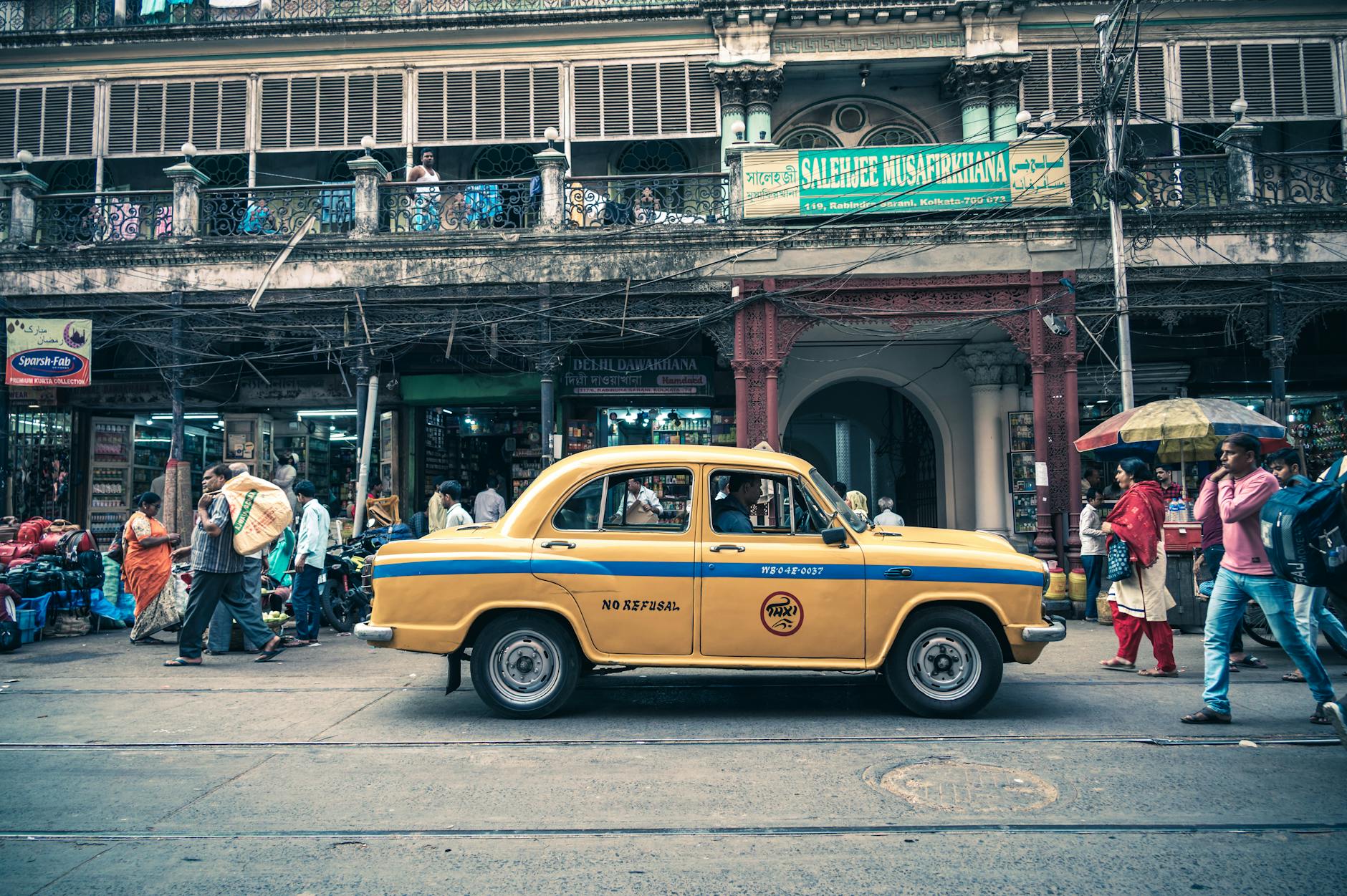
Photo de Ayan Bose sur Pexels.com

In our Kolkata home, even considering the weather was something we rarely had the luxury to do. My mother worked tirelessly, always striving to provide more than what she had, so that we could lead a happy and healthy life. The monthly expense of my grandmother’s medicines, often exorbitant, pushed trivial concerns like the weather to the far edges of my mind, replaced by a yearning for a respite from life’s relentless demands.

In stark contrast, my father had crafted his own niche, a haven of sorts, where he found his contentment. His life was profoundly influenced by the Bratachari Movement, started by Gurusaday Dutt, a civil servant from the British Raj era. This movement wasn’t just a gathering; it was a platform for awakening awareness, nurturing a sense of brotherhood, and preserving the rich, intangible cultural heritage of undivided Bengal.
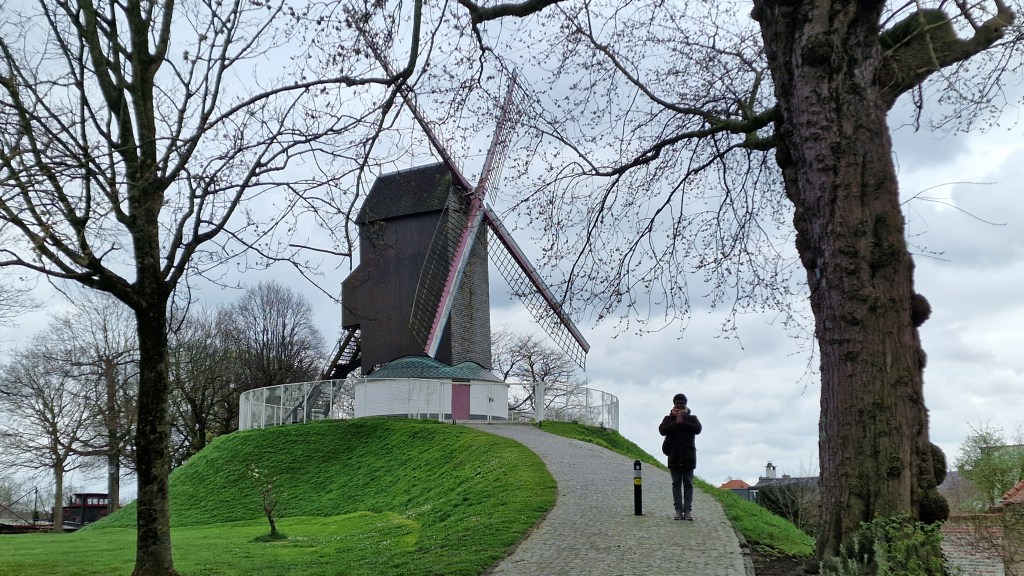
Bruges, Flanders, Belgium, Photo: Aniruddha Barua, London, United Kingdom

My early years were immersed in the principles and activities of this movement, especially during the Christmas holidays at the Bratachari Camp in Thakurpukur, located on the southern fringes of Kolkata. There, as opposed to our everyday life where the weather seldom crossed our minds, we engaged in nurturing our surroundings and establishing a connection with nature. It was a time to embrace our roots, to bask in the pride of ‘Shonar Bangla’, the Golden Bengal. This juxtaposition of the everyday struggle for survival at home against the backdrop of the enriching, nature-centric life at the camp significantly moulded my perspective on life. It confused me.

My father and my sister at her wedding, Kolkata February 2024, Photo: Writtwik

The mix of experiences from my childhood, oscillating between the mundane and the culturally rich, was something I found intriguing, though I never felt compelled to unravel it. Yet, as I grew older and encountered some unexpected realities, my sense of concern deepened. This prompted a shift in focus; I began to seek connections with friends, family, clients, and collaborators to understand their perspectives on climate change.
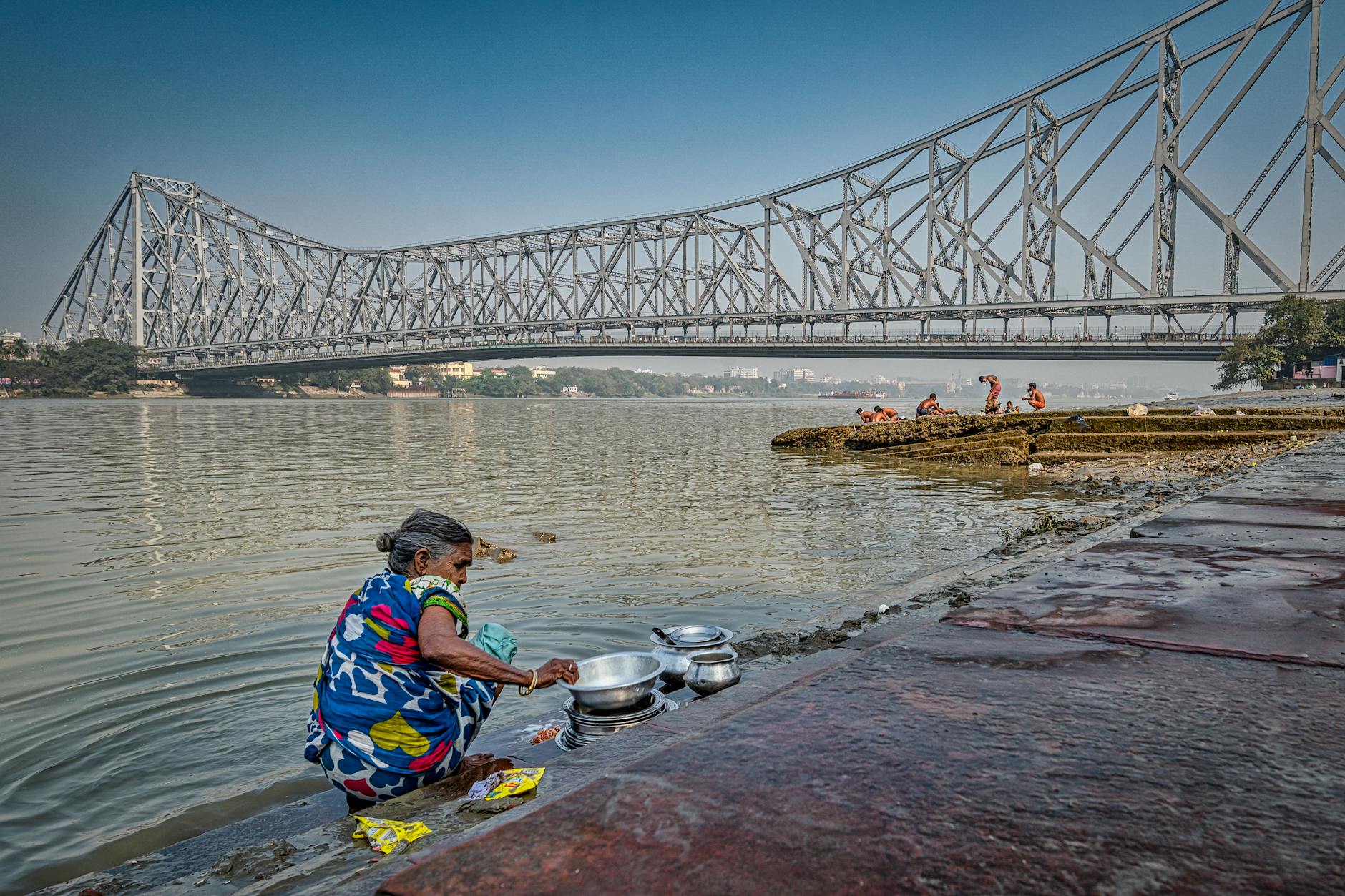
Photo de Kumar Kranti Prasad sur Pexels.com

Living in Paris, it often feels like we’re in a maze regarding our role in addressing climate concerns. We find ourselves caught in a whirlwind of media-induced guilt, though we’re far from being the sole architects of these global challenges. The narrative is often skewed, painting us as the culprits, when in reality, our contribution to these issues is considerably smaller.

One of my clients recently shared with me his simple desires: a warm room to wake up in, a hot bath, an organic but affordable breakfast, a meaty lunch, a soothing cup of organic green tea upon returning home, followed by a dinner of quiche made with free-range eggs. This, in his eyes, is his connection to the climate issue. It’s a perspective that echoes the sentiments of many, where everyday comforts and lifestyle choices intertwine subtly with the broader climate conversation.

This is probably how my client wakes up and thinks about energy transition! Photo generated by AI

He’s content as long as his basic needs are met without stretching his means too thin. However, when the guise of climate change leads to escalating prices for essential items at local grocery stores, coupled with the media’s barrage of self-blame, it raises his awareness. This shift in perception is one of the reasons I found the Berlin Energy Summit remarkably clear and approachable. While discussions ensued and leaders exchanged pointed remarks, the summit presented these complex issues in a way that was understandable and relatable to the general public.
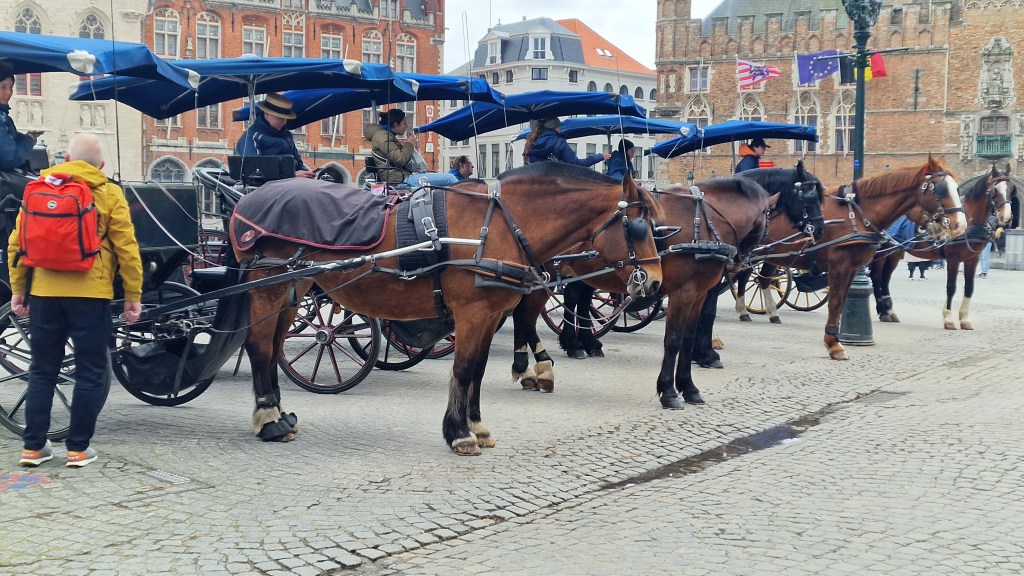
Bruges, Flanders, Belgium, Photo: Writtwik

As I mentioned earlier, my aim is to demystify the concept of energy transition, bringing it down to the grassroots level. This led me to get into the local fabric of France, the ‘terroir’ of its local communities, known as ‘les collectivités territoriales’. To gain deeper insights, I reached out to Cécile Raquin, the head of these local authorities, and Fabien Moigne, the Director of Risks and Prevention at the Paris Fire Brigade.

The French ‘collectivités locales’ or the DGCL acts as the main liaison for local authorities across France. It is tasked with shaping policies affecting these authorities, allocating state financial assistance to them, and setting standards for the roles of elected officials and staff. Additionally, it outlines strategic directions for national and European cohesion and urban policies.
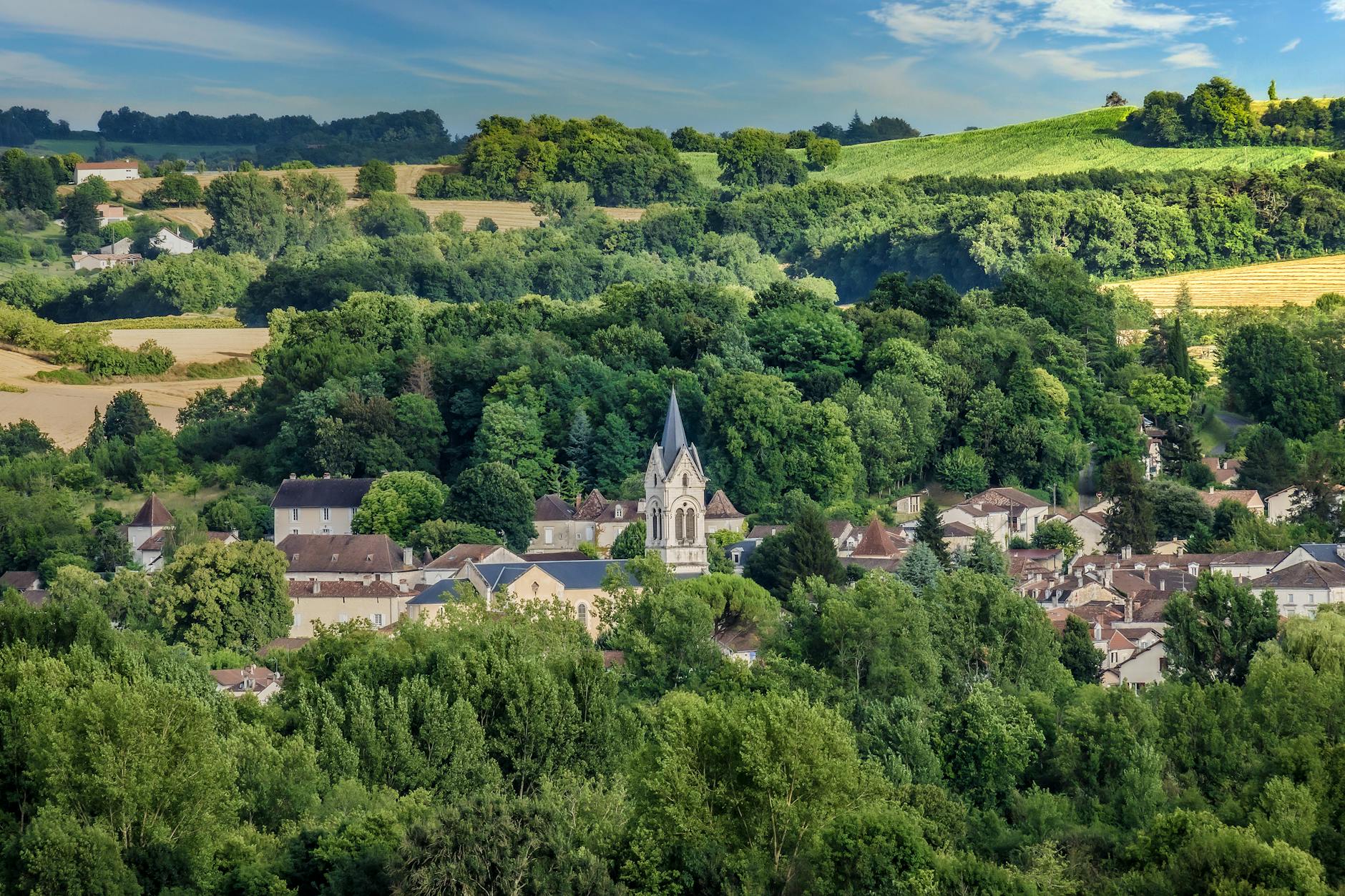
Photo de Vincent Su00e9bart sur Pexels.com

I was initially unsure if Cécile Raquin would agree to an interview, but to my pleasant surprise, she offered a deep dive into how French local authorities are weaving energy transition goals into their developmental fabric. Her insights illuminated the strategic use of tools like the ‘Green Fund’ and various regional investment grants. Cécile’s responses highlighted the vigorous efforts at the local level to champion environmental and ecological transition projects, aligning seamlessly with national sustainable development aims.

Then there was my interaction with Fabien Moigne from the Paris Fire Brigade. Awaiting his approval felt like an eternity, but it was worth the suspense. Venturing into a discussion about energy transitions with the Paris Fire Brigade, known for their annual calendar featuring the Herculean, Eros-like figures of their firemen, added a layer of allure to the topic. Framing my questions around how these energy shifts impact emergency services, I aimed to unveil the less-discussed yet crucial side of this transition.
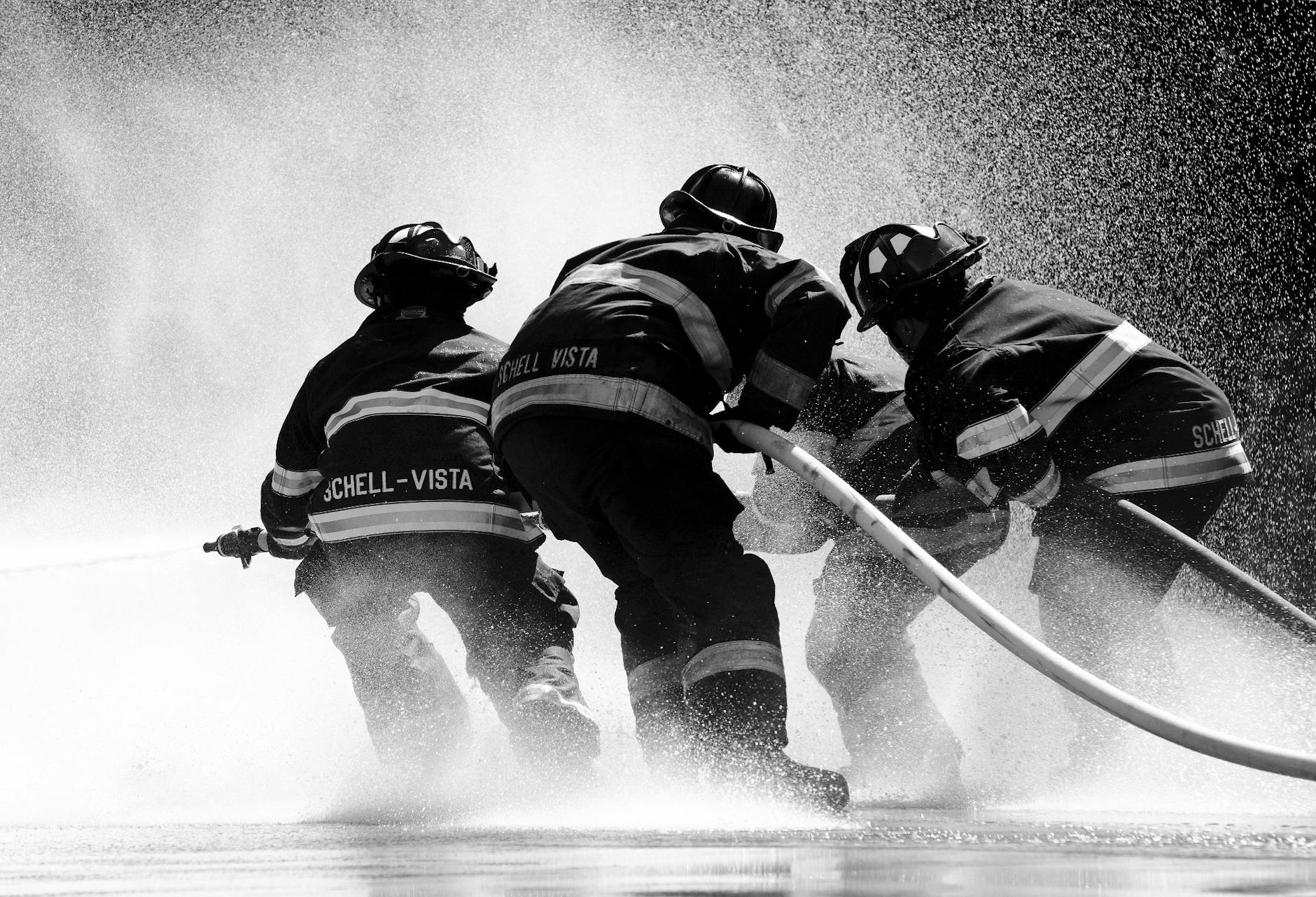
Photo de Pixabay sur Pexels.com

These interviews together paint a dynamic, almost mythological scene of how energy transitions are navigated across France’s societal fabric. From policy-making and public involvement in local government to the practical, and often heroic, adaptations in emergency response services, these dialogues offer a rich, multifaceted perspective on the journey of energy transition. Despite this write-up stretching beyond my initial control, I am eager to share these woven, captivating narratives with you.

Cécile Raquin, Director , Directorate General of the Local Authorities, Ministry of Home Affairs, Govt of France

Writtwik: How do French local authorities integrate energy transition goals into their local development plans, and what impact do these strategies have on sustainable development and achieving national energy objectives? (Comment les collectivités territoriales françaises intègrent-elles les objectifs de la transition énergétique dans leurs plans de développement local, et quelle est l’impact de ces stratégies sur le développement durable et l’atteinte des objectifs nationaux en matière d’énergie ?)

Cécile Raquin: French local authorities are significantly integrating energy transition goals into their local development plans, as evidenced by the presentation made to community representatives about the « green fund. » The investment grants provided under the Rural Action Plan or DETR (Dotation d’Equipement des Territoires Ruraux) and the Local Investment Support Grant or DSIL (Dotation de Soutien à l’Investissement Local) programs indicate a strong focus on environmental and ecological transition projects.

In 2022, these types of operations were the second most financed theme under the DETR, both in terms of the number of projects and the amount of subsidy awarded. This shows a substantial commitment at the local level to environment-friendly projects, which in turn supports the broader national goals of sustainable development and ecological transition.

Moreover, the ‘Green Fund,’ a new financial support tool for local communities, was established in 2023 with a budget of 2 billion euros and has been met with great success. Its resources were fully utilized to finance essential projects for mitigating and adapting to climate change. This fund will continue into 2024 with an allocation of another 2 billion euros.

Writtwik: Considering the challenges and opportunities related to financing energy transition initiatives at the local level, what innovative approaches are being adopted by local authorities to mobilize resources, in partnership with the central government and private sector players? (Face aux défis et opportunités liés au financement des initiatives de transition énergétique au niveau local, quelles sont les approches innovantes adoptées par les collectivités pour mobiliser des ressources, en partenariat avec le gouvernement central et les acteurs privés ?)

Cécile Raquin: Local French authorities are utilizing innovative financing approaches to support energy transition initiatives, primarily through government investment grants like DETR and DSIL.

In 2022, the Rural Action Plan or DETR supported 4,459 projects in this category with a total of 202.6 million euros in commitment appropriations, representing a total amount of 744 million euros.

The Local Investment Support Grant or DSIL, on the other hand, prioritized this theme most significantly, both in terms of the number of projects and the allocation of credits. This demonstrates how local authorities are effectively leveraging governmental support to finance significant operations in the field of environmental, energy transition, and ecological projects. These initiatives not only help in meeting the local developmental needs but also align with national objectives for a sustainable future.

Writtwik: Can you share concrete examples where citizen participation has been pivotal in the success of local energy transition projects? (Pourriez-vous partager des exemples concrets où la participation citoyenne a été déterminante dans la réussite de projets de transition énergétique au niveau local ?)

Cécile Raquin: Citizens are playing a key role in transforming the way we use energy in France, and I’ve seen some inspiring examples of this. Through initiatives like Énergie Partagée, local people aren’t just onlookers in the energy transition; they’re active participants. They’re getting involved right from the grassroots level, putting their own money into renewable energy projects. This isn’t just about switching to greener energy; it’s about communities taking control and really owning these projects.

Also, it’s about keeping everyone in the loop. Énergie Partagée makes sure people know what’s happening through regular updates and events. It’s great to see folks come together, sharing ideas and experiences, and building something beneficial for all.

Then there’s Centrales Villageoises. They show how diverse and creative these local energy projects can be. Take the Centrales Villageoises de la Région de Condrieu, for example. They’ve set up multiple solar panel installations and are even exploring a smart-grid project. Or the Centrales Villageoises du Val d’Eyrieux, which has 23 installations! They’re also experimenting with something really interesting: letting people use the solar energy they produce themselves.

Each of these projects has its own unique story, but what they all share is a sense of community. People aren’t just waiting for change; they’re rolling up their sleeves and making it happen. And that’s what’s truly exciting about the energy transition in France – it’s driven by the people, for the people.
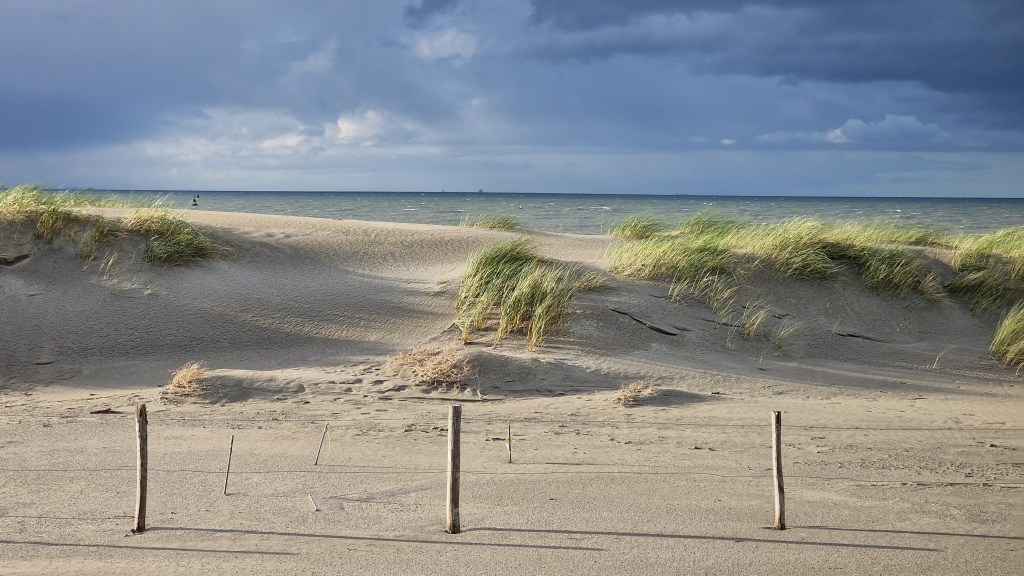
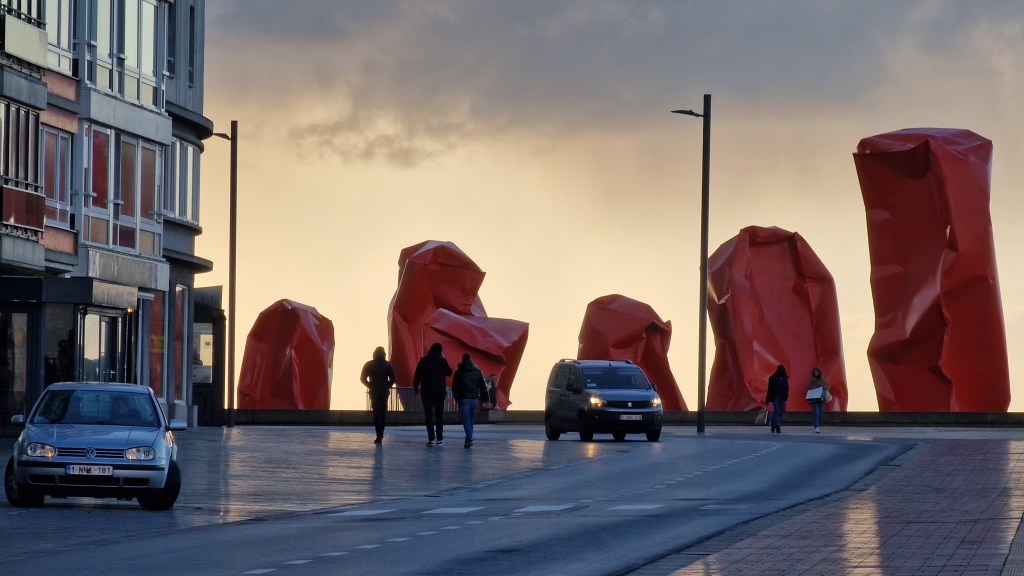
Ostende, Flanders, Belgium, Photo: Writtwik

Fabien Moigne, Director of the Risk and Prevention Department, Paris Fire Brigade, Ministry of Home Affairs, Govt of France

Writtwik: How does the transition to renewable energy sources and new energy technologies affect the Brigade’s intervention protocols and methods, particularly in emergency or accident situations?

Fabien: The energy transition significantly affects the intervention protocols of the Brigade. Notably, the electrification of the vehicle fleet, the invention of hydrogen engines, and the introduction of biosourced materials in construction pose new challenges in terms of fire prevention. Unlike concrete, these combustible materials require a revision of prevention rules to incorporate these new fire risks.

Writtwik: With technological advancements in the energy sector (such as lithium-ion batteries, solar panels, etc.), how do you ensure your teams are trained and prepared for the associated risks?

Fabien: To address the new energy challenges, the Brigade is adapting by training its teams on the characteristics of new types of fires, such as those related to wooden buildings or electric vehicles. The Brigade also collaborates with experts and industry professionals to understand and better manage these risks, enriching the skills of its teams and improving intervention protocols.

Writtwik: Are there collaborations or exchanges between your department and energy sector companies to anticipate and better manage the risks associated with energy and its transition?

Fabien : Yes, there are collaborations between the Brigade and the energy sector. These exchanges enable the Brigade to enhance its understanding of the specificities of new energy technologies and adapt its intervention methods. This interaction is beneficial both for the firefighters, in terms of skills and preparedness, and for the energy sector companies, which gain a better understanding of the challenges associated with implementing these technologies.

Acknowledgements:

Cécile Raquin, https://www.collectivites-locales.gouv.fr/

Fabien Moigne, https://pompiersparis.fr/

Matthieu Angotti, https://agence-cohesion-territoires.gouv.fr/

Ute Swart, https://www.energydialogue.berlin/press/

Aniruddha Barua, Photographer, London
à la Une

German Notion of Accountability in Energy Transition
On this journey, they introduced us to three unique companies striving to leave their mark on the global stage, amidst a sea of thousands aiming for international recognition.

To my friends and readers, here’s a candid confession! Simplifying the intricate world of energy-related topics can be quite the challenge. I always try to maintain your interest without overstretching your patience, though I admit, sometimes I might miss the mark. My goal isn’t just to keep you scrolling through my blog, but to offer substantial content that often gets overlooked in mainstream outlets. Yes, I could easily churn out answers in my unique style, creating an unending stream of content just to stay in the loop, but that’s not my cup of tea. I am highly ethical and close to being a Saint. So, I hope you’ll bear with me as we take a plunge into a story that’s not exactly a piece of cake to simplify – a story filled with nuances, ambiguities, and a need for a polish here and there.

Photo: Blogger

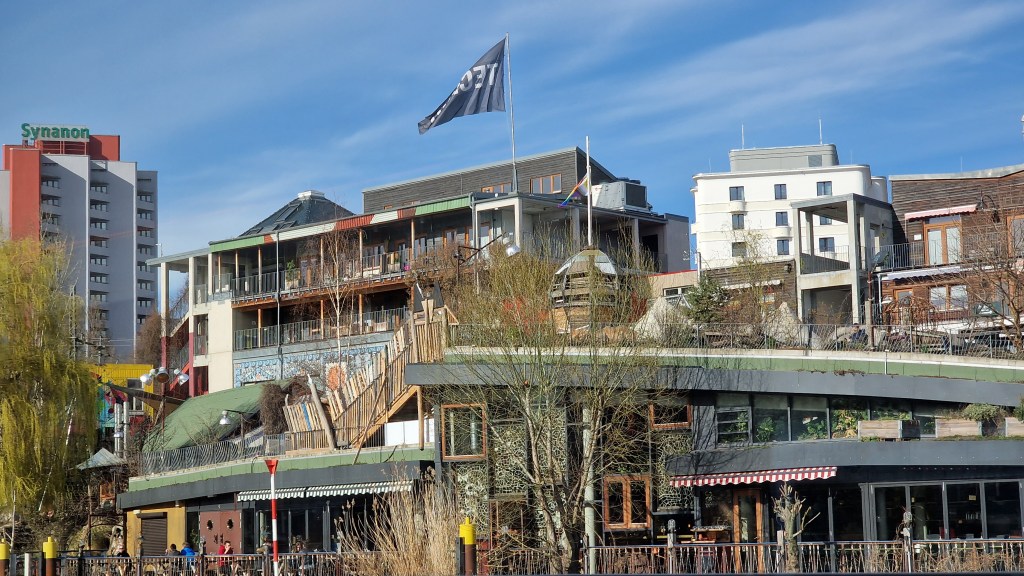
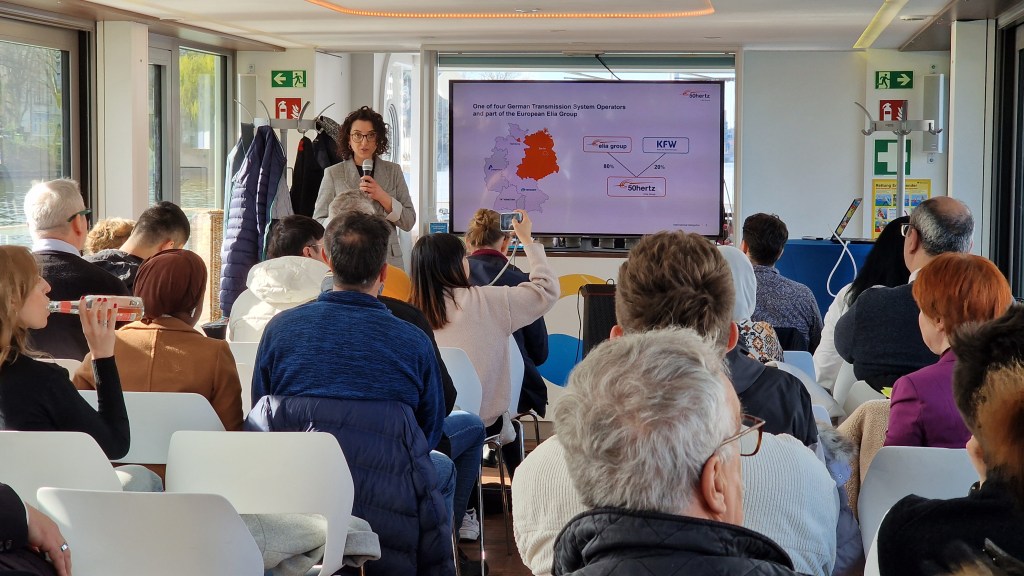
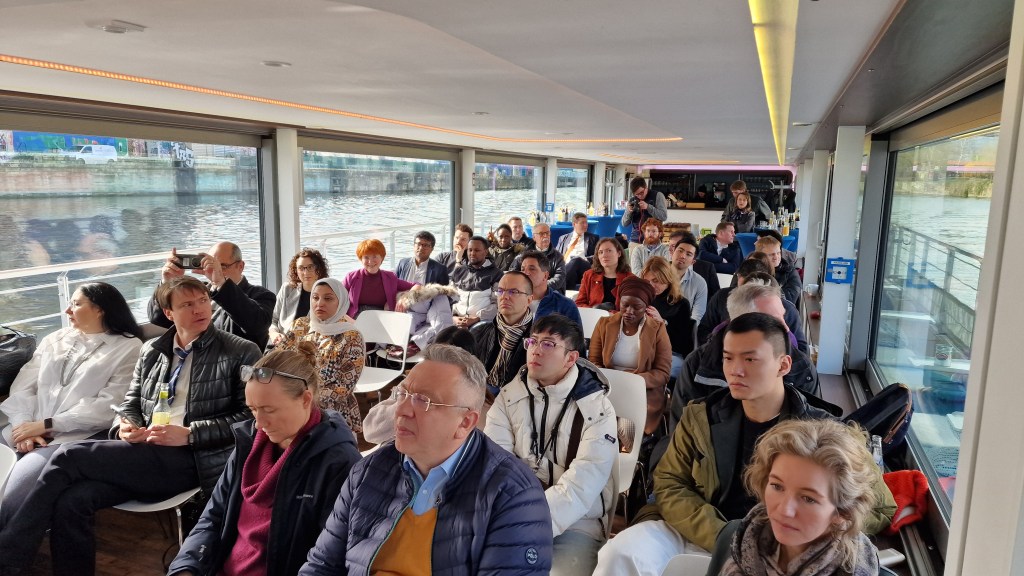
So, allow me to take you on a journey into the German notion of accountability in energy transitions, and trust me, it’s a risk I’m willing to take to bring you closer to this concept. I’ll be incorporating observations from the boat ride hosted by DENA, the German Energy Agency on 18th March, as a side event of #BETD24. During the boat ride, we got a glimpse into the world of energy innovation. On this journey, they introduced us to three unique companies striving to leave their mark on the global stage, amidst a sea of thousands aiming for international recognition. It was indeed an enlightening experience.

Photo: Blogger

Developing this story is perhaps going to be a tough one. Therefore, I’m all ears for discussions and welcome any corrections to my understanding, largely derived from online resources courtesy of my memberships with the BNF and INHA. Yes, energy has indeed played a role in the history of art in Europe, as I’ve learned from stories shared by my German friends’ families. Please see reference section below.

Now, let’s get into the complexity of accountability in energy transitions within Berlin’s historical and spatial context over the past century. This city, transitioning through various political regimes, from democracy to state socialism, offers a unique lens to view how accountability in energy transitions has been molded by the political constructs of each era.

Accountability in Berlin’s energy infrastructure today is more than just a minor concern. It’s fueled by public demand for democratization in decision-making processes. Movements like the Berlin Energy Roundtable and Citizen Energy Berlin have reshaped energy policy debates around participation, transparency, and, of course, accountability. Coming from France, I must say, the effectiveness and transparency of German processes are something to behold, no joke intended. These movements have influenced city government policies, paving the way for a public energy utility to rival private entities, marking a shift towards governance that’s more accountable and focused on consumers.

Photo: Blogger

Exploring urban energy democracy in Berlin provides insights into how accountability is being framed and institutionalized today. But to truly grasp this concept, one must peek into the historical backdrop of the city’s energy policies. It’s not just about the contemporary low carbon transition; it’s about understanding the various phases of energy transition and the evolution of accountability and legitimacy in each period.

Photo: Blogger

With Berlin’s energy transition over the last century in mind, I’ve identified three themes in Energy Transition that I believe will clarify the core concept for us all and also tried to furnish a consolidated timeline in order to facilitate our reading: Innovation and Diversification of Energy Sources, Infrastructure and Modernization and Sustainability and Circular Economy. To complement, I have brought back the topic of semiconductor as well.

Innovation and Diversification of Energy Sources:

1920s – 1940s: The energy sector was dominated by coal and water power, with limited electricity usage in households.
1950s – 1960s: Oil emerged as a new source of energy.
1970s – 1980s: The beginning of diversification with the rise of nuclear energy.
1990s – 2000s: The adoption of wind and solar power marked the beginning of a more diverse energy mix.
2010s – 2024: Continuous innovation led to the growth of decentralized energy systems and smart energy technologies. The Industry 4.0 movement brought about a significant transformation in energy usage in manufacturing, focusing on automation and efficiency. ENERTRAG’s development of combined power plants points to the need for diversified renewable energy sources for reliability and efficiency.

Infrastructure and Grid Modernization:

1950s – 1960s: Post-WWII electrification of households expanded, and oil began replacing coal for home heating and industrial use.
1970s – 1980s: Nuclear power plants began contributing significantly to the energy mix.
1990s – 2000s: Deregulation of the energy market facilitated the development of modern energy infrastructure.
2010s – 2024: Germany saw significant advancements in energy storage technologies and the integration of renewable energy sources into the grid. The development and expansion of electric vehicle infrastructure represented a major step in modernizing the energy infrastructure. 50Hertz’s role in expanding energy grids highlights the importance of infrastructure in integrating renewable energy sources

Sustainability and Circular Economy:

1970s – 1980s: The energy crises led to heightened awareness of conservation, ushering in energy-efficient appliances and insulation techniques in homes.
1990s – 2000s: With an increased focus on renewable energy, there was a significant push towards sustainable energy practices.
2010s – 2024: The Energiewende policy emphasized a transition to renewable resources, supporting a shift towards a more sustainable and circular approach in energy use. The expansion of decentralized energy generation, including residential solar panels, and the growth of smart home technologies for efficient energy management further bolstered this shift. SunCrafter’s initiative with second-life solar modules illustrates a move from traditional consumption models to sustainable circular economies.

The integration of renewable energy in semiconductor manufacturing, as discussed in my previous interview questions, highlights the interconnectivity of different industries in the energy transition. Policies and incentives for eco-friendly practices in sectors like semiconductors may point towards a holistic approach to sustainability across industries.

Photo: Blogger
Collaborations between countries and global entities in renewable energy underscore the importance of international cooperation in achieving global sustainability goals and that’s why I had to ask a specific question on Global South to a career diplomat of India who is currently serving his mission somewhere in eastern Europe.

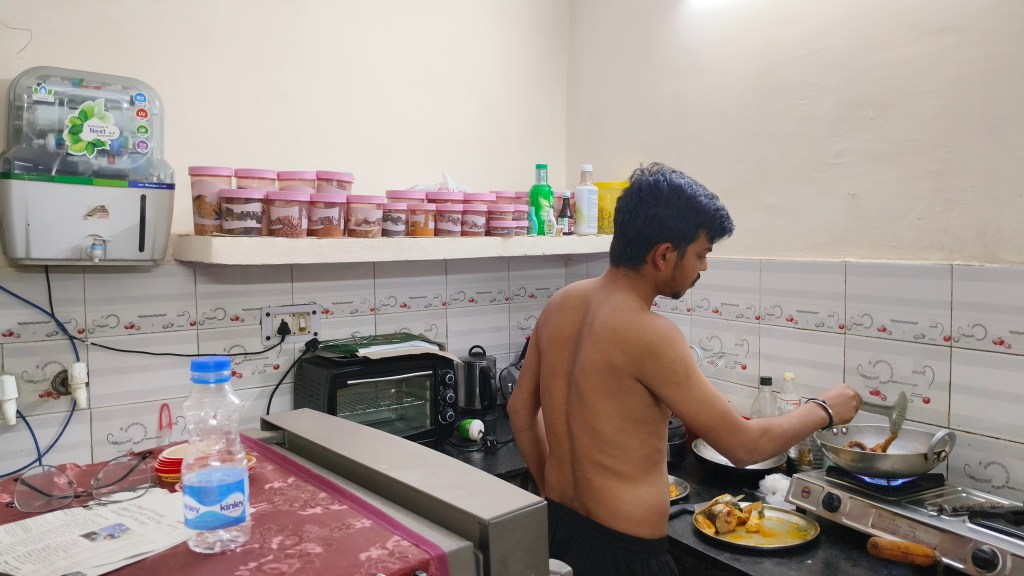
From coal to gas and now to OTG (Oven-Toaster-Griller), India’s own energiewende in a nutshell

I asked: In light of India’s significant advancements in renewable energy, what strategies could be implemented to extend support and share best practices with the Global South countries, particularly in areas like solar energy, energy efficiency, and sustainable infrastructure development? How can India leverage its own experiences to create a more inclusive and sustainable energy transition in developing nations?

What he answered: In response to how India can extend support and share best practices with the Global South, a key strategy is the promotion of solar energy. our membership in the International Solar Alliance (ISA) positions us well to facilitate this. Additionally, we can make solar panel technology and photovoltaic plant technology more accessible to developing nations through lines of credit (LOC) or soft loans. This approach would enable us to leverage our own renewable energy advancements to assist in facilitating a more inclusive and sustainable energy transition globally.


In conclusion, drawing from Germany’s diverse historical experience and its evolving story of accountability, the energy transition is recognized as much more than a simple switch from fossil fuels to renewable sources. It’s a multi-faceted metamorphosis that spans innovation, infrastructure development, policymaking, and international collaboration. Looking back at Germany’s energy evolution, from its early reliance on coal to today’s emphasis on renewables and democratic energy management, it’s clear that a sustainable energy future necessitates comprehensive and cohesive strategies. These strategies must address not just the technical aspects of energy production but also give due consideration to the environmental, economic, and geopolitical factors that influence our world. This approach, informed by historical insights and accountability principles, is essential in guiding the global shift towards a more sustainable and equitable energy environment.

I hope this write-up was not too long! Thanks.

References:

Enabling Sustainable Transition

La politique énergétique allemande: engagements, réalisations et perspectives

Transition énergétique: Comment fait l’Allemagne?

à la Une

The Berlin Energy Transition Dialogue 2024

With the global semiconductor industry often at the center of geopolitical tensions, particularly between major powers like the US and China, how is the India Economic Trade Organisation navigating these complex dynamics? What is India’s strategy to maintain its growth and independence in this high-stakes environment while balancing international relations?

Photo by the Press Office of the BETD, Berlin, Germany

I am travelling again and in less than a few hours, I will be on the other side of the Rhine. Berlin. And this time, I am attending the Berlin Energy Transition Dialogue as a press delegate. While preparing my trip, I am also reflecting on a journey deeply connected with energy narratives. Growing up in Kolkata, India, « load shedding » was a regular part of life, a term synonymous not just with power cuts, but with the broader struggles of industrial decline. This experience was not just about the inconvenience of power outages, but rather a deeper narrative of economic shifts.

Back then in the nineties and the early years of 2000, Kolkata, under a specific regime, faced numerous strikes and unemployment, evidence to the need to balance power distribution and industrial demands. The irony lies in today’s Kolkata, where load shedding is a thing of the past, not due to a grand energy transition, but rather an absence of industrial demand, leading to an almost overflowing electricity supply. This personal backdrop forms a stark contrast to the energy landscapes I encountered later in my career, especially at international forums like COP21 in Paris.

Photo: Writtwik

I had the modest opportunity to be part of the media team for the Embassy of India, allowing me to study countless documents over a week. While everyone buzzed about India and France as key players at Le Bourget, deep inside, I was riddled with questions.

Admittedly, like most people, climate issues hadn’t deeply intrigued me beyond my 2009 master’s dissertation in Earth Sciences at the University of Paris-Cité (Diderot). It was during my time translating in the media center at COP21 that I found a burning desire to understand climate stakes more deeply.

I pondered: What are the tangible effects of climate change? Is there an effective climate policy? What is the science behind it? How can green activists convince decision-makers to implement coherent policies? Is there a ‘jugaad’ (an innovative fix) for all these questions? Probably not.

Photo de Pixabay sur Pexels.com

These questions haunted me for some time, compelling me to focus on the topic of energy, an area where I lacked expertise. The first thing that came to my mind was light, a resource still inaccessible to much of India. Light leads to energy. How is energy utilized in an emerging and ambitious economy like India?

Searching for organizations working in this field, I stumbled upon TERI (The Energy and Resources Institute) in New Delhi. Though I had heard of this NGO during COP21, the lack of French media coverage made it challenging to research them further. My discovery of TERI marked the beginning of a new chapter in my journey towards understanding and advocating for energy solutions.

While aiding The Energy Research Institute to disseminate its ‘lighting a billion lives’ project across francophone nations, a deep-seated emotional bond with energy advocacy burgeoned within me. This advocacy journey seamlessly intertwined with fate at the Paris Peace Forum in 2018, where I crossed paths with Dr. Asif Iqbal from the Indian Economic Trade Organisation. Our bond, cemented by shared aspirations of fostering cross-country connections, has flourished. While Asif navigates tangible trade dialogues, my role meanders through the promotion of intangible cultural heritage, leading us to a common confluence – the estuary of mutual understanding and cooperative goals. Our collaboration, underpinned by a shared pursuit of a greener future, makes the forthcoming dialogue an exciting convergence of ideas and insights.

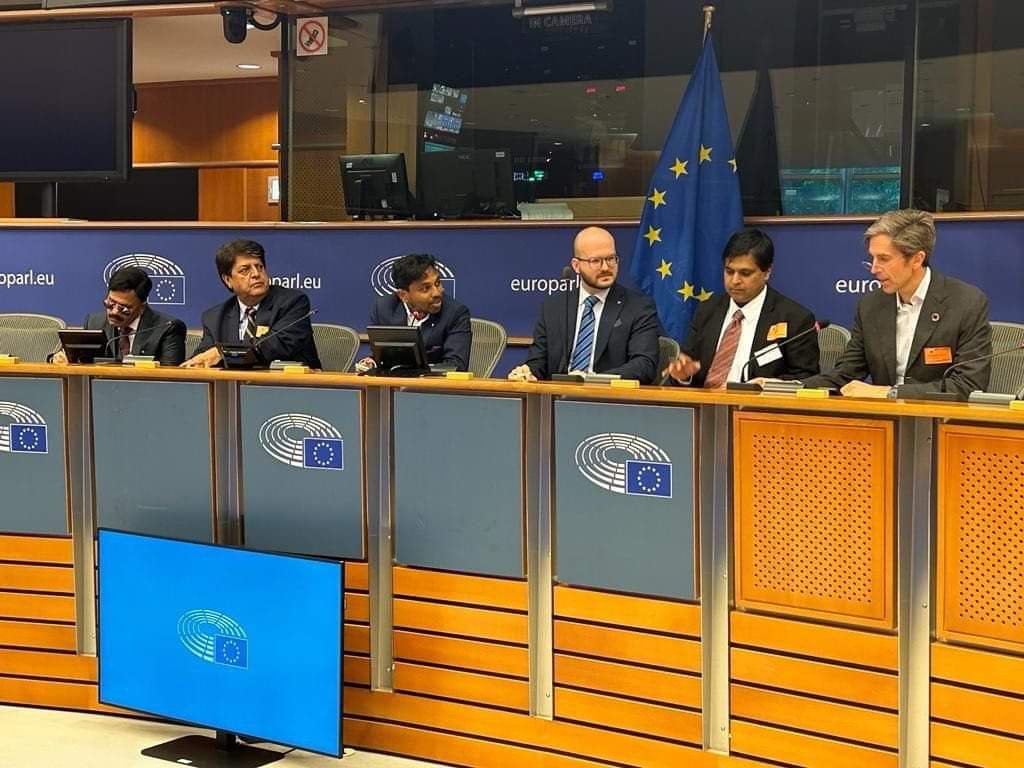
Photo: Asif, at the Energy Panel of the European Parliament

This inaugural article for the Berlin Energy Transition Dialogue is, therefore, much more than a discussion on energy; it’s a story of how Dr. Asif Iqbal orchestrates dialogues and creates synergy across various domains. Therefore, keeping in line with the theme of the Berlin Dialogue, I’ve prepared four tailored questions to explore these dynamics. These questions aim to focus on how the Indian Economic Trade Organisation is influencing policies and industry standards in semiconductor manufacturing, especially regarding renewable energy integration. They also touch upon eco-friendly practices within the semiconductor industry, global collaborations for technological advances in this sector, and how geopolitical tensions are maneuvered. Through these questions, I would like to shed light on the multifaceted role that Dr. Iqbal plays in bridging gaps and fostering partnerships across the globe.

Photo de Pixabay sur Pexels.com

Writtwik: As a key player in lobbying, how is the Indian Economic Trade Organisation influencing policy and industry standards to promote the integration of renewable energy in semiconductor manufacturing? Are there specific initiatives or recommendations you’re championing to encourage sustainable energy infrastructure in this sector?

Asif: The Indian Economic Trade Organization (IETO) operates as a facilitator of economic collaborations, plays a crucial role in driving sustainable initiatives within the semiconductor sector and more. We act as a bridge between Indian semiconductor manufacturers and global entities specializing in green energy solutions. Through collaborations, IETO facilitates the exchange of technologies and best practices, fostering the adoption of eco-friendly manufacturing processes. Moreover, IETO contributes to the upliftment of Small and Medium Enterprises (SMEs) within the semiconductor industry, ensuring that sustainability measures are inclusive. The organization conducts capacity-building programs, provides financial support, and facilitates technology transfer to empower SMEs in embracing sustainable practices.

Photo de Pixabay sur Pexels.com

In tandem with India’s broader vision, IETO actively engages in policy advocacy, working closely with governmental bodies to promote regulations that incentivize the use of sustainable energy sources in semiconductor manufacturing. The organization also advocates for and supports research and development initiatives, encouraging innovative technologies that contribute to energy-efficient processes.

Furthermore, IETO creates networking opportunities for SMEs, fostering collaboration and knowledge-sharing on sustainable practices within the semiconductor industry. The organization also establishes recognition programs to acknowledge and incentivize companies, particularly SMEs, excelling in sustainable energy adoption.

Through these combined efforts, India, with the proactive involvement from large enterprises, strategic International collaborations, boost from the SME’s, positions itself as a global leader in driving sustainability within the semiconductor industry. The collaborative approach not only aligns with international environmental goals but also strengthens India’s semiconductor ecosystem by promoting inclusive and resilient practices.

Writtwik: What incentives or policies are being advocated to promote energy-efficient practices within India’s semiconductor industry, and are there any specific programmes encouraging the adoption of such technologies?

Asif: In India, the government has historically introduced various initiatives to promote energy efficiency and sustainability across industries, but specific programmes for the semiconductor sector may vary. Policies related to renewable energy adoption, energy-efficient technologies, and environmental sustainability can have indirect effects on semiconductor manufacturing.

The Indian government has set up the India Semiconductor Mission (« ISM ») to tackle the worldwide shortage of semiconductors and encourage manufacturers to establish their semiconductor facilities in India. Under the ISM, the government has introduced four schemes. As the central agency, ISM will assess the technical and financial aspects of received applications, suggest the selection of applicants, and undertake other responsibilities assigned by the Ministry of Electronics and Information Technology as needed.

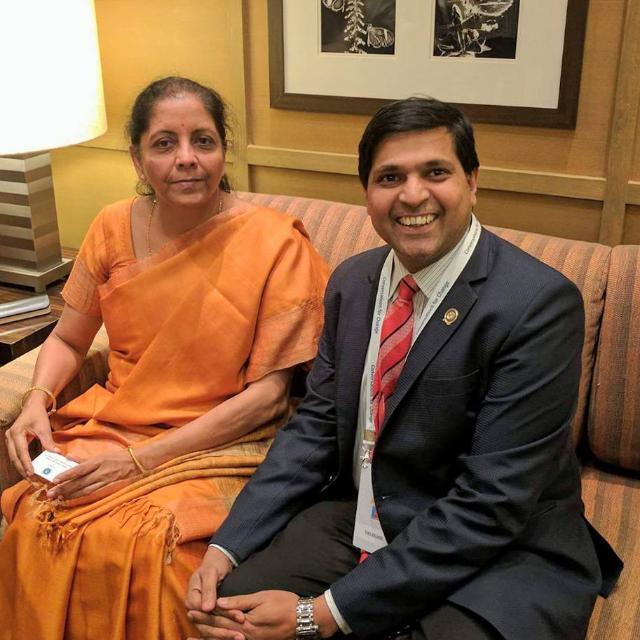
With India’s Finance Minister, Ms. Nirmala Sitharaman at the Huddle Conference in Bengaluru, Karnataka, India

The Ministry of Electronics and Information (MeitY) is looking for applications from 100 Indian companies, startups, and small businesses for its Design Linked Incentive (DLI) Scheme. This program has three parts: support for chip design infrastructure, incentives for product design, and incentives for deployment. C-DAC (Centre for Development of Advanced Computing), a scientific society under MeitY, will be in charge of making sure the DLI scheme works. The main aim of the DLI scheme is to help at least 20 Indian companies that work on designing computer chips. The goal is to help these companies make more than INR 15 billion or 167 million euros in the next five year.

Writtwik: Can you shed light on how the organisation is facilitating collaborations between Indian semiconductor industry and global leaders in renewable energy, and any significant partnerships aimed at propelling India towards a sustainable semiconductor future?

Asif: With India excelling in chip design, the recently authorized facilities will drive the advancement of chip fabrication capabilities, fostering the growth of indigenous packaging technology. This transformation is anticipated to generate fresh employment opportunities and simultaneously increase semiconductor production capacity. According to the central government’s projections, the establishment of three new units will directly impact 20,000 high-tech positions and indirectly lead to the creation of an additional 60,000 jobs.

The Indian semiconductor industry has gained significant investments and commitments from top global chip manufacturers, showcasing confidence in India’s potential as a semiconductor hub. Notable contributions include Micron’s INR 22,500 crore semiconductor facility in Gujarat, Foxconn’s USD 1.2 billion investment for electronic components manufacturing in Tamil Nadu, AMD’s USD 400 million investment in Bangalore for the world’s largest R&D facility, and Applied Materials’ USD 400 million investment in Bengaluru for semiconductor manufacturing equipment. Additionally, collaborations with industry suppliers, discussions with global players, and a memorandum of cooperation with Japan further highlight India’s emergence in the semiconductor sector. Sahasra Semiconductors has already established a production unit in Rajasthan, set to commence production of locally-made memory chips in October 2023. We at the IETO strongly highlight the need for a collaborative effort between the Indian government, industry, and global players to establish resilient semiconductor supply chains worldwide.

Writtwik: With the global semiconductor industry often at the center of geopolitical tensions, particularly between major powers like the US and China, how is the India Economic Trade Organisation navigating these complex dynamics? What is India’s strategy to maintain its growth and independence in this high-stakes environment while balancing international relations?

Asif: India’s role in the geopolitical landscape is underscored as it emerges as a significant player in the semiconductor industry. While the primary focus of the discussion revolves around global dynamics, tensions between major powers, and strategic initiatives, India’s proactive involvement is evident. The extended summary previously mentioned India’s efforts in attracting substantial investments from top chip manufacturers, such as Micron, Foxconn, AMD, and Applied Materials, reflecting the country’s commitment to developing a robust semiconductor ecosystem.

These investments, I am convinced, position India as a major player in the global semiconductor supply chain, contributing to the geopolitical equation. The Memorandum of Cooperation signed with Japan further emphasizes India’s strategic collaborations to bolster the semiconductor sector. Amidst the intensifying competition between major nations, India’s growing semiconductor capabilities add a unique dimension to the geopolitical narrative, enhancing its role in the intricate balance of power in the technology and semiconductor domain.

Currently, IETO plays a vital role in driving economic partnerships, especially in the semiconductor sector. It actively engages in promoting investments, trade deals, and partnerships, significantly contributing to building a strong, global semiconductor supply chain network. This approach, which prioritizes collaboration and shared economic gains, aligns with a strategy that combines diplomatic and business perspectives, skillfully managing geopolitical complexities without direct involvement.

Writtwik: Thank you so much, Asif. Really appreciate it.

Acknowledgements:

Dr.Asif Iqbal, President, Indian Economic Trade Organisation

The Press Office, Berlin Energy Transition Dialogue, 2024

à la Une

Lyon Unveiled: Part Two – Glimpses Beyond the Ordinary

As dawn broke on my second day in Lyon, my expectations clashed with reality over a trivial matter – coffee. The brew provided by Sofitel, though adequate for many, fell short of satiating my refined palate. Fortunately, my ‘coffee archives’ – a collection of carefully chosen sachets for emergencies – came to my rescue, transforming an ordinary morning into one of aromatic satisfaction.

The rhythm of the day established its tempo with a visit to the hotel gym. In this sanctuary, the rigor of physical exertion danced with the serenity of mental clarity. It was a harmonious prelude to what I anticipated would be a similarly invigorating experience in the steam room.

For me, the gym has always been an arena of mixed emotions rather than a consistent ally. My relationship, you know it quite well now, with physical fitness has been a journey of peaks and valleys. There have been times when I’ve shied away, preferring the shadows to the unforgiving glare of gym lights that illuminate the sculpted physiques I sometimes yearn for yet accept I may never achieve.

Today, as I ran on the treadmill, each step was a negotiation between aspiration and acceptance. After a determined thirty-minute sprint, my body signaled it was time to step down, marking the end of one challenge and the threshold of another.

My curiosity about Sofitel’s steam room had been simmering for quite some time, fueled by whispers of its luxurious ambiance and the promises of a rejuvenating experience. The prospect of finally stepping into this famed retreat infused me with a sense of eager anticipation. It was not just a room I was about to enter, but a dream I was ready to live. The steam room, renowned for its restorative powers, beckoned me, promising a sanctuary where the physical exertions of the gym could be soothed away, and where the mind could wander freely in the comforting embrace of warm, healing vapors.

Photo courtesy: https://www.bullukian.com/

The steam room, a vast yet intimate heaven designed to detoxify and rejuvenate, was spacious enough to accommodate a small crowd, yet on this day, it was my solitary retreat. Informed of its mixed-gender use – a nod to the Scandinavian saunas I fondly remembered as bastions of openness and self-challenge – I entered with a tinge of curiosity. France, with its facade of liberal attitudes, often harbours a deeply ingrained conservatism, and this extends to the sanctums of luxury hotels as well. Such spaces, though ostensibly liberal, are coloured by a certain puritanical ethos.

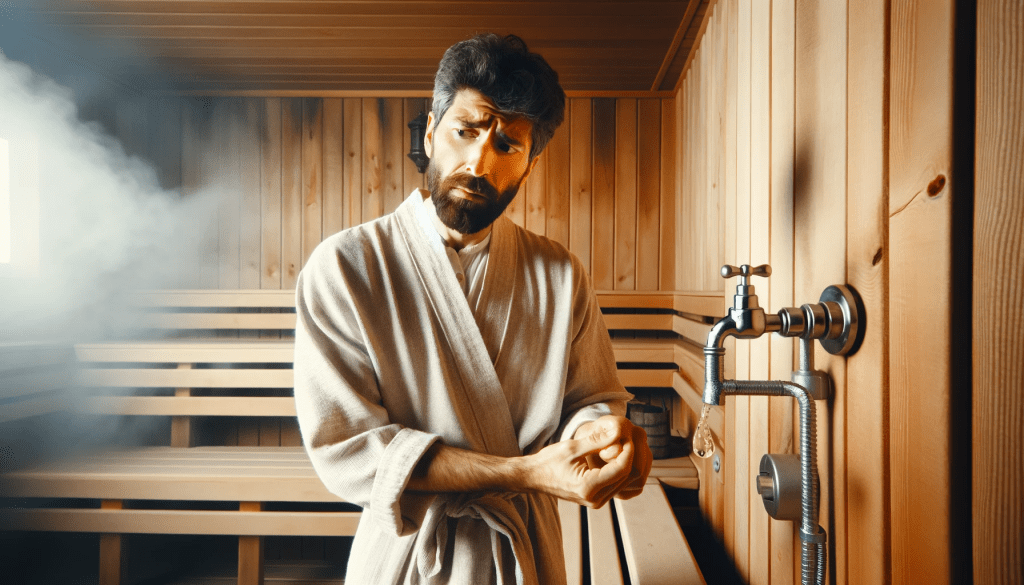
Alone, I embraced the liberating solitude of the steam room, allowing the heat to envelope me, coaxing the toxins from my skin, and indulging in a moment of unbridled freedom. But this idyll was not to last. As I prepared to rinse away the vestiges of the steam, I was met with the startling reality that the showers were out of order. Suddenly, the tranquility of my solitude was replaced by a pressing urgency.

Image obtained from an illustrator

Imagine the scene: there I was, a figure drenched in sweat, hastily redressing in my dampened clothes, my exit from the steam room a far cry from the leisurely retreat I had envisioned. The journey back to my room was a blend of discomfort and haste, a stark contrast to the earlier serenity. The disruption, even though minor, served as a reminder of the unpredictable nature of life, even within the meticulously planned environment of a luxury hotel. This unexpected detour in my otherwise seamless routine was a vivid episode in the mosaic of my Lyon adventure, a momentary lapse in the orchestrated elegance that only served to heighten the overall experience. As I returned to my room, the memory of this incident stayed on, a testament to the day’s unpredictable nature and the small surprises that await us in our most private moments.

Refreshed from my shower, I spritzed myself with Gentleman de Givenchy, a fragrance that has become a part of my very essence, enveloping me in a cloud of refined elegance. This olfactory ritual served as the perfect prelude to my meeting with Georgio at Place Bellecour. He, a man juggling the multifaceted roles of fatherhood, husband, son, and a cyber security expert. His presence, is always a delightful surprise and his responses are as eagerly awaited as a message in a bottle cast into the sea, adds a unique charm to every encounter.

We met, greeted eachother and realised that our appetites were keenly awakened. Our culinary rendezvous was at L’Espace, a brasserie that echoed the sophisticated ambience of our previous meeting at Sir Winston, a high-end Indo-British brasserie near the Arc de Triomphe in Paris. Here, in the heart of Lyon, our Parisian memories were rekindled over a meal that celebrated simplicity and luxury in equal measure. The burger, our mutual choice, served as a bridge between our shared past and present.

With Georgio at L’Espace Brasserie: https://www.maison-borgeot.fr/lespace-brasserie/

As the wine added a touch of class to our meal, we eschewed dessert for a more rustic yet equally indulgent option – demi Saint Marcellin cheese platters. True to my culinary philosophy, I indulged in the delightful ritual of ‘buttering my bread for cheese’ – a personal idiosyncrasy that elevates the experience to an art form.

Now, I’m well aware that in the hallowed halls of Lyonnaise gastronomy, slathering butter under a slab of cheese might be considered nothing short of heresy. It’s like wearing sneakers to a black-tie event – unorthodox, mildly scandalous, yet undeniably me. This quirk in my palate has its roots in my very first full meal with my friend Tété in September 2006. He, with his mixed heritage and a dash of Swedish lineage, encouraged me to layer butter under the cheese, insisting it would elevate the taste. To my initial horror, I discovered that this combination, though delicious, was met with looks of sheer astonishment from the purists around us. In France, where cheese often represents God on earth, pairing it with butter is akin to rewriting the Book!

So, as I spread a generous layer of butter under my cheese, Georgio’s reaction was priceless. His eyes widened, mirroring the shock that once played across my face. In that moment, I realized how much I relished these little acts of culinary rebellion. Tété’s Swedish influence, which embraced cheese with biscuits – a big no-no in traditional French circles – had clearly rubbed off on me. It was a delightful mash-up of cultures, a testament to how food can transcend boundaries, much to the amazement (or dismay as you can say) of culinary traditionalists like Georgio.

To those who find my Kardashianesque attention to detail wearisome, I forewarn – the remaining part of my Lyon saga may well surpass your wildest imaginations. Lyon, with its blend of the ancient and the contemporary, has a way of transforming even the mundane into the extraordinary. As I continue to document this journey, each moment becomes a thread in the intricate fabric of my story, a story that is as much about discovering Lyon as it is about rediscovering myself.

Somewhere in Croix Rousse, at the 4th arrondissement of Lyon

STAY TUNED!!! Because day two hasn’t finished yet. After our lavish lunch, Georgio and I took our leave from one another with a pledge to reunite soon over more stories and burgers. He headed back to his abode, and I ventured up to Croix Rousse, the 4th arrondissement of Lyon. This uphill neighbourhood is a microcosm of the Rhône Alpes high-flyers, a community living within its own bubble, where descending to Saxe Gambetta or Bellecour feels like an odyssey.

In the heart of Croix Rousse, I stumbled upon a sanctuary of well-being, a serene oasis amidst the urban hustle. Here, a Delhi-born entrepreneur, with her roots deeply entrenched in the vibrant culture of India, had woven her magic into the very fabric of Lyon. Her boutique, reminiscent of a tranquil ashram, stood as a vivid embodiment of her dedication to nurturing wellness and self-care.

In our conversation, I found myself passionately expressing the necessity of nurturing the soul, especially in these times when the media landscape seems to be an ever-churning sea of information and misinformation. The relentless tide of news, often tinted with bias or sensationalism, has a way of wearing down even the most resilient spirits. « We need to offer a haven for people to feel good about themselves, » I shared with her, my voice echoing in the calm of her well-curated space.

I spoke fervently about the need for a retreat from the world where the lines between reality and fabrication have become alarmingly blurred. In a society where public discourse is often dominated by a cacophony of voices, each clamoring to be heard, the importance of personal wellness has never been more paramount. « There’s no crisis in wellness, » I declared. This was more than just a statement; it was a belief, a conviction that in the midst of societal tumult, the pursuit of personal peace and well-being remains an unshakable pillar. As I articulated these thoughts, the entrepreneur listened, her space providing a backdrop that seemed to absorb and understand the depth of my words. It was a moment of connection, a shared understanding that amidst the noise and chaos of the external world, these indulging escapes are essential sanctuaries, offering respite and rejuvenation for the weary. An aura, straight from the abyss of Ayurvéda!

Our deep conversation over life, perception, and our chosen paths as expats turned immigrants in France left a lasting impression. She walked me down to the metro and as we went our seperate ways, the day’s experiences lasted in my thoughts. Back in my room, I surrendered to the quiet flow of the Rhône. In the serenity of the night, I embraced again the world of dreams – my world of boundless possibilities, where burgers, bondings, and new beginnings awaited.

To be continued…

à la Une

Lyon Unveiled: A Saga of Love, Language, and the Lure of Luxury

As I prepare to embark on yet another solitary journey to Lyon this early November, the world around me seems gripped by the icy hands of an impending crisis. Yet, amidst the rising tide of uncertainty, here I am, a 41-year-old soul from the rich cultural soils of India, poised at the cusp of Lyon’s old-world charm and contemporary luxury at the Sofitel.

Seventeen years have whisked by since I first set foot in France, leaving behind the sophisticated linguistic tapestry of the Alliance Française du Bengale. My passage through this European land has been anything but untroubled. I have navigated disillusionment and weathered disappointment. I have grappled with frustration that gnaws at the spirit of a foreigner seeking to find their niche in a new land. Yet, here I remain. The question, then, is ‘why?’


The answer is simple yet profound: love. Love was the compass that guided me across continents, and it is love that has anchored me to this terrain. The French language, to me, is not merely a collection of words or phrases; it is a territory unto itself, a serene landscape where my spirit roams free. In this sense, France is more than my adopted homeland; it is a reflection of my innermost self.

Why Lyon? 


Lyon is more than just a city; it is a memory etched in the contours of my being, intertwined with the academic rigor of my Diplôme supérieur’s thesis. This city, with its historical moniker, Lugdunum, is an enigmatic blend of the sacred and the worldly – a center for both the influential bourgeoisie and the ecclesiastical power of the Church of France.


I returned to Lyon, drawn not by the allure of nostalgia alone but by the whisper of escape. An invitation from a friend to a local bistro event flickered like a beacon, cutting through the muddle of my Parisian existence. And so, with a spontaneous spirit, I rerouted my life’s itinerary for a brief sojourn. I find myself now aboard the Paris-Lyon TGV, the French countryside blurring past my first-class window at 284 km/h.


Why first class? 
This indulgence in first-class is a narrative of transformation. My roots, entrenched in the lower middle class of India, once viewed such luxury with a critical eye. Yet, as fate would have it, I found myself redefining my destiny. The Koromondol express First AC journey to Andhra Pradesh was a turning point; it revealed that the mastery of the French tongue could unshackle me from the confines of a preordained life. 


Isn’t it a bit of a snobbery? A m’as-tu-vu, as the French say? 
Yes, I confess to a hint of snobbery – a trait that unsettles my dear sister back in India. I’ve become the proverbial prodigal, returning not to seek but to flaunt the spoils of European comfort. I seem to have started, as my father jestingly chides, viewing India through a lens tinted with the sterility of my European life. The once comforting aroma of street food of Kolkata now triggers in me a fear of contamination. The familial gatherings, which used to be the highlights of my visits, have become events I endure, not enjoy. I find myself critiquing the very core of what once defined me, unable to reconcile the love for my roots with the discomfort they now evoke, lavishing in the abundance skimmed from foreign shores.


And why not first-class in Paris? It’s more than a simple choice; it is a statement. In Europe, I cling to the refined echelons as a shield against the scathing judgement that often taints the air with its silent, discerning gaze. It’s a sanctuary I choose in a world where my brown skin is an unwarranted whisper of difference.


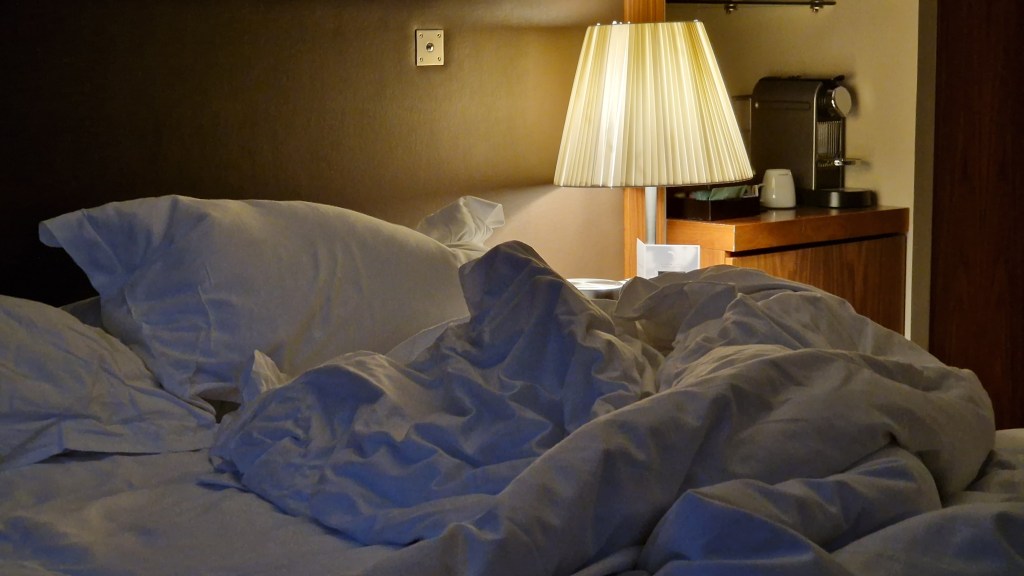
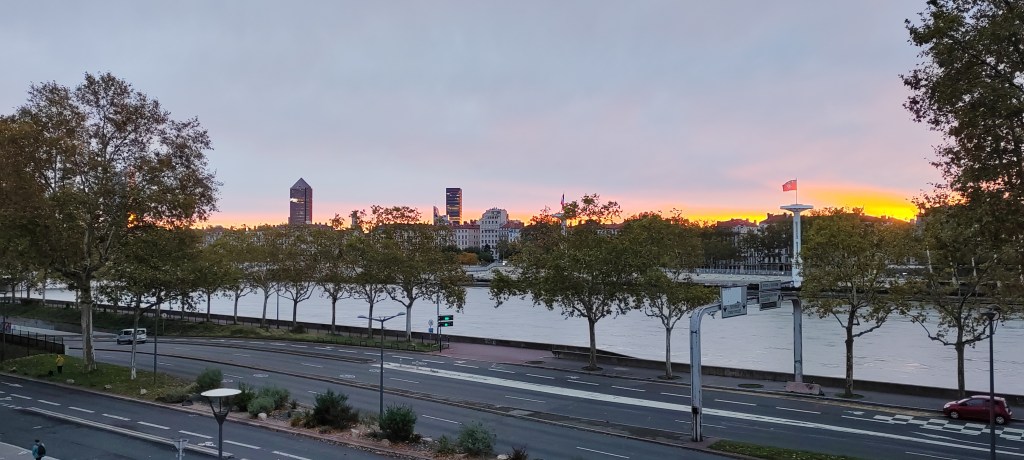
But let us end on the note of dreams – the luxurious embrace of my river-facing room at the Sofitel, where the crisp linage meets the gentle lull of the Rhône. Here, in this space of plush tranquility, I dare to dream of dreams, each weaving into the next, an endless tapestry of hopes and reveries. It is here that I find my truth, and perhaps, it is here that I will conceive the next dream that will coax my spirit to dance once more upon the cobbled stones of this ancient, noble city.


In Lyon, against the backdrop of time and tides, my narrative continues – a passionate ode to the journey, the culture, and the unyielding love that binds me to this land.

To be continued…..

à la Une

The Ebbing Pulse of Heritage: From Bangladesh to France and Beyond

« Purity of point of view is impossible, almost difficult for the colonised. Every region (not necessarily nation state) has its own reality and history. We need to reconcile those within us, and only then we can effectively communicate with others. »

The allure of intangible cultural heritage is a siren’s song that transcends borders, beckoning the dedicated and curious to dive deep into the currents of history and tradition. A little over a decade ago, I found myself irresistibly drawn into its fold in Paris, with the sonorous notes of Bengali language echoing in my ears, a gift from my esteemed mentor at INALCO, National Institute of Oriental Languages and Civilisations, Paris, Philippe Benoît who wanted me to interpret the songs of Patuas for the Festival de l’Imaginaire by Maison des Cultures de Monde, Paris. The journey began with the Chitrakars of Bengal, India, whose scroll paintings spoke of narratives passed down through generations. My father, whose life revolved around the preservation of Bengali folk arts, lit the torch of this exploration.

France, where I’ve spent over seventeen years, presented a different tapestry of heritage. While the vibrancy of Indian culture beckoned from a distance, the melodies of French folk traditions were slowly fading away. While doing my diplôme supérieur at the Alliance Française du Bengale in 2005-06, my research on Lyon, a city renowned for its handloom culture, unveiled the melancholic tale of the extinct Canuts, the iconic handloom weavers. The Maison des Canuts stands as a silent testament to this lost craft. But not all is lost; tucked away in the alleys of Aix en Provence, a city I lived for more than two years, is the Oustau de Prouvènço, fiercely guarding the culture of La Provence.


France’s tumultuous past has muted its indigenous voices, creating a homogeneous soundscape. My naiveté as a young Indian lad, enamored by the French language, was shattered by the chilling accounts of the Bretons, whose native tongue was suppressed in their own land. However, like the phoenix, France is re-emerging, with regions now celebrating their unique cultural identities. The tides are turning; France is hearkening back to its roots.


My adopted homeland is seeing a resurgence in its regional cultural heritage, as local governments invest in cultural projects, and residents take pride in showcasing their native customs. At this juncture, « Ajob Karkhana, Song of the Soul, » a Bangladeshi film directed by Shabnam Ferdousi and produced by Samia Zaman, has its festival screening in Paris. As I watched the film, memories flooded back – memories of my father, of Calcutta’s Gurusaday Museum, and of the arts I so ardently practiced yet left behind.

Join me in this ensuing dialogue with the film’s producer, Samia Zaman, as we delve into the intricacies of preserving our shared global heritage. This isn’t a review or criticism, but an invitation to understand the challenges faced in holding onto our past while navigating the currents of the present. Dive in, and as the French say, « Bonne lecture! »

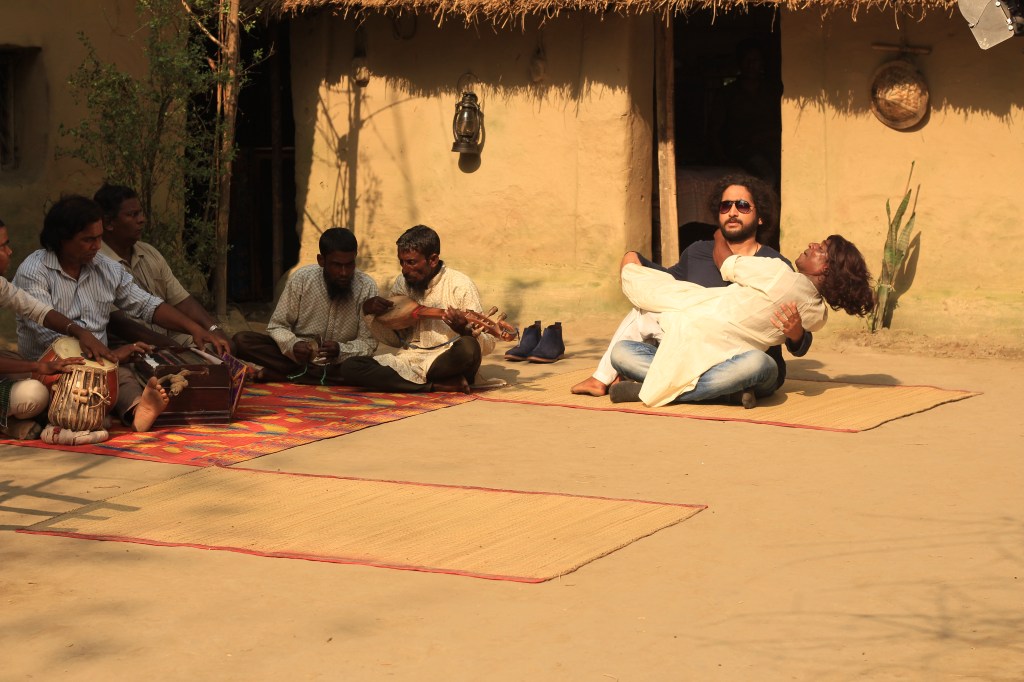
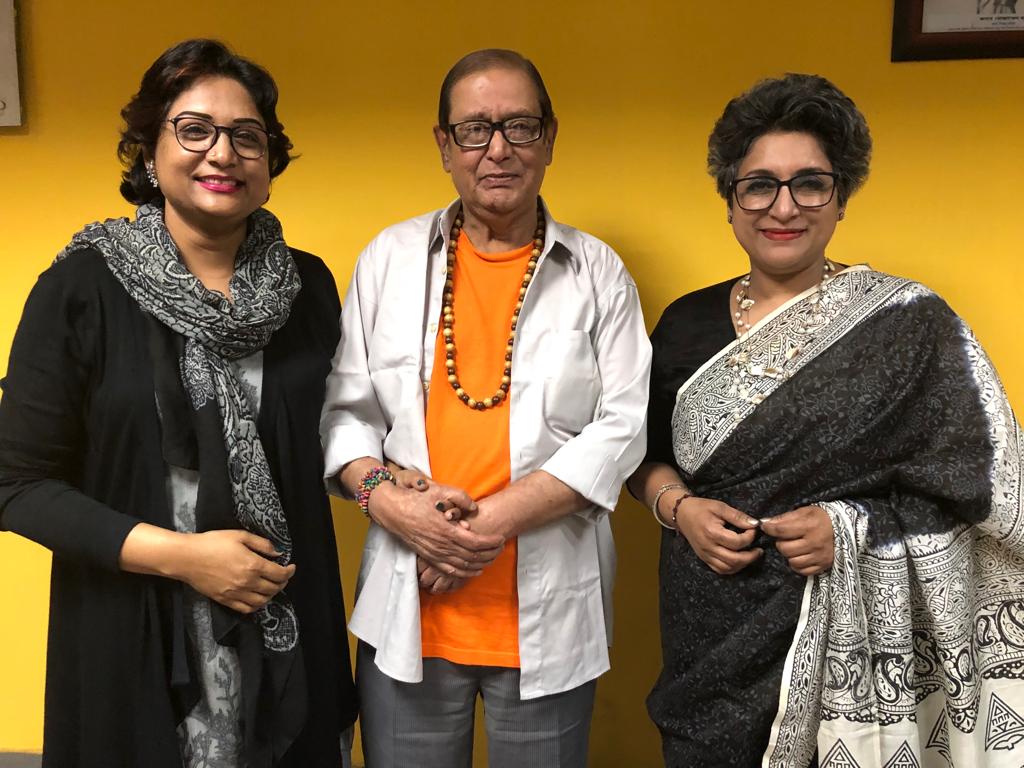
From left: Director Shabnam Ferdousi, Poet and Lyricist Helal Hafiz and Producer Samia Zaman

Writtwik: What inspired you to create Ajob Karkhana, a film focused on preserving the folk music of Bangladesh?

Samia: The idea of the film came from a television show I was producing for Ekattor Television of Bangladesh, where I was the editor as well as the CEO. Shabnam Ferdousi created and directed this show which contained the seed of this film.

A popular pop singer was taken to a village setting; he interacted with the local singers and was the presenter of the show. We noticed the confidence of the local singers. They were in their elements, sure of their craft and sure of their relationship to their land, their surroundings.

In comparison, our popular musician seemed unsure, out of place and in a bit of awe of the singers who are completely unknown in the urban sophisticated Dhaka. Shabnam got this epiphany and started on writing up the idea. When she approached me about it, I immediately got on board. I encouraged her to finish the first draft of the script and applied for a grant from the Bangladesh Government to produce the film, which we received in time. I was already committed to work to preserve various cultural elements of Bangladesh though my TV commissions.

The original TV show later got a new incarnation where the urban presenter role was dropped, as we discovered the musicians are quite capable of telling their own stories. On the other hand, I am very aware of the rapid changes that are taking place in Bangladesh. People are resilient and flexible, resulting in being open to many changes in their lives. Some are beyond our powers like the forces of globalisation and the weight of the colonial history. Anyway, change is inevitable. So I was convinced of the philosophy of the film, that we are intrinsically connected to our land, heritage, and history. At the same time documentation of these transient, disappearing and irrevocably changing art forms seemed urgent and necessary. Music, especially folk music is intrinsic to the sense of Bengaleeness I think. The journey and the place of music in present day Bangladesh has many socio-political layers. All the above and the strength and uniqueness of the storyline, which I was already privy to, made me undertake this, which later proved to be a formidably challenging production.

Writtwik: Could you share your main message or intention behind this docu-fiction film?

Samia: Let me clarify first, the film is not a docu-fiction. This film has many real characters; primarily the folk singers; the film itself is a work of fiction though. 

Message is a word I struggle with. I don’t know the film is trying to convey any fully formed message. The impossibility of traversing the same path twice may be. Or how we are all looking for that nostalgic past, the life we leave behind when we fit our selves to the new, shiny, modern life? I think the film will speak to the individual audience according to their own sensibility and history. In this shifting landscape of life, the folk musicians seemed most anchored and sure of themselves and their art.

In the middle of this Ajob Karkhana of life; they have found their place. They are in touch with their inner being, the true self. When the elderly singer Helim Bayati says, his feet keep rhythm even when he sleeps; he himself recognises that he may have gone towards some pure music body and soul. The main protagonist will probably try and find a music true to himself by the end of the film; and live a more authentic life. Authentic, mindful these kinds of new age speak, seem to come naturally to our philosopher-musicians who practice folk and embody literally thousands of year-old connection to their surroundings and liveliood. 

Writtwik: In a world increasingly influenced by global culture, how do you see the importance of preserving traditional and folk cultures?

Samia: I may have already partially answered this. We need to be clear what we mean by global culture. Rather, which elements of global culture we are talking about. Beatles; Michale Jackson, Beyoncé? The behemoth of Hollywood and now Bollywood too? K-drama? The way we speak in English as Lingua franca and increasingly encouraged or pressured to even think in Anglo-Saxon terms or some other dominant cultural economic force? What is the political economy of this global culture who are the producers and who are the consumers? Was Ravi Shankar a symbol of Global culture or did he eventually was consumed by the West and eventually became a curiosity item?

In the long term, can a consumer influence a producer? I think; when we start to analyse these questions; the importance and gravity of the task, of trying to preserve cultural practices in their original form as well as documenting the evolution and inevitable changes become paramount. Also, this cannot be an anthropological exercise. The practitioners need to be part of the story telling and the documentation project. Who is telling whose story and for whom? None of us are free if these dichotomies and inconsistencies but an honest effort is a must, Role of traditional and folk is yet another discussion altogether. There’s a class aspect to it maybe. In Bangla music one could argue traditional music has been fossilised while the folk is now being repackaged to the extent it will be unrecognisable. 

Writtwik: Can you elaborate on the concept of intangible cultural heritage and its significance in your film?

Samia: Apart from the obvious ones like talking about various music forms; the film touches on references many other ‘endangered’ forms too. By the way, in Ajob Karkhana; we managed to touch on only a few music forms of current day Bangladesh. Lalon is a linchpin of this film; and not only his music rather his philosophy; so he had to be there. But we could not accommodate a larger-than-life Hason Raja, who deserves a film himself, women group, and individual performers like Dhamail, and literally hundreds of music forms still existing in Bangladesh. But quite apart from folk music, the film talks about poetry; how quotable and immensely popular lines of Jibanananda is completely unknown to the new young TV assistant producer. Another layer of poetry documentation took place in this film! We had the amazing opportunity of using several Helal Hafiz poems.

Writtwik: Regarding the film’s marketability and business development, how do you plan to reach a wider audience and ensure its success through distribution channels?

That is a challenge facing us. And I suppose many independent films, the marketing plans for Bangladesh is market specific. We hardly get revenues back through hall ticket sale » multiple reasons – screen number gone down; single screen cinemas throughout the country either shutting down or only show ‘big’ films. We try get sponsorship in various forms. It will depend on a successful partnership. Next step selling to OTT (Over the Top) platforms and television. Internationally, this is an independent film from Bangladesh. So, our first target audience will be worldwide Bangla speaking audience and the distribution targeting this segment of the audience is still quite patchy.

Regardless of that, a kind of informal distribution network of Bangla films is spreading, and we hope to be able to use that existing and, in some places, burgeoning distribution network to reach worldwide Bangla speaking audiences. In the early days of worldwide Hindi film distribution, it was a model; nowadays, Hindi films and films from the South are regularly getting worldwide release. I am not talking here about the blockbusters like Jawan. Much smaller films are regularly getting release.

UK and US naturally have more of this network, but this is happening in other places too. Bangla films are just beginning to have regular releases. Few boutique distributors are coming ahead. I believe we shall have a strong diaspora targeted release next year. 

Writtwik: Do you believe that the responsibility of supporting cinema that focuses on preserving cultural heritage lies with the state, the private sector, or both? Why?

Samia: Both. State has a big responsibility no doubt, and if there is a stated intention and purpose, they can be a great force. But private sector must be equally effective and participate in this. Sometimes, the cultural heritage in question may or may not fit government agenda, in those cases private money is vital. But even in ordinary cases, private public partnership, and separately vigorous support and funding is necessary to ensure viable choice, distribution and diversity of subject matters and personnel. I shall include public or crowdfunding here too. 

Writtwik: You have been a path breaking journalist, so as a journalist who has challenged the conventional narrative, how difficult is it to speak truth to power to a conflict ridden West, especially coming from a region like Bangladesh?

Samia: It is not difficult only it is almost impossible. West has its own narrative and often cannot hear or see other that what they perceive. An inevitable outcome of the colonial legacy is a substantial number of people from our regions, and many of them are in the cultural sectors as part of the privileged intelligentsia are Western educated or at least follow a Western curriculum. As a result, we also see ourselves through an eye which is not entirely ours. It’s a dilemma. Purity of point of view is impossible, almost difficult for the colonised. Every region (not necessarily nation state) has its own reality and history. We need to reconcile those within us, and only then we can effectively communicate with others. 

Writtwik: What parallels or differences do you see between your work as a journalist and your role as a film producer in shaping perceptions and narratives?

Samia: There’s lot of similarity. One must be focused in the middle of cacophony of the production process. I have done a lot of highly charged live television. Film making is not much different. Film has more longevity I suppose. With super-abundance of visual material around us, it may not seem so always. Shaping perception and narrative is a huge task, and news sometimes can be remarkably effective in that too. Can film, do it? I believe it can, but the changes need to take place on the greater society, and many factors are needed to make change happen. Film is but a small part of it. 

Ajob Karkhana, Song of the Soul, Bangladesh

A film by Shabnam Ferdousi

Produced by Samia Zaman

Festival Ganges sur Seine, Paris

GANGE SUR SEINE festival de cinéma indien (lelincoln.com)

à la Une

CONTEMPORARY THINKING IN INDIAN CINEMA : A REFLECTION

I was too much involved in understanding film finance, film economy, coproduction mechanisms, cultural diplomacy, I mean, all sorts of big words which could give impetus to the perspectives of Indian cinema and make it smarter than ever in the world. Or, the large part of the real stakeholders of cinema back home were stuck in fixed and outdated ideologies!

A virtual film « adda », a chat, that took place a couple of years ago via email with two of my favourite human beings: Anuraadha Tewari and Amrit Gangar

« Cinema is dead ! », this is what the whatsapp status of a Calcutta based film maker reads. I am sometimes terrified to such an unabashed admission. Eventhough I am not a serious stakeholder of cinema, five years ago, I felt the need to understand from within the mind of a film maker. How do they think? How do they write? How do they remain focused? how do they negotiate? Can they be unbiased? I had all sorts of stupid questions popping up from here and there. Unanswered, most of my questions were, therefore, I preferred to focus on defining the trendlines and following the trajectories of India’s « world cinema ». It was pretentious and I was wrong. I should have, instead, tried to create a balance between the thought process of a Cinéaste and how do they want to pave the way for new ideals with an effective outcome. Better late than never!

I was too much involved in understanding film finance, film economy, coproduction mechanisms, cultural diplomacy, I mean, all sorts of big words which could give impetus to the perspectives of Indian cinema and make it smarter than ever in the world. Or, the large part of the real stakeholders of cinema back home were stuck in fixed and outdated ideologies! Perhaps, hackneyed. « Noone reads books these days and, in fact, we lack good books on cinema », very often this is what I get to hear from the film veterans of India. And that is why I always feel the necessity to document what they have to say about world cinema in general and Indian cinema in particular. I must connect.

When morality is at issue, art loses it autonomy, this is what the contemporary ethical thinking shows us today. How are the questions of the good and the just trying to be formulated in a new way at a time when we can no longer resort to immutable and transcendent moral values? Is Cinema really dead? I don’t think so. Even if I am trying not to intellectualise this write-up, I must refer to what Sartre had said in the middle of the 20th century in his book « L’Existentialisme est un humanisme », « No general morality can tell us what to do: there is no sign in the world. »

We are either condemned or blessed to invent our existence through moving images and so the values ​​we wish to follow. The term ethics, which is largely missing from the cultural discourse in India, is distinguished from that of morality in the sense that morality refers more to a structure made up of norms whereas ethics implies a questioning on the norm itself.

Ethics questions the foundations of these norms and at the same time confronts the absence of immutable moral criteria. If the contemporary world of Indian cinema needs to think of an ethic, it is precisely confronted with a vacuum from the point of view of moral value.

How can we be accountable for our actions when we can no longer content ourselves with showing adherence to a superior body that knows what to do in our place? We resist. We look for a greater aesthetic justice.

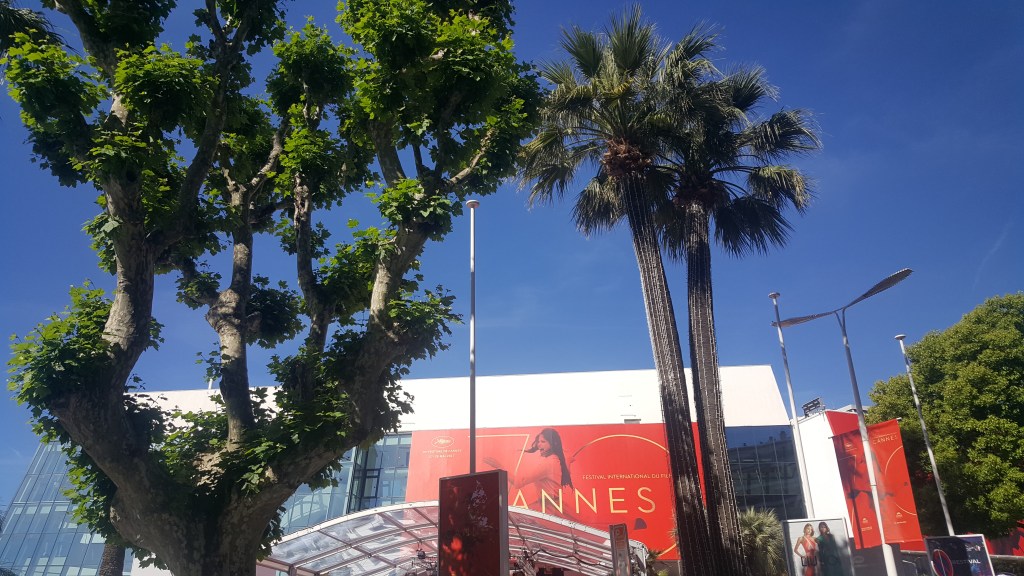
Therefore, I thought of documenting the thought process of Amrit, Filmosopher and the Creator of the concept « Cinema of Prayōga » who I met couple of years ago in Paris and of Anuraadha, accomplished screenwriter, my flatmate in Cannes during the festival which got over a couple of weeks back. She tells us about the wheels of Dharma, Yin and Yang which are probably transforming the contemporary film thinking in India.

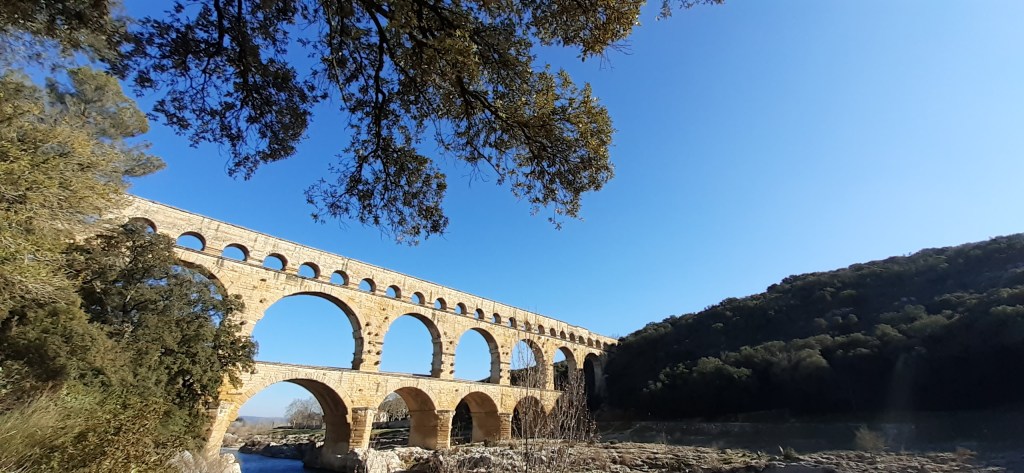
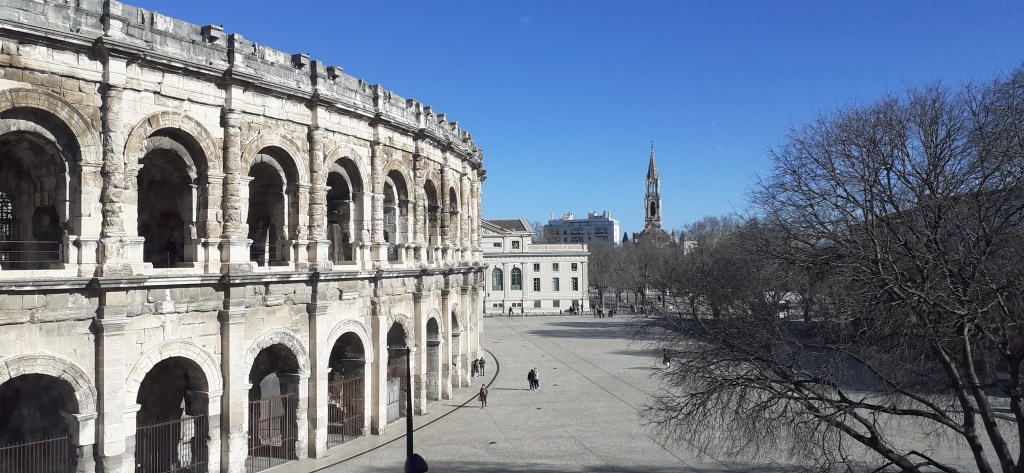
Pont du Gard, Nîmes, Provence, France, Writtwik

Writtwik : Can you tell us something about your vision regarding the Indian cinema ?

Amrit : With its massive size in number both in terms of films produced and the number of people employed as also the investment made year after year, the Indian cinema to me is a beautiful multi-legged octopus. Deeply and continually drawing from the Indian epics and the Natya Shastra, the ancient text on performing arts and aesthetics, it, unlike in the West, defies genrefication, the cut-and-dried categorization. It seamlessly mixes rasas, the exalted sentiments or juices of tastes that counter the Western aesthetics of the genre, including cinematography.

As the Natyashastra broadly defines, Rasa is produced from a combination of Determinants (vibhāva), Consequents (anubhāva) and Transitory States (vyabhichāribhāva). It is indeed a complex system of aesthetic experience that India has developed over centuries and I would personally like to integrate this experience with the film theory, film studies for enrichment. And there are so many philosophical, semi- or para-philosophical thoughts and concepts that could be ploughed back into film scholarship and historical perception, maybe beyond the so-called ‘rationalism’.  This approach would also lead us to an embracement of polyphonic and non-hierarchical reception of Indian cinema.

Writtwik : Evolution of world cinema in general and specifically the evolution of Indian cinema, where are we heading to?

Anuraadha : I think for starters the two are like galaxies, moving away at a very rapid pace from each other! Having said that, I think the mandate of World Cinema in general and Indian Cinema in particular are poles apart. While the former is dedicated to the Art of Storytelling and evolving and pushing boundaries with each successive year, Indian Cinema is designed and expected to fill up emoty lives with hope, make the struggle of the underdog look worthwhile, to sell dreams and aspirations to a third world nation. Its mandate is far away from Art. Of course, its focus is also the commercial, but frankly that was the mood at Cannes as well. Not one Buyer at the Producers’ Network spoke of the Art House or Arty kind of Cinema. Everyone wanted that which sells, that which will get the audience in. India simply has slightly distinct reasons for the audience to be drawn in, for Cinema to sell. The principles of the business are, the same. It’s all a high-stake business first.

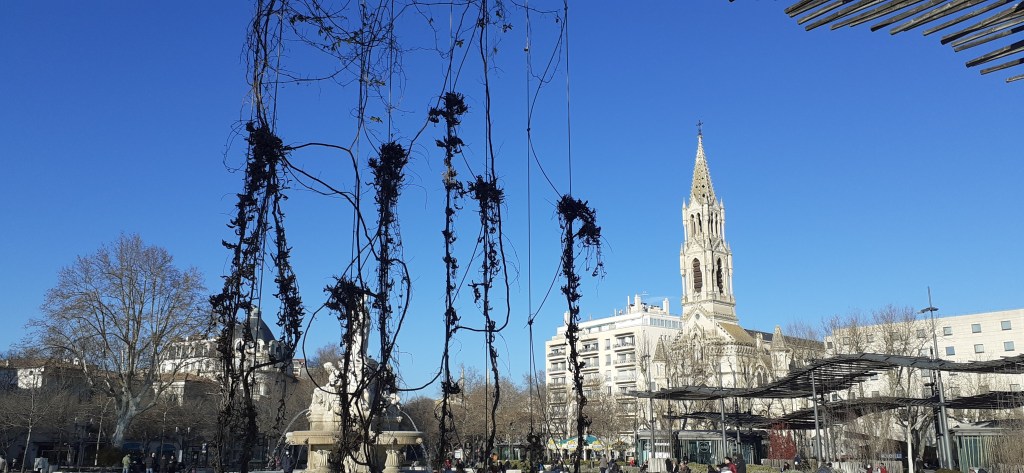
Nîmes, France, Writtwik

Writtwik : Can you tell us something about your experience at the festival?  What are the Cannes take aways?

Anuraadha: This was my first visit to Cannes as well as the festival, though Ive been to France many times. It was really a mixed set of emotions. In some ways, it felt much smaller than I imagined. The famed Red Carpet for example was no bigger than say the ones they put at PVR Cinemas for regular Bollywood Premiers. Yet, scale apart, the sheer fact that you are mingling with the Best in Cinema from around the world is a heady feeling that very few other expreinces can rival. To be at a Master Class with Clint Eastwood or to exchange notes with Pedro Almodovar . . . it’s like a spiritual jouney . . . a Pilgrimage of Cinema as it were. The biggest take away, however, has been the nurturing, maternal energy of the festival. I think, Cannes is Feminine. It encourages you, exhalts you, lets you discover and yet supports in small, amazing ways . . . almost whispering in your ears . . . “Go make a Good Film! Go!!!” I think, that is most moving thing about this experience.

Writtwik : What is « Cinemas of Prayoga » and are they different from Genre films? Are « Cinemas of Prayoga », transgressive in nature?  (The question is perhaps stupid! please excuse!)

Amrit« Cinema of Prayōga » is a conceptual framework that locates the history of experimental film in India within an ancient pre-modern tradition of innovation, of prayōga. Cinema of Prayōga is a theory of filmic practice, which challenges the dominant forms of filmic expression in contemporary India, including the all-pervading contemporary Bollywood or the social realism of Indian New Wave.

« Cinema of Prayōga » celebrates a cinematographic idiom that is deeply located in the polyphony of Indian philosophy and cultural imagination. It attempts to reconfigure the « generally » accepted notion of the experimental and the avant-garde in Indian cinema by conjuring the term ‘Prayōga’ from Indian philosophical thought. Etymologically, the term prayōga in Sanskrit refers to a theory of practice that emphasizes the potential of any form of contemplation – ritualistic, poetic, mystic, aesthetic, magical, mythical, physical, or alchemical. In cinema, it is a practice of filmic interrogation that is devised as a quest toward a continuing process in time and space.

No, « Cinema of Prayōga » is not transgressive in nature in its literal or whatever sense, it has no fascination to break rules as the word would obviously claim on the contrary Cinema of Prayoga would aim at deepening and intensifying the aesthetic-spiritual experience through cinematography by evoking a temporal anubhooti, a deeper experience. It would treat cinematography as a temporal art rather than a visual, and this is significant, as it inherently gets closer to kāvya (poesy) or samgeet (music), their temporal and experiential abstraction, freeing itself from being representational.

In its filmosophical essence, « Cinema of Prayōga » avoids employment of the Western terms such as experiment, genre or avant-garde. Avant-garde is at its roots, a military term, no matter it has been part of art vocabulary all over the world and for a long time now, the idea of ‘genre’ seems to be departmetmental-storish, pigeon-holing. 

Gotland, Sweden, Writtwik

Writtwik : As the ideas of pluralism are being challenged by rising populism and xenophobia, how do you see the concept of « Desh » (Nation)?

Amrit : History keeps unclothing the truth, turning it naked all the time, peeling off its skin, and throwing it up right in our face. The Mantra of Multiculturalism that the West had begun to chant in the 1970s and later was embedded, I am afraid, in skepticism and selfishness. They, then needed, labor, and cheaper labor from the East, or maybe there was a sense of cleansing the guilt of colonizing many counties of the East, and as the generations passed, from the first to the third, uncomfortable truth kept unraveling itself, the economic and racial realities started popping up their heads. It kept becoming an uneasy situation with the blooming diasporas and deeper economic and racial contradictions dancing their sporadic dreadful dance!

The polyphonic voices started to become uniphonic, judgmental, racial and intolerantly nationalistic on the octave of history. This octave is not always upward moving, it has its ups and downs, while chasing the utopia of equilibrium. We are all in search of this utopia to counter xenophobia, which history has witnessed over centuries, through rising populism and existential angst. It is an ongoing battle between the good and the evil through ‘samaya’, time.

What is interesting is the process that history undergoes through human interventions, and the way it keeps creating power-centres, while at the same time, making humanity more and more fragile, the search for ‘détente’ is a sign of insecurity and the fear of collective annihilation. On the wobbling project of ‘multi-culturalism’ was foisted the so-called project of ‘globalization’, a fake, trade-globalization that has not been able to unify the world or tempering its intolerance. Why have you to ask me this question of ‘rising populism and xenophobia’ in this age of globalization? The question per se suspects the idea of globalization as it is, or contradicts it.

I think the Classical Globalization, if I may call it so, was more culturally healthy, I am referring to knowledge exchange and human movements and not ignoring the facts of oppression and persecutions. The continental-sized India with her polyphonic voices of religion and language had always kept the doors of her house open, where many philosophers and artists (including film makers) would come, settle and contribute their skills and visions. And here perhaps the emotively embedded notion or concept of ‘Desh’ becomes crucial. Even today, if a migrant from a village now settled in the metropolis of Mumbai, while going to his native place or village would say that he is going to his ‘desh’. Desh would also mean ‘nation’, e.g. Bharatdesh or even Bangladesh. ‘Desh’ or ‘Des’ as a micro-term includes the ‘micro’, imagine, a ‘village’ wombing a « nation »! It is so inclusive.

Desh or Des is an interesting notional or emotional term that most Indians largely from villages often use. In this sense, the idea of ‘rashtra’ (nation and therefore nationalism) is perhaps an imposition, maybe an import from the West. I think, our fellow-villagers were or are more progressive and modern in their perception of humanity and the world at large. India is a great federation of the smaller units called ‘desh’ and that’s her strength – in her polyphony, her pluralism, her heterogeneity ; she is obviously not a single monolith, and yet wields a strength of her own in nouising myriad and multiple views…

And no wonder we keep hearing this song from a remote Rajasthani village : Kesariya balam / Padharo mhare des – it acquires a new meaning in our times of ‘globalization; this ‘des’, as a country, a rashtra, where, in fact, are many rashtras, many des or desh.

In Sanskrit language, the word ‘Desh’ has some interesting connotations too, e.g. it also means ‘atithi’, a guest who comes to your home without any prior appointment or date (tithi) and he is still most welcome because he is not only your guest but god, as the saying goes, « Atithi devo bhava »: This is a traditional Indian ethos. Atithi is also a foreigner, a desh-atithi. Desh is a region, province or a country as a whole. I think, in its deeper essence, it obliterates the notion of a nation in its narrow nationalistic sense.

Anuraadha : Well, if you’re asking me from a Political perspective then the concept of a Nation is a necessary evil. The Human Mind understands order through segregation and needs a sense of belonging to feel safe. A Nation gives you all that and more. From the perspective of Cinema, it can be a boon and a bane. There are Films bind the Nation intangibly as a whole and give you that indescribable feeling of being One in this strange way and then there are times when a National Identity and its collective sensibility can be restrictive and a pejorative when represented outside . . . like the term ‘Indian Cinema’ on a global platform often is.

Writtwik : As a film professional, do you think the world of cinema both in India and in France or in Europe is equipped to deal with multiple systems of knowledge in order to reinvigorate the idea of pluralism in an era of post truth? What can India bring to the global debate on a world without borders? 

Anuraadha : I am not sure what exactly you are implying with the first part of your question. Of what I understand, in India, ‘truth’ is a multi-angled phenomenon, a bit like ‘Rashomon’, but it’s also embraced in its plurality. I think the European mindset while not accepting of multiple truths isnt exactly honest about the chosen version! I think, that reflects in the both the Cinemas at multiple levels.

On the global debate on a world without borders, I think, India is virtually the pioneer of this thought since ancient times! We have been a Nation despite principalities and kingdoms for the longest time. We continue being a Nation despite the overwhelming diversity of culture in all its forms and nuances. I think the very existence of the Indian Polity. Polity proves that it’s possible to be connected despite inherent and intense differences and that borders are merely political necessities and forms of governance . . . . there is a way to feel the unity. Indian Cinema does a stupendous job of giving us that feeling every once in a while. Art notwithstanding.

Amrit : The present globalization has made the monster of market more monstrous and that is swallowing all creative, independent, intrepid voices though it creates an illusion of democracy and universal empowerment. it is not beyond suspicion as new monopolistic powers tend to control our world.

It has given birth to big and bigger fish that keeps gulping all the smaller fish. In India, we see the disappearance of those charmingly raw B and C grade films, those small producers have been pushed out of the scene, and technology has not made the so-called mainstream film making cheaper, it is all in the neo-capitalistic game, which has cleverly formulated its own norms for the rich and the powerful.

Films with massive publicity budgets can capture the maximum multiplex screens, not allowing the smaller fishes to swim in those waters. It is a new territorialism that has been created in this age of illusionary globalism. Cinema of Prayoga and its practitioners are essentially makers of antithesis to the monster of marketism.

With her historic intellectual-philosophical traditions France, and India, with her, emotional-philosophical historicity can resist these anti-art neo-capitalistic, even crony-capitalistic forces. And in this sense, I would believe that France and India are inherently equipped to deal with multiple systems of knowledge in order to reinvigorate the idea of pluralism in an era of post-truth as you said though I have a problem with this term ‘post-truth’ it will keep shifting as ‘post’ in ‘modernism’. Like modernism, truth is also in continuum as Indian mind would think.

The world without borders is perhaps not the same as Friedrich Engels had imagined within Marxiam philosophy, the withering away of the state. His imagination was beautiful as he said, “The interference of the state power in social relations becomes superfluous in one sphere after another, and then ceases of itself. The government of persons is replaced by the administration of things and the direction of the processes of production. The state is not « abolished », it withers away.”

The centuries-old Indian Maha Upanishad has this perception of the world : “Vasudhaiva kutumbakam”, which means the world is one family. Won’t you call it the modern ? With such ancient wisdom that is also practiced at large by her citizens, India can certainly contribute and bring about a global debate around the perception of the governable globe without walls, without boundaries, without divisions.

But personally, I would think these are necessary utopias, the utopias that we must keep chasing, we cannot live without this process… France, as a European, rational, intellectual ‘desh’ can create an environment that can groove into the Indian emotional-intellectual ethos with its tattva-jnana (knowledge of truth, of essence).

Writtwik : When morality is at issue, art loses it’s autonomy. What, according to you, should be the role of public intellectuals in the time of crisis? 

Anuraadha : Frankly, according to me, Art has been slowly losing its autonomy over the last few decades as Commerce has taken centrestage. Its the victory of the Masculine principle over the Feminine in this one. Im also a believer of the wheel of Dharma, in motion constantly, and that the Yin and Yang of the world will keep taking turns in different spheres. In Cinema it’s the Yang taking over for now but the Yin will also return sooner than later. Hence the job of a Public Intellectual in my opinion is to neither resist nor protest unduly but to simply keep the Art alive and thriving till it makes its come back on centre stage.

Visby, Gotland, Sweden, Writtwik

Amrit Gangar is a Mumbai-based poet, writer, curator, historian and cultural activist. He is curatorially engaged in the upcoming National Museum of Indian Cinema.

Anuraadha Tewari is Mumbai-based screenwriter and film maker with a degree in Mass Communication with a specialization in Film Direction. She has written films like « Jail », « Fashion » and « Heroine »

Reference:

L’Existentialisme est un humanisme, Paris, Editions Nagel, 1972, p.47

The Games Behind the Games

« An empowered citizen today helps create a more resilient society tomorrow. And resilience begins when complex subjects are made understandable without being reduced to slogans. »

Cybersecurity, Trust and the Hidden Architecture of Sport

BrandIndia Exclusive — From VivaTech 2026 to a conversation with Clément Migeon, Director of the Cybersecurity Division of the CNOSF, France’s National Olympic and Sports Committee

EU-India Digital Sovereignty Conference

On Day 2 of VivaTech 2026, our focus was cybersecurity and digital sovereignty. Through Kaushik’s movement across the floor, BrandIndia.fr followed the subject from several angles: GovTech and the democratic organisation of public-sector meetings; Aikido Security and the prevention of software vulnerabilities; the EU–India discussion on sovereign digital infrastructure; Publicis/Razorfish’s warning that AI-generated content may weaken trust even as it accelerates production; and Bpifrance’s reminder that cybersecurity must now be built from the first line of code.

The day left us with one clear impression: technology is opening new possibilities, but it is also creating the very complications that institutions must now learn to govern.

This is where cybersecurity becomes more than a technical issue. It becomes a question of public trust, democratic resilience and human responsibility. If digital sovereignty is discussed on stage, it is tested inside real institutions especially in sport, where millions of people gather, watch, travel, pay, connect and believe in the same shared moment.

To understand what this means beyond rhetoric, I turned to Clément Migeon, Director of the Cybersecurity Division of the CNOSF, France’s National Olympic and Sports Committee, for a candid conversation on Paris 2024, ransomware, supply chains, AI-enabled threats, crisis management and the human factor.

I was not sure the interview would be possible. His schedule was tight, the subject is sensitive, and we are living through a period where cybersecurity, institutional reputation and information warfare constantly overlap. There are also limits to what can be said publicly, and rightly so. But precisely because of those limits, it felt necessary to ask direct questions and receive answers from someone who had lived the Olympic cycle from inside a sporting institution.

I did not want to approach cybersecurity only through the usual heavy strategic vocabulary, the kind often associated with national agencies, defence structures or high-level cyber doctrine. Those dimensions matter deeply. But sport offers another entry point. It speaks to everyone. It is public, emotional, democratic and massively followed. It allows us to understand cybersecurity not only as a matter of State protection, but as a matter of everyday trust.

An empowered citizen today helps create a more resilient society tomorrow. And resilience begins when complex subjects are made understandable without being reduced to slogans.

Adobe Theatre

This interview is therefore not only a technical exchange. It is part of a legacy design: to understand what Paris 2024 transmitted, what remains fragile, and how major public events can continue to stay open in a world where openness itself has become a security challenge.

Interview with Clément Migeon

Director of the Cybersecurity Division of the CNOSF, France’s National Olympic and Sports Committee

Writtwik: Thanks a lot Clément for agreeing to do this interview with me today. In your view, what was the main cybersecurity challenge during the Olympic cycle: protecting infrastructure, coordinating between stakeholders, or human vulnerability?
Selon vous, quel a été le principal défi cybersécuritaire durant le cycle olympique : la protection des infrastructures, la coordination entre acteurs ou la vulnérabilité humaine ?

Clément: For the National Olympic Committee of a country hosting the Games, the first challenge is certainly dealing with a cyber threat that can be disproportionate. For many external actors, we are often associated with the organising committee, whereas our actions are completely different, as are our resources.

Writtwik: Ransomware attacks now affect entire ecosystems. How does an institution such as the CNOSF prepare for a scenario in which sporting operations themselves could be disrupted?
Les attaques par ransomware touchent désormais des écosystèmes entiers. Comment une institution comme le CNOSF se prépare-t-elle à un scénario où les opérations sportives elles-mêmes pourraient être perturbées ?

Clément: Ransomware attacks are indeed very present. With the help of ANSSI and private partners, we managed to move into a resilience-oriented approach ahead of the Paris 2024 Games. We segmented our information systems and strengthened our backup policy so that we would be able to resume activity, even in degraded mode. Cyber crisis exercises were also organised to prepare all CNOSF business teams as effectively as possible.

BPI France, AI and Cybersecurity

Writtwik: Major sporting events depend on a considerable number of subcontractors and digital service providers. Is the supply chain now the main point of cyber fragility?
Les grands événements sportifs reposent sur un nombre considérable de sous-traitants et de prestataires numériques. La chaîne d’approvisionnement constitue-t-elle aujourd’hui le principal point de fragilité cyber ?

Clément: Yes, clearly. Supply-chain attacks are now one of the main attack vectors. Within this chain, the CNOSF itself acted as a partner of the Paris 2024 Organising Committee, and in that capacity we remained vigilant and worked in collaboration with them.

Writtwik: Are generative artificial intelligence tools for instance deepfakes, automated phishing, synthetic identities already changing your perception of the cyber threat?
Les outils d’intelligence artificielle générative — deepfakes, phishing automatisé, identités synthétiques — modifient-ils déjà votre perception de la menace cyber ?

Clément: It is obvious that AI tools play a major role in current cyber threats. Increased awareness among our staff regarding the detection of phishing, or any other attack of this type, plays a predominant role in this area. Other cybersecurity tools integrating AI are beginning to emerge and are very promising.

Writtwik: What did cooperation with French cybersecurity institutions teach you about crisis management during a highly visible international event?
Que vous a appris la coopération avec les institutions françaises de cybersécurité sur la gestion de crise lors d’un événement international à très forte visibilité ?

Clément: The support provided by French State services in the field of cybersecurity was extremely valuable to us. Thanks to them, we were able to carry out a half-day cyber crisis exercise that brought together all CNOSF functions likely to be affected by an incident.

Writtwik: In your experience, what remains the most complex challenge today: technology, governance or the human factor?
Dans votre expérience, quel reste aujourd’hui le défi le plus complexe : la technologie, la gouvernance ou le facteur humain ?

Clément: Technology is, paradoxically, the most manageable part: it has a budget, a roadmap and solutions. The real knot lies between governance and the human factor, and the two are linked. Governance, because a common requirement has to be kept alive across different business departments, without direct hierarchical authority over most of them. The human factor, because no technical system can sustainably compensate for a click, a shared password, or vigilance that fades once the event is over. If I had to choose, I would say that the human factor is the most difficult risk to reduce over time, because it has to be constantly maintained. It requires a great deal of pedagogy and support.

Writtwik: Has Paris 2024 permanently transformed the cybersecurity approach of French sporting institutions, or is there a risk of loss of momentum after the event?
Paris 2024 a-t-il durablement transformé l’approche cybersécuritaire des institutions sportives françaises ou existe-t-il un risque d’essoufflement après l’événement ?

Clément: Paris 2024 primarily made it possible to pass on a cyber approach to a number of institutions and to spread good practices. Now, the results sometimes take time to become visible, as some systems carry significant technological debt, and sport remains mainly focused on the human dimension.

Writtwik: Thank you Clément.

Clément: Merci beaucoup Ritt!

Editorial Note

Clément Migeon’s answers are presented here within the limits of what can reasonably be discussed in a public forum on cybersecurity. The objective is not to disclose operational details, but to understand the broader lessons of Paris 2024 for public trust, institutional resilience and the future of major sporting events.

His responses underline one essential point: cybersecurity is not only a matter of technology. It is also a question of proportion, governance and human behaviour. An institution may not be the main organiser of an event, yet it can still be perceived as part of the target. It may not operate like a defence agency, yet it must increasingly adopt reflexes of strategic resilience: anticipation, segmentation, backup, crisis exercises, coordination with State actors and continuous awareness. In my opinion, this is where VivaTech 2026 and the CNOSF interview converge.

On the exhibition floor, the language was innovation: AI, digital sovereignty, cybersecurity by design and trusted infrastructure. In the CNOSF interview, I wanted in a way that the language becomes operational: ransomware, supply-chain exposure, technological debt and the human factor.

The challenge is not to turn sport into a fortress. It is to make sure that people can still gather, watch, travel, celebrate and trust what they see without turning openness into an invitation to collapse.

Acknowledgements and Methodological Note

  • This interview would not have been possible without the support and encouragement of Christophe Moreaux, CFO of the CNOSF, whose openness helped make this exchange possible.
  • I am also grateful to sources familiar with the French cybersecurity ecosystem, including institutional perspectives linked to ANSSI, France’s national cybersecurity agency. Their insights helped me better understand, within the limits of a journalistic and non-technical inquiry, the challenges of trust, resilience and digital vulnerability.
  • Special thanks to Kaushik Kalyan Kotte, who moved across the VivaTech 2026 floor on 18 June, from stand to stand and session to session, collecting field observations, event notes and daily inputs on cybersecurity, digital sovereignty and AI governance for BrandIndia.fr.
  • ChatGPT Pro by OpenAI was used as an analytical support tool for text alignment, semantic structuring, terminology refinement, synthesis of complex arguments and simplification of technical concepts for a broader readership. The editorial framing, interview questions, interpretation, final selection and publication responsibility remain entirely with BrandIndia.fr.

VivaTech at Ten: When Innovation Became Geopolitics

« This is where India enters the picture, and perhaps also where my own discomfort begins. »

A Brandindia reflection on sovereignty, talent, India and the stories technology chooses to tell

By Writtwik Banerjee
Founder / Editor, Brandindia.fr

President of the French Republic, Shri Emmanuel Macron at Vivatech

A couple of days ago, I asked Kaushik Kalyan Kotte, who is working with Brandindia.fr on the visual documentation of VivaTech, to write our inaugural curtain-raiser. His first reflection began outside the exhibition halls, on the Champs-Élysées, where technology briefly stepped into the city before becoming a professional universe of conferences, start-ups, investors, institutions and carefully controlled conversations.

His article captured that first moment of encounter: the city receiving technology almost like a public installation, open to pedestrians, tourists, families, influencers, curious Parisians and passing observers.

This second piece begins from another place. It begins from memory. My memory.

When I attended VivaTech in 2017, the event was still in its early years, and France was beginning to imagine the contours of the Macron era: Emmanuel Macron had just become the youngest president in French history barely a month earlier, and there was a wider frenzy around start-ups, innovation, entrepreneurship and the promise of a new technological ambition. I did not attend the event as a journalist, nor as a technology specialist. I had been selected by the Indian Embassy in Paris to be part of it as an executive.

First edition of Vivatech in 2017

At the time, start-ups were already fashionable, artificial intelligence was beginning to enter public conversations, and technology still carried a language of optimism that feels almost innocent when compared to what we hear today. Innovation was mostly discussed as opportunity. It had not yet fully become the language of sovereignty, defence, ethics, talent capture and geopolitical anxiety.

I remember being impressed but not convinced.

I looked around, listened, observed, and yet struggled to find anything substantial to write about. Not because VivaTech lacked ambition, but because I did not yet know what question I was supposed to ask. The event seemed distant from the subjects that had shaped my own intellectual and professional world: diplomacy, culture, India-France relations, language, migration, soft power, identity and the strange ways in which nations try to explain themselves to one another.

And yet, curiously, I kept returning.

Some years I went simply as an attendee, often on the last day, when the great institutional choreography had already softened and the event became more accessible to ordinary visitors. Last year, I was press accredited for Brandindia.fr. I walked through the halls, collected notes, followed conversations, and still published nothing. Again, the problem was not the absence of material. The problem was the absence of the right inner voice.

Maurice Lévy, CEO of Publicis and Bernard Arnault, CEO LVMH at the VivaTech 2026, Inauguration

I did not want to write a mechanical article on “the future of technology”. Others do that much better. I also did not want to pretend to be a start-up analyst, venture capitalist or gadget commentator. That is not why you come to Brandindia. You read Brandindia because, for better or worse, I write from where I stand.

This year, VivaTech’s tenth anniversary has given me the missing entry point. The special supplement published by Les Echos offers a clear timeline of the event’s evolution: its launch in 2016, the rise of French Tech, the focus on diversity, open innovation, the pandemic interruption, hybrid formats, global expansion, the explosion of artificial intelligence, and now the language of scaling up, sovereign AI and digital sovereignty.

At first glance, it looks like a chronology of technological progress. But the more I looked at it, the less I saw a simple technology timeline. I saw a timeline of our collective anxieties.

Ten years ago, we were fascinated by cloud computing, virtual reality and the promise of digital transformation. Then came questions of data, privacy, connectivity and platform power. Covid brutally reminded us that innovation without resilience is fragile. The metaverse briefly promised a new world before generative AI arrived and changed the tone of the conversation entirely. Now, almost every serious discussion leads back to regulation, sovereignty, cybersecurity, infrastructure, talent, energy, defence and CONTROL.

In other words, the technologies changed, but the underlying questions remained strikingly constant. Who owns the infrastructure? Who controls the data? Who attracts the talent? Who captures the intellectual property? Who writes the rules? And ultimately, who shapes the future before the rest of us are invited to adapt to it?

This is why VivaTech feels very different today from the event I first discovered in 2017. Back then, it was still possible to see it primarily as a celebration of innovation. Today, it increasingly resembles a geopolitical observatory disguised as a technology fair.

Walk through the halls and, of course, you will find start-ups, demonstrations, investors, screens, robots, founders, delegations and impressive slogans. But if one listens carefully, one also hears the vocabulary of international affairs: trust, resilience, strategic autonomy, influence, sovereignty, security, talent, regulation, ethics and, increasingly, espionage.

The diplomat, the engineer, the defence planner, the founder and the policymaker may not always sit at the same table, but they are now circling the same questions. This is where India enters the picture, and perhaps also where my own discomfort begins.

India Pavillion at Vivatech 2026

India is now regularly presented as one of the great technology stories of our time. The start-up ecosystem is enormous, the talent pool undeniable, the digital public infrastructure admired, and the ambition increasingly global. In speeches and panels, India appears as a key partner, a market, a talent reservoir, a strategic democracy, a digital society and a future-shaping power. And yet, from Paris, I often find India more visible as an idea than as a narrative. This is not my criticism thrown from a distance. It is an editorial concern.

An Indian start-up delegation supported by government channels has already reached Paris for a residency programme linked to VivaTech. Naturally, I tried to connect with them in order to build a proper Brandindia editorial around their presence. After two reminders to the Embassy’s economic wing, I received no reply.

This may be a simple administrative gap, and one should not convert silence into conspiracy. But editorially, it does raise a question: why does India so often intend to generate substance without generating visibility? Why do we speak so much about Indian innovation while so few structured stories circulate internationally about the people building it?

Is it a communication problem? Is it bureaucratic caution? Is it a kind of post-colonial paranoia, where visibility is desired but not fully trusted? Or is it simply that India has become excellent at producing talent and technology, while still struggling to narrate them with confidence in global spaces?

The paradox becomes sharper when one observes what is happening around Indian talent. While official structures sometimes hesitate to communicate, the parallel universe of strategic headhunters, recruiters, investors and what I would call “talent jammers” is already fully active. They identify key minds, offer incentives, create pathways, structure opportunities and, in many cases, ensure that intellectual property remains locked within legal and financial architectures controlled elsewhere.

The battle is not only for markets anymore. It is for engineers, founders, researchers, patents, algorithms, databases and future leverage. So, when India speaks of sovereignty, the question cannot be only about national pride. It must also be about narrative capacity, institutional coordination and the ability to protect value without suffocating talent. A country may produce brilliant minds, but if others explain them better, finance them faster and structure their intellectual property more intelligently, then the story of innovation slowly moves away from the place where it was born.

This is one of the central questions I want to carry into VivaTech this year.

The second question concerns Europe itself. Germany is the Country of the Year at VivaTech 2026, which is symbolically important because the Franco-German relationship remains central to the European project. Yet outside the polished language of partnership, one can also sense irritation, hesitation and competition. French media reports and strategic debates around major defence-industrial projects such as SCAF remind us that European cooperation is not always as linear as its official vocabulary suggests.

For those of us who do not fully understand this geostrategic mumbo jumbo — and I include myself with full honesty — it sometimes feels like watching several chess games unfold on the same board, while each player continues to speak publicly about unity.

This is precisely why VivaTech matters.

It offers a surface of optimism, but underneath that optimism one can read the tensions of our time. France speaks of sovereignty. Europe speaks of regulation. Germany brings industrial power. India brings talent and scale, but it also carries a more complex economic and political logic: the global positioning of Indian talent abroad has long functioned as soft power, national pride and a source of remittance, even when the deeper question of how to retain, protect and narrate that talent remains unresolved. The United States brings platforms, capital and acceleration, but also the power to close the gates when frontier technologies become too strategic to remain universally accessible. China brings execution and state-backed technological ambition. Everyone speaks of cooperation, but everyone is also preparing for concurrence.

And somewhere inside this tension lies the real story of technology today.

For Brandindia, I do not want to cover VivaTech through the usual language of “top innovations” or “coolest start-ups”. That is not my strength, and it would not be honest. Instead, I want to read VivaTech through three lenses that correspond more closely to the way I understand the world: sovereignty and ethics, cybersecurity and defence, and creative media.

Sovereignty and ethics because artificial intelligence and digital infrastructure are no longer neutral tools. They carry values, biases, dependencies and power structures.

Cybersecurity and defence because trust has become an infrastructure, and the invisible systems protecting our institutions, citizens, athletes, companies and states are now part of national resilience.

Creative media because technology does not only transform industries; it transforms imagination, authorship, language, images, storytelling and cultural memory.

Photo by VivaTech 2025

This last point matters deeply to me. I spent more than twelve years engaging with the Indian film industry as a co-production analyst, had my articles published in platforms linked to India’s official cultural and diplomatic outreach, and spent hundreds of hours with film professionals in India and Europe. Yet I often struggled to understand what long-term vision the Indian media and film ecosystem wanted to build in order to position itself firmly in a rapidly changing world.

That question has become even more urgent today.

If technology changes how societies create and circulate stories, then it also changes soft power. If the media industry is squeezed between state-supported cultural frameworks, private channels weaponising emotion, algorithmic amplification and increasingly sophisticated forms of psychological influence, then culture itself becomes vulnerable. It changes how India is seen, how France explains itself, how Europe defends its cultural model, and how smaller voices survive inside systems shaped by platforms, governments, agencies and markets. Perhaps this is why, ten years after my first encounter with VivaTech, I am finally ready to write about it.

Not because I suddenly understand technology better than before. I do not.

But because technology has moved closer to the questions I have always followed: who speaks, who is heard, who is represented, who is recruited, who is translated, who is erased, who controls the frame, and who gets to tell the story.

Ten years ago, VivaTech asked what technology could do. Today, the more interesting question is what societies choose to do with technology and what technology, quietly but powerfully, is doing to societies in return.

This is the question I will carry with me as VivaTech 2026 opens…

References:

INDIAai | Pillars

Bharat Innovates 2026 | 14-16 juin | Accélérateur mondial pour l’écosystème éducatif indien

Germany, France scrap joint fighter jet program

L’Allemagne et la France affichent désormais leurs désaccords sur les propositions défendues par Macron

India’s start-ups are not lacking innovation but imagination | The Indian Express

VivaTech 2026 : humanoïdes, souveraineté numérique et IA à l’honneur pour cette dixième édition – Les Echos

All photos featuring the logo were produced by the Brandindia.fr team.

VivaTech 2026: First Contact on the Champs-Élysées

« I could not stop asking myself: can a machine understand memory? Can a prompt carry enough of a feeling to become a perfume? Maybe the answer is not simple. But what I saw was clear. People were curious. They were ready to try. They were ready to give a part of their imagination to a machine and receive something personal in return. »

When Technology Steps Into the City

By Kaushik Kalyan Kotte
Photography and Visual Documentation, Brandindia.fr

Vivatech Diiscovery at Champs-Elysées

Before the industry leaders arrive, before the main stages open, and before VivaTech becomes a full professional universe of keynotes, investors, founders and global conversations, there was this first contact on the Champs-Élysées.

I was in fact asked to do what felt like a simple assignment: take photographs, observe the space, and document every aspect of the VivaTech teaser on the Champs-Élysées. I thought my role would remain behind the camera. I would look, frame, capture and move on.

But little did I know that Writtwik would ask me to go beyond the photographs and write the curtain-raiser of the summit through my own eyes!

That was not expected. I have always seen myself more as a visual person than as someone who writes. Recently, I had gone to watch Spielberg’s latest film, Disclosure Day, and in a strange way, this assignment felt like my own small disclosure. To be asked to turn my visuals into a story, and that too a written one, came almost like a shock. I wouldn’t say that this was a negative shock, but the kind that shakes your comfort zone and makes you realise that maybe you have something to say beyond the image.

Photo from VivaTech press kit

So this piece is not written as an expert report on technology. It is my first attempt to look at VivaTech through the eyes of someone who came with a camera, but slowly realised that the camera was also asking him questions.

On 14 June, 2026 one of the most symbolic avenues of Paris became something slightly different. People who may have come simply to walk near the Arc de Triomphe suddenly found themselves inside a public preview of the future.

From a higher view, especially from the rooftop of the Maison du Danemark, the imposing Danish House, the stalls were arranged into the letters “VIVATECH”, with the Arc de Triomphe in the background. It was a very strong visual moment for me.. There were families, children, visitors, tourists, professionals, photographers, and people who were not necessarily expecting to meet technology in this way.

As a photographer and videographer for Brandindia.fr, I felt a real pleasure to enter this space with my camera. For me, the camera was not only a tool to capture an event. It became a way of observing how people react when innovation leaves the exhibition hall and comes into public life.

The first thing that struck me was the atmosphere. It was not a closed technology conference. It was open, visual, almost theatrical. The Champs-Élysées became a stage, and technology became part of the street. Children and elders were equally attracted by the installations. Some people were trying to understand what they were seeing. Others were simply filming it on their phones. Around me, there was excitement, confusion, surprise, and that very human desire to go closer to anything that shines, moves, speaks or promises something new.

One of the most fascinating installations was the algorithmic perfume experience. People were not choosing a perfume from a normal catalogue. They were writing a prompt. A memory, a feeling, a person, a place, or an emotion. The machine then interpreted the words and created a fragrance in real time. As someone coming from a visual and creative background, I found this very interesting. It made me think about how far artificial intelligence is entering the world of sensory experience. We often speak about AI producing texts, images or videos, but here it was trying to translate emotion into smell.

I could not stop asking myself: can a machine understand memory? Can a prompt carry enough of a feeling to become a perfume? Maybe the answer is not simple. But what I saw was clear. People were curious. They were ready to try. They were ready to give a part of their imagination to a machine and receive something personal in return.

Then came the robots.

There was a small humanoid robot moving through the crowd, almost at the height of a child. What stayed with me was not only the robot itself, but the faces of the children looking at it. They were not laughing in a simple way. They were not afraid either. They were studying it very seriously, as if they were trying to understand whether this thing belonged to their world or to another one. For me, this was one of the strongest visual moments of the afternoon.

Later, the robot demonstration became a real street performance. Two humanoid robots and two robotic dogs moved in front of the public, with the Arc de Triomphe in the background. The operators almost felt like modern snake charmers, guiding machines instead of animals, creating a circle of attention in the middle of the city. The robots danced, gestured and interacted. The crowd followed every movement.

As a photographer, I was trying to capture not only the robots, but the relationship between the robots and the people around them. That relationship is where the story is. Technology alone is impressive, but technology inside human space becomes more meaningful. The faces, the gestures, the distance people keep, the way they lean forward, the way they record, the way children look directly and adults look through their screens — all of this tells us something about the time we are entering.

I also noticed technologies created to assist people with mobility or physical challenges. This was important for me because innovation should not only be about spectacle. It should also be about support, accessibility and dignity. When technology helps a person move, participate or experience a public space with more freedom, it becomes more than a product. It becomes part of human evolution.

Gitana: an offshore racing stable founded by Baron Benjamin de Rothschild

That is why, for me, this first VivaTech encounter was not only about photographing an event. It was about capturing a projection of human evolution.

At the same time, I also felt that the experience could become overwhelming. There was always another object, another screen, another demonstration, another crowd gathering around the newest thing. Innovation as spectacle can be powerful, but after a while it also raises a question: what remains after the surprise?

This is where I feel Brandindia.fr gives me a special space. It allows me not only to capture images, but to participate in a deeper visual and editorial narrative. I chose to work with Brandindia.fr because it does not look at technology only as a trend. It looks at technology as part of culture, diplomacy, business, creativity, ethics and human behaviour. For someone like me, coming from visual merchandising, spatial design and creative direction, this is important. I am interested in how things are placed, how people move around them, how brands create emotion, and how spaces tell stories.

Photo from the press kit of VivaTech 2025

VivaTech on the Champs-Élysées gave me exactly that kind of story. It was a designed space, but also a public emotion. It was branding, but also curiosity. It was technology, but also theatre. It was Paris, but also the world arriving in Paris.

The main VivaTech event from 17 to 20 June at Porte de Versailles will now take this first contact much further. The leaders, entrepreneurs, innovators, investors and visionaries will come with their ideas, their products and their ambitions. I am looking forward to capturing not only what they show, but also what they represent. What kind of future are they proposing? Who is included in that future? Who is watching from outside? What is useful, what is beautiful, what is ethical, and what is simply impressive for a few seconds?

Photo from the press kit of VivaTech 2025

The Champs-Élysées preview was only a beginning. It gave me the first images, the first questions and the first emotion.

Now I am ready to go deeper into VivaTech 2026, with my camera, with curiosity, and with gratitude to Brandindia.fr and to my mentor Writtwik Banerjee for believing in my eye and giving me this opportunity.

For me, the future is not only something to be announced on a stage. It is something to be observed in people’s faces.

Acknowledgements

This article is based on my own observations, photographs and field experience during the VivaTech 2026 preview on the Champs-Élysées. Editorial and AI-assisted tools were used transparently to help match the visual material with the written narrative, and refine the overall flow. The purpose was to support the transformation of a visual assignment into a written piece, without replacing my own experience or point of view. I also thank Writtwik for encouraging me to look beyond the camera and develop this visual experience into a written story. Images used from the VivaTech press kit are mentioned where applicable. No AI-generated image has been used as documentary photography.

Vivatech 2026

Brandindia returns to VivaTech 2026 with a clear editorial ambition: to look beyond the spectacle of innovation and examine the deeper shifts that technology is creating in business, diplomacy, culture and society.


For Brandindia, VivaTech 2026 offers a timely opportunity to explore these questions through an India–France and wider global lens. India has become one of the world’s most dynamic digital societies, with a fast-growing innovation ecosystem, a major talent base, and an increasingly strategic role in global technology debates. France and Europe, meanwhile, are placing sovereignty, regulation, ethics and resilience at the heart of their technological vision.


Our VivaTech coverage will focus on the ideas, people and institutions shaping this conversation. We will look at cybersecurity as a question of resilience and trust; artificial intelligence as both a creative and ethical challenge; creative industries as a frontier of soft power; and technological sovereignty as a defining issue for democracies, businesses and societies.

Brandindia’s approach is not to celebrate technology blindly, nor to fear it simplistically. Our objective is to build a serious, accessible and independent reflection on how technology is changing the way we live, work, govern, create and imagine the future.

Through interviews, analysis and field observations from VivaTech 2026, Brandindia will seek to connect innovation with responsibility, entrepreneurship with public interest, and global ambition with cultural intelligence.

Thank you.

Intangible Heritage in an Age of Outsourcing

« Craftsmanship today exists in a strange state of tension. France continues to celebrate its métiers d’art, yet many traditional practices are fading, disappearing silently or being outsourced elsewhere. »

Foire de Paris, Patricia Heym and the Quiet Resistance of Craftsmanship

The piece you are about to read emerged from something I still struggle to explain. Perhaps because it took me a while to return to writing. Or perhaps because, somewhere along the way, I lost the reassuring illusion that narratives arrive naturally, perfectly structured, elegantly tied together like the final scene of an arthouse film screened in a half-empty Parisian cinema where everyone pretends to understand silence better than life itself. A few days ago, Kaushik, my cameraman, occasional philosopher and patient witness to my editorial spirals, gently told me: “You need balance. Don’t become too pushy with the narrative.” I stared at him in confusion while simultaneously trying to untangle microphone wires, reply to three WhatsApp messages, and unsuccessfully locate the press badge that was hanging around my own neck!

Balance. The word sounded suspiciously luxurious. The past year has not been particularly gentle neither personally nor collectively. And perhaps that is why this story exists.

Because despite everything, I continue to believe that the stories we encounter in everyday life deserve to be documented. They deserve more than accelerated consumption through disappearing reels and algorithmic fragments. They deserve texture, pauses, contradictions and breath. Above all, they deserve to make people feel involved.

That has always been the intention behind BrandIndia.

Which is precisely why I approached the Foire de Paris a fair, that has existed consistently for more than a century — and asked whether I could become part of it.

Not because I was searching for spectacle. But because I needed movement.

Foire de Paris is not merely a consumer fair. It is a concentration of human energy: inventions, regional identities, gestures, conversations, sales pitches, failed prototypes, artisanal obsessions, improbable culinary combinations and exhausted exhibitors surviving on caffeine and optimism. Somewhere between a honey producer from rural France, a Korean skincare stand, a salesman demonstrating miracle kitchen knives with terrifying enthusiasm, and elderly Parisian couples comparing mattresses with the seriousness of geopolitical negotiations, one begins to realise that fairs are perhaps among the last truly democratic theatres of human interaction.

And strangely, I needed precisely that. Because outside the fairgrounds, the world had started to feel unbearable.

I no longer read newspapers the way I once did. I barely watch news channels anymore. The violence of permanent information, outrage and performance has exhausted me. Increasingly, I find myself gravitating instead towards materials, crafts, textures, conversations, objects shaped by hands rather than by algorithms.

Perhaps it is escapism.

Or perhaps it is survival.

So there I was, walking through the aisles of the Foire de Paris, carrying too many thoughts, insufficient sleep and an increasingly expensive coffee in hand when one question quietly began returning to me:

What remains when the gesture disappears?


For days, I walked through the fair observing not merely products, but traces of invisible worlds hands that still shape, assemble, stitch, carve and imagine despite the accelerating rhythm of industrial production. Beneath the commercial energy of the fair lingered something more fragile: the ebbing pulse of heritage.


Craftsmanship today exists in a strange state of tension. France continues to celebrate its métiers d’art, yet many traditional practices are fading, disappearing silently or being outsourced elsewhere. In one conversation at the fair, I was struck to learn how many French artisans increasingly turn towards Indian craftsmen rather than Chinese production not only because of cost, but because of finishing, patience, adaptability and the continuity of manual skill.


India, in that sense, has become indispensable to the global craft ecosystem. A country exporting not merely products, but gestures, techniques, time.
And yet, presence alone does not create narrative. As I wandered through the aisles of the fair, my thoughts repeatedly returned to someone I had met months earlier within the modest setting of English classes: Patricia Heym. Strangely, her story began to resonate differently here, in the middle of this vast celebration of consumption and invention.


Because what Patricia creates is not simply fashion. Nor nostalgia disguised as luxury. Her work feels closer to a form of resistance a quiet refusal to let materials, memory and craftsmanship dissolve into anonymity.


Coming from Époisses, near Dijon in Burgundy, Patricia carries within her an inherited cultural universe shaped by textiles, refinement and transmission. Yet what struck me most was not lineage itself, but her determination to exist beyond inherited identities. Neither fille de, nor femme de, nor mère de could entirely define her trajectory. She needed to build a language of her own — diverse, delicate and deeply self-fashioned.
What emerged through her work is therefore more than a house of garments. It is a dialogue between geographies, textures and memories. Traditional silks preserved by her grandfather encounter the architectural fluidity of Japanese kimonos. Burgundy quietly converses with the Silk Roads. Fabric becomes language. The coat becomes testimony.


I sometimes wonder whether stories like these still find readers today. I am constantly told by younger generations in Paris and in India’s major cities that people no longer read — they scroll, consume, swipe, listen. Narratives are reduced to fragments of sound and accelerated images.
Perhaps they are right. And yet, I remain convinced that certain stories require slowness. They demand context, texture and breath. Without narrative, craftsmanship risks becoming aesthetic without memory. A beautiful object detached from the civilisation that shaped it.


This conversation with Patricia is therefore not simply an interview. It is an attempt however modest to document a world that still believes in the intelligence of the hand, in the dignity of making, and in the poetry hidden within material itself.
What follows, therefore, is less a portrait than a tête-à-tête on transmission, freedom, craftsmanship and the fragile future of intangible cultural heritage in an increasingly standardised world.

Bérénice, Patricia’s daughter

Writtwik: Before speaking about your journey, how would you describe the world of HEYM Paris to someone discovering it for the first time?

Patricia: A long time ago, in the world of a globetrotter someone who collected objects and textiles from distant lands and civilizations I found myself searching for a piece that could transport me through its rarity. An immense fringed stole, made of Uzbek ikat, captivated me. Blues, plums, greens, and a touch of white shimmered through this silk blended with cotton. The material vibrated like a landscape. I turned it into a coat. A coat from the steppes of Central Asia, with fringes that danced to the ground, lined with an imperial yellow damask. One day, while visiting an Austrian diplomat friend, he could not resist hanging my coat in his living room—as one would display a work of art. That gesture embarrassed me. And yet, without my realizing it, it pointed to something very true. That coat was already my universe.

A coat that was both refuge and manifesto. A coat of travel. A coat of presence. A coat shaped by fabrics that tell the story of the world.

An eternal coat. A coat of appearance. That is where everything began. HEYM Paris was born from that coat.

Writtwik: HEYM seems deeply rooted in a family story. Could you tell us about this intimate origin?

Patricia: The house bears my grandfather’s name. Above all, it is a tribute. Why him? Because he was the one who began this collection of fabrics, without ever imagining it would one day become foundational. He was an art lover, an aesthete, a scholar, deeply devoted to beauty. He collected rare silks and offered fabrics to my grandmother so she could create elegant garments. He himself would sew his ties and waistcoats in silk. From that moment on, something was transmitted. A kind of instinctive passion.

Across nearly a century, my grandmother, my mother, my daughters, and myself—we have all immersed ourselves in this living material, always driven by the same idea: to seek out the exceptional piece that will give birth to creation. Fabric became a language. A way of living. A way of inhabiting the world.

Writtwik: When did you decide to bring this private story into the public sphere?

Patricia: It began with a kind of vertigo. I realized that fabrics were everywhere in the attic, in trunks, in boxes, in every room of the house, and the most precious ones carefully stored in a chest. Then came a simple sentence from my husband: “A material that is not valued is worth nothing.

At that moment, I imagined these treasures being auctioned off in lots for a few euros. I found it deeply unjust. So I asked myself a practical question: what form could hold all of this? I could not create an entire wardrobe. Nor redecorate multiple homes. There was not enough of a lifetime for that. Almost instinctively, I turned toward a single piece: the coat.

A simple, essential form capable of revealing the material without constraining it.

Writtwik: You have moved through very different worlds—textile, cinema, cultural tourism. Do you see them as detours or essential building blocks?

Patricia: Yes, they were detours—side paths, explorations. But they were necessary. Each experience refined my gaze. Whether guiding in a château, working in contemporary art, or briefly entering cinema and theatre, I was always searching for a form of creative freedom. In truth, my way of seeing was shaped much earlier—in childhood, alongside my grandfather. He taught me to look.

Writtwik: You speak of a quest for freedom. Was there a precise moment when you felt the need to change direction?

Patricia: Very early on, through music and dance, I felt a need to shift direction—as if I wasn’t yet on the right path. Later, arriving in Paris brought distance, clarity, and a sense of freedom. In hindsight, I no longer call it a quest for freedom. It is a freedom that imposed itself naturally.

Writtwik: You have often refused to be defined as “wife of,” “daughter of,” or “mother of.” How would you define your identity today?

Patricia: I have always tried to build myself independently. My identity lies in autonomy of thought, character, and perspective. A need to listen deeply, to reflect, and to continue learning. Perhaps I stand slightly apart—but I embrace that position.

Writtwik: Has working in the background given you a particular form of freedom?

Yes. Remaining in the background allowed me to escape expectations and preserve a more intact freedom. It strengthened a quiet, internal rebellion. Creating without needing to please. In retrospect, it was not an absence—but a strength.

Writtwik: Your connection with Japan seems strong. What has it awakened in you?

Patricia: A sense of restraint. Delicacy. The boldness of pattern combinations. But beyond Japan, it is Asia more broadly that inspires me—Korea, China, and the historical circulation of forms along the Silk Roads. I do not invent anything. I continue a movement that has existed for centuries.

Writtwik: How do you build a dialogue between kimono and coat without falling into clichés?

Patricia: The connection is not obvious, it is even misleading. The kimono and Western coat are constructed differently. But they share a technical foundation: the T-shaped cut. My work is not about direct cultural dialogue, but about continuity of forms across time and geography. The goal is to create timeless pieces—avoiding folklore, avoiding clichés—while understanding influences deeply enough to translate them into poetry.

Writtwik: In a world of outsourcing, is defending craftsmanship a choice, a commitment, or a necessity?

Patricia: I celebrate craftsmanship. I have always been fascinated by the hand. Today, society seems disconnected from the act of making—as if thinking and doing were separate. But they are inseparable. The rare does not come from the hand alone, but from a mind shaped alongside it.

Writtwik: What do you seek to transmit through HEYM: savoir-faire, sensibility, or a vision of the world?

Patricia: All three. A garment must adapt to the body—not the other way around. It must be as beautiful inside as it is outside. I work with existing materials, often historical ones, reconnecting with a time when fabrics circulated freely between decorative arts and clothing. There is also a philosophy: to reveal imperfections rather than hide them—drawing inspiration from Kintsugi. Ultimately, it is about continuity, transmission, and restoring value to time, quality, and craftsmanship.

Patricia at her estate in Epoisses, near Dijon, Burgundy, France

Writtwik: If you had to summarise HEYM in one emotion rather than an object?

Patricia: Precision. A lived precision-of gesture, material, and time. An emotion that does not seek to seduce, but imposes itself through balance and necessity.

Acknowledgements

Special thanks to Paul Mourier, Patricia’s better half, who recently concluded his duties as Préfet of the Bourgogne-Franche-Comté region, for his warmth, kindness and encouragement towards this cultural exchange. A special mention as well for the wonderful lunch he prepared for us had he not chosen the demanding life of one of France’s top public servants, he could very well have given serious competition to a Michelin-starred chef.

My sincere gratitude to Hortense for graciously allowing us to film in her apartment and helping create an atmosphere that perfectly echoed the intimacy of this conversation.

A heartfelt thank you to Bérénice for accepting to take part in the shoot with such elegance and spontaneity.

Special thanks to the teams of the Foire de Paris for granting BrandIndia.fr the opportunity to document, observe and engage with one of France’s most enduring public institutions celebrating craftsmanship, innovation and everyday culture.

Visual documentation and camera:
Kaushik Kalyan Kotte, acclaimed Architect and Visual merchandiser, currently pursuing a Master’s degree in Luxury Management at Collège de Paris.

Editorial & Creative Assistance Disclaimer

This feature was independently conceived, researched and directed by BrandIndia.fr / Writtwik Banerjee. Certain stages of the editorial process — including translation support, structural realignment of drafts, design thinking, formatting assistance and content deployment strategy were developed with the support of ChatGPT Plus by OpenAI as an AI-assisted creative and linguistic tool.

All interviews, reflections, field observations, editorial positioning and final narrative direction remain original to the author.

© Writtwik’s — the language consulting company of Writtwik Banerjee, registered with the French National Institute of Industrial Property (INPI).