


A Brandindia reflection on sovereignty, talent, India and the stories technology chooses to tell
By Writtwik Banerjee
Founder / Editor, Brandindia.fr

A couple of days ago, I asked Kaushik Kalyan Kotte, who is working with Brandindia.fr on the visual documentation of VivaTech, to write our inaugural curtain-raiser. His first reflection began outside the exhibition halls, on the Champs-Élysées, where technology briefly stepped into the city before becoming a professional universe of conferences, start-ups, investors, institutions and carefully controlled conversations.
His article captured that first moment of encounter: the city receiving technology almost like a public installation, open to pedestrians, tourists, families, influencers, curious Parisians and passing observers.
This second piece begins from another place. It begins from memory. My memory.
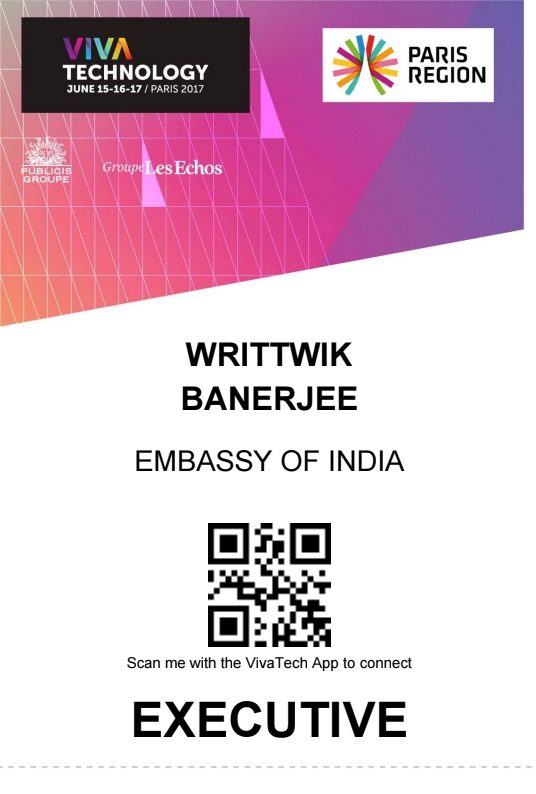
When I attended VivaTech in 2017, the event was still in its early years, and France was beginning to imagine the contours of the Macron era: Emmanuel Macron had just become the youngest president in French history barely a month earlier, and there was a wider frenzy around start-ups, innovation, entrepreneurship and the promise of a new technological ambition. I did not attend the event as a journalist, nor as a technology specialist. I had been selected by the Indian Embassy in Paris to be part of it as an executive.
At the time, start-ups were already fashionable, artificial intelligence was beginning to enter public conversations, and technology still carried a language of optimism that feels almost innocent when compared to what we hear today. Innovation was mostly discussed as opportunity. It had not yet fully become the language of sovereignty, defence, ethics, talent capture and geopolitical anxiety.
I remember being impressed but not convinced.
I looked around, listened, observed, and yet struggled to find anything substantial to write about. Not because VivaTech lacked ambition, but because I did not yet know what question I was supposed to ask. The event seemed distant from the subjects that had shaped my own intellectual and professional world: diplomacy, culture, India-France relations, language, migration, soft power, identity and the strange ways in which nations try to explain themselves to one another.
And yet, curiously, I kept returning.
Some years I went simply as an attendee, often on the last day, when the great institutional choreography had already softened and the event became more accessible to ordinary visitors. Last year, I was press accredited for Brandindia.fr. I walked through the halls, collected notes, followed conversations, and still published nothing. Again, the problem was not the absence of material. The problem was the absence of the right inner voice.
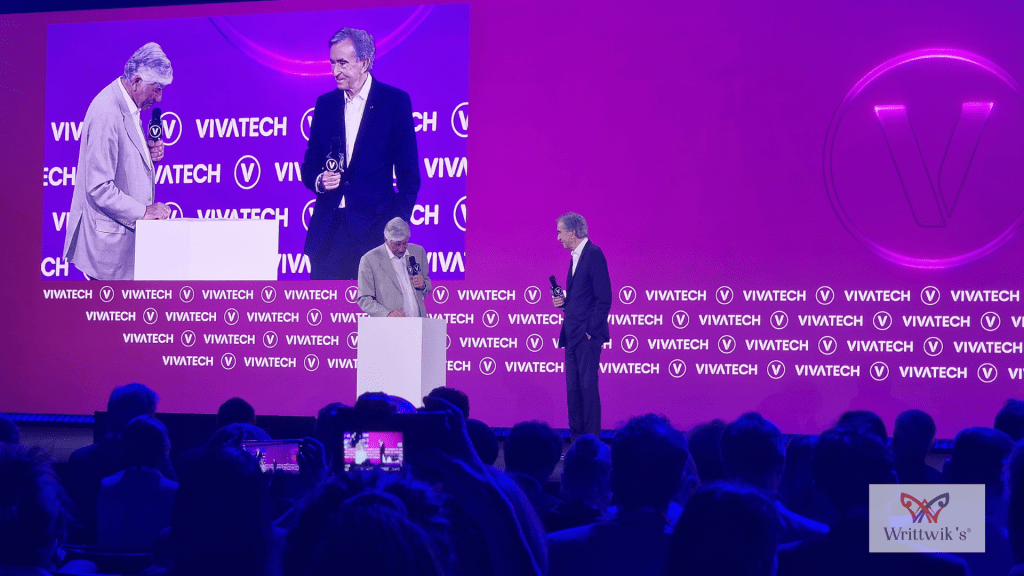
I did not want to write a mechanical article on “the future of technology”. Others do that much better. I also did not want to pretend to be a start-up analyst, venture capitalist or gadget commentator. That is not why you come to Brandindia. You read Brandindia because, for better or worse, I write from where I stand.
This year, VivaTech’s tenth anniversary has given me the missing entry point. The special supplement published by Les Echos offers a clear timeline of the event’s evolution: its launch in 2016, the rise of French Tech, the focus on diversity, open innovation, the pandemic interruption, hybrid formats, global expansion, the explosion of artificial intelligence, and now the language of scaling up, sovereign AI and digital sovereignty.
At first glance, it looks like a chronology of technological progress. But the more I looked at it, the less I saw a simple technology timeline. I saw a timeline of our collective anxieties.
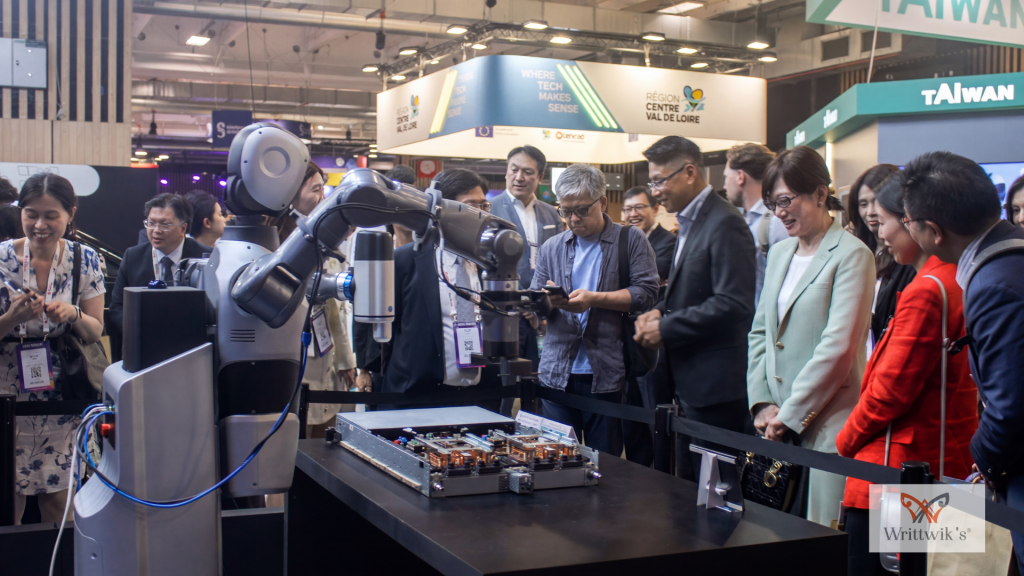
Ten years ago, we were fascinated by cloud computing, virtual reality and the promise of digital transformation. Then came questions of data, privacy, connectivity and platform power. Covid brutally reminded us that innovation without resilience is fragile. The metaverse briefly promised a new world before generative AI arrived and changed the tone of the conversation entirely. Now, almost every serious discussion leads back to regulation, sovereignty, cybersecurity, infrastructure, talent, energy, defence and CONTROL.
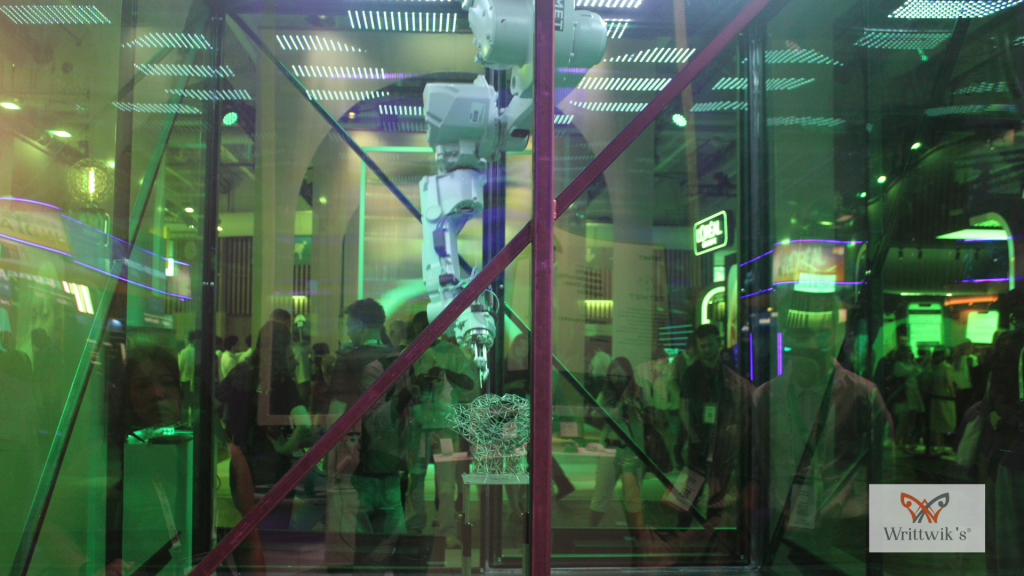
In other words, the technologies changed, but the underlying questions remained strikingly constant. Who owns the infrastructure? Who controls the data? Who attracts the talent? Who captures the intellectual property? Who writes the rules? And ultimately, who shapes the future before the rest of us are invited to adapt to it?
This is why VivaTech feels very different today from the event I first discovered in 2017. Back then, it was still possible to see it primarily as a celebration of innovation. Today, it increasingly resembles a geopolitical observatory disguised as a technology fair.
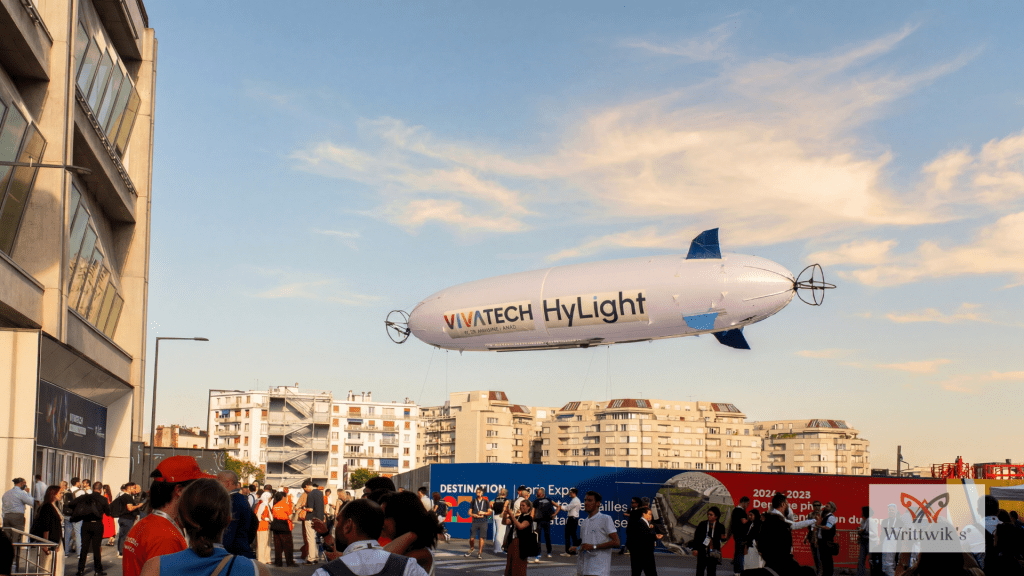
Walk through the halls and, of course, you will find start-ups, demonstrations, investors, screens, robots, founders, delegations and impressive slogans. But if one listens carefully, one also hears the vocabulary of international affairs: trust, resilience, strategic autonomy, influence, sovereignty, security, talent, regulation, ethics and, increasingly, espionage.
The diplomat, the engineer, the defence planner, the founder and the policymaker may not always sit at the same table, but they are now circling the same questions. This is where India enters the picture, and perhaps also where my own discomfort begins.
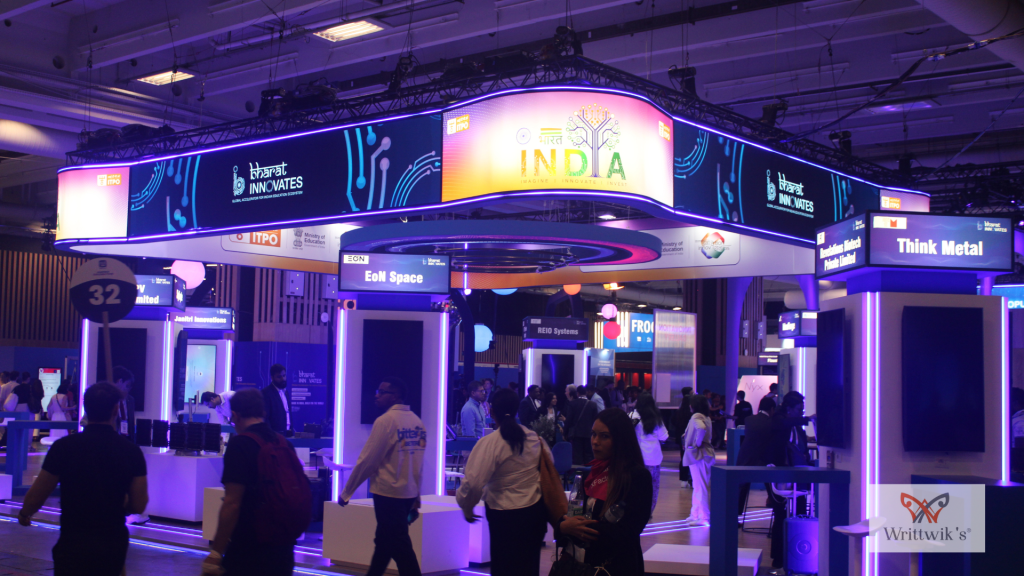
India is now regularly presented as one of the great technology stories of our time. The start-up ecosystem is enormous, the talent pool undeniable, the digital public infrastructure admired, and the ambition increasingly global. In speeches and panels, India appears as a key partner, a market, a talent reservoir, a strategic democracy, a digital society and a future-shaping power. And yet, from Paris, I often find India more visible as an idea than as a narrative. This is not my criticism thrown from a distance. It is an editorial concern.
An Indian start-up delegation supported by government channels has already reached Paris for a residency programme linked to VivaTech. Naturally, I tried to connect with them in order to build a proper Brandindia editorial around their presence. After two reminders to the Embassy’s economic wing, I received no reply.
This may be a simple administrative gap, and one should not convert silence into conspiracy. But editorially, it does raise a question: why does India so often intend to generate substance without generating visibility? Why do we speak so much about Indian innovation while so few structured stories circulate internationally about the people building it?
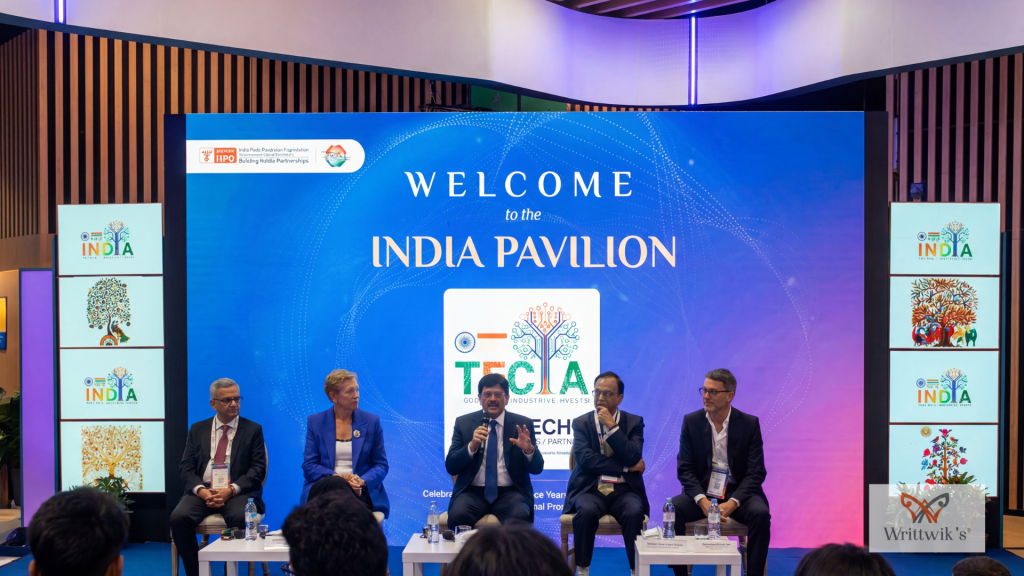
Is it a communication problem? Is it bureaucratic caution? Is it a kind of post-colonial paranoia, where visibility is desired but not fully trusted? Or is it simply that India has become excellent at producing talent and technology, while still struggling to narrate them with confidence in global spaces?
The paradox becomes sharper when one observes what is happening around Indian talent. While official structures sometimes hesitate to communicate, the parallel universe of strategic headhunters, recruiters, investors and what I would call “talent jammers” is already fully active. They identify key minds, offer incentives, create pathways, structure opportunities and, in many cases, ensure that intellectual property remains locked within legal and financial architectures controlled elsewhere.
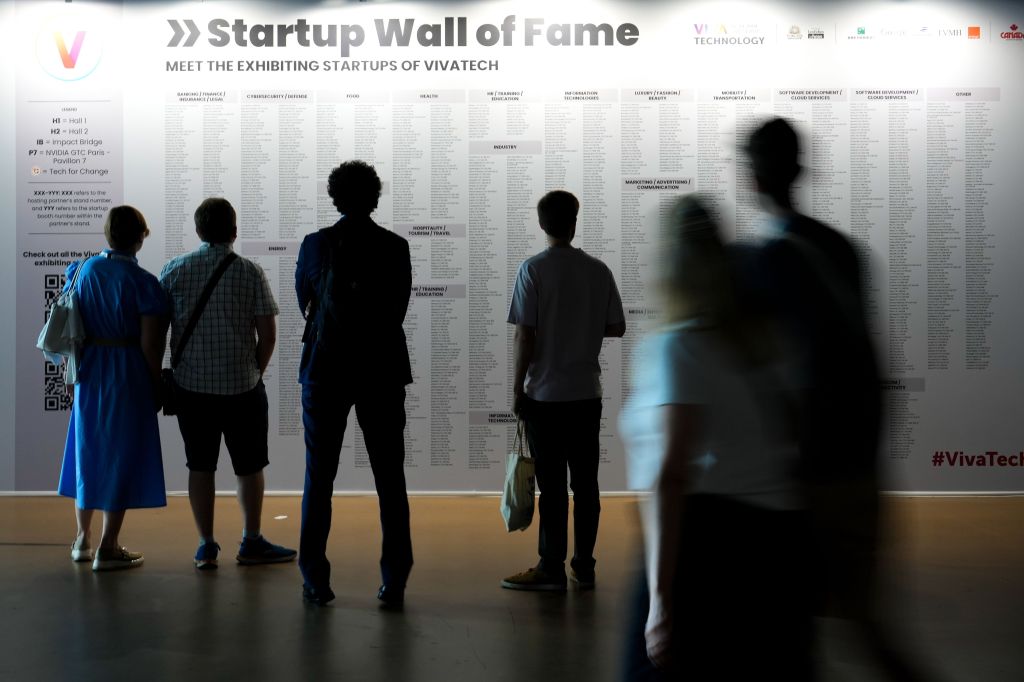
The battle is not only for markets anymore. It is for engineers, founders, researchers, patents, algorithms, databases and future leverage. So, when India speaks of sovereignty, the question cannot be only about national pride. It must also be about narrative capacity, institutional coordination and the ability to protect value without suffocating talent. A country may produce brilliant minds, but if others explain them better, finance them faster and structure their intellectual property more intelligently, then the story of innovation slowly moves away from the place where it was born.
This is one of the central questions I want to carry into VivaTech this year.
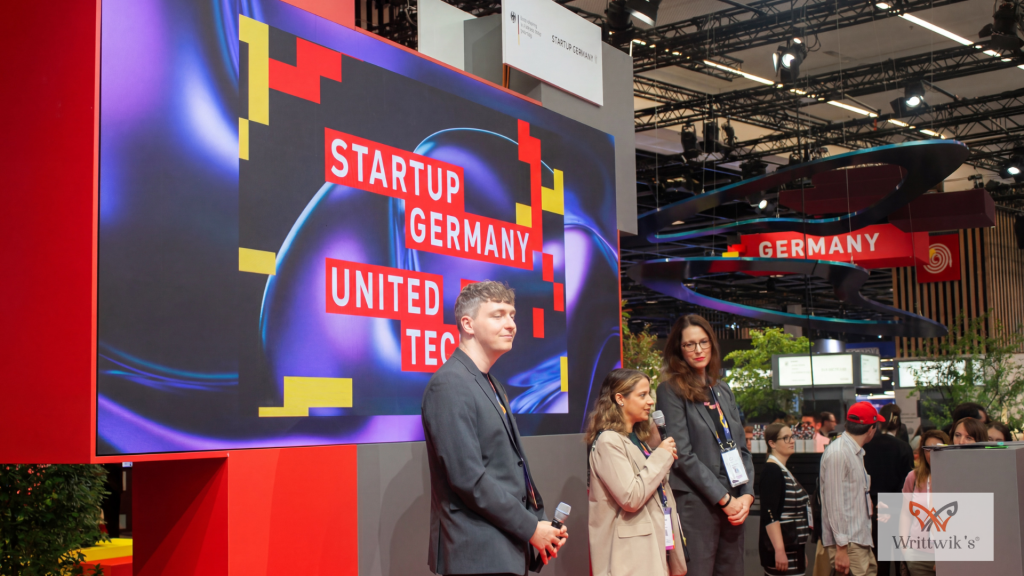
The second question concerns Europe itself. Germany is the Country of the Year at VivaTech 2026, which is symbolically important because the Franco-German relationship remains central to the European project. Yet outside the polished language of partnership, one can also sense irritation, hesitation and competition. French media reports and strategic debates around major defence-industrial projects such as SCAF remind us that European cooperation is not always as linear as its official vocabulary suggests.
For those of us who do not fully understand this geostrategic mumbo jumbo — and I include myself with full honesty — it sometimes feels like watching several chess games unfold on the same board, while each player continues to speak publicly about unity.
This is precisely why VivaTech matters.
It offers a surface of optimism, but underneath that optimism one can read the tensions of our time. France speaks of sovereignty. Europe speaks of regulation. Germany brings industrial power. India brings talent and scale, but it also carries a more complex economic and political logic: the global positioning of Indian talent abroad has long functioned as soft power, national pride and a source of remittance, even when the deeper question of how to retain, protect and narrate that talent remains unresolved. The United States brings platforms, capital and acceleration, but also the power to close the gates when frontier technologies become too strategic to remain universally accessible. China brings execution and state-backed technological ambition. Everyone speaks of cooperation, but everyone is also preparing for concurrence.
And somewhere inside this tension lies the real story of technology today.
For Brandindia, I do not want to cover VivaTech through the usual language of “top innovations” or “coolest start-ups”. That is not my strength, and it would not be honest. Instead, I want to read VivaTech through three lenses that correspond more closely to the way I understand the world: sovereignty and ethics, cybersecurity and defence, and creative media.
Sovereignty and ethics because artificial intelligence and digital infrastructure are no longer neutral tools. They carry values, biases, dependencies and power structures.
Cybersecurity and defence because trust has become an infrastructure, and the invisible systems protecting our institutions, citizens, athletes, companies and states are now part of national resilience.
Creative media because technology does not only transform industries; it transforms imagination, authorship, language, images, storytelling and cultural memory.

This last point matters deeply to me. I spent more than twelve years engaging with the Indian film industry as a co-production analyst, had my articles published in platforms linked to India’s official cultural and diplomatic outreach, and spent hundreds of hours with film professionals in India and Europe. Yet I often struggled to understand what long-term vision the Indian media and film ecosystem wanted to build in order to position itself firmly in a rapidly changing world.
That question has become even more urgent today.
If technology changes how societies create and circulate stories, then it also changes soft power. If the media industry is squeezed between state-supported cultural frameworks, private channels weaponising emotion, algorithmic amplification and increasingly sophisticated forms of psychological influence, then culture itself becomes vulnerable. It changes how India is seen, how France explains itself, how Europe defends its cultural model, and how smaller voices survive inside systems shaped by platforms, governments, agencies and markets. Perhaps this is why, ten years after my first encounter with VivaTech, I am finally ready to write about it.
Not because I suddenly understand technology better than before. I do not.
But because technology has moved closer to the questions I have always followed: who speaks, who is heard, who is represented, who is recruited, who is translated, who is erased, who controls the frame, and who gets to tell the story.
Ten years ago, VivaTech asked what technology could do. Today, the more interesting question is what societies choose to do with technology and what technology, quietly but powerfully, is doing to societies in return.
This is the question I will carry with me as VivaTech 2026 opens…
References:
Bharat Innovates 2026 | 14-16 juin | Accélérateur mondial pour l’écosystème éducatif indien
Germany, France scrap joint fighter jet program
India’s start-ups are not lacking innovation but imagination | The Indian Express
All photos featuring the logo were produced by the Brandindia.fr team.
En savoir plus sur Serendipity
Abonnez-vous pour recevoir les derniers articles par e-mail.

 Serendipity